Forget Scaling to Millions—This CEO Says the Real Growth Hack Is Understanding One Customer
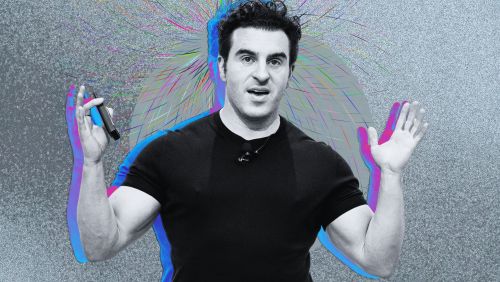
Aurora CEO Jonah Lowenstein shares how a random café conversation sparked the launch of his luxury lifestyle management company and why he thinks most founders are chasing the wrong kind of growth.

Jonah Lowenstein is the co-founder and CEO of Aurora, a luxury lifestyle management company he launched in the summer of 2024 to serve the world’s highest-performing individuals—founders, athletes, and family offices. The service combines AI tech with human expertise and has attracted a roster of high-profile investors, built on a simple idea: that the work of living well shouldn’t be work at all.
A few weeks ago, the company took over Flyfish Club for a secret poker night that brought together the types of high-performers Aurora was built to serve, including Kevin Hart, Gary Vaynerchuk, Yes Chef Group founder Jack Goldburg and Brooks Nader.

Photo credit: Aurora
Entrepreneur connected with Lowenstein to learn what his experience launching and growing Aurora can teach other entrepreneurs about fundraising, scale, and staying focused on what actually matters.
(Interview has been edited for length and clarity.)
What inspired you to create this business?
There’s an old saying that you can’t have business, social life, and health all at once. But looking at the founders and family office executives around me, it struck me that with AI and agents — combined with genuinely world-class human experts — you could finally take the work out of achieving the lifestyle you aspire to live.
The “aha moment” came in a London café. I got talking to the person next to me about the idea to build a premium lifestyle operating system, and it turned out he was the most successful founder in the space — he’d just built and sold the first venture-scale mobile digital concierge to a US bank the year before. There were a dozen things — canceled meetings, weather, chance — that put me in that chair. The timing was extraordinary and I wondered if I could turn that feeling of serendipity into how someone’s lifestyle operated.
What is something you did or a pivot you made that unlocked a new level of success for the company?
We were one of the first to let members integrate their personal services to power their lifestyles — Calendar, Oura, Whoop — directly into the app. At the time, connecting your health wearable to a lifestyle management service was met with some suspicion. But it meant Aurora could send proactive recommendations for experiences you’d never have heard of, aligned to your schedule, your taste and your recovery state. We found post-exit founders really warmed to this, followed closely by athletes, and many of the world’s top family offices.
Lifestyle services had always been reactive, siloed and unscalable. Going proactive and promptless was a big bet, and it ended up turning a funnel into a flywheel: we anticipate what a member wants, execute early rather than last-minute, which gets us better access and inventory, which earns better pricing and perks from providers, which makes the next recommendation better still.
You have some very high-profile investors. What advice would you give entrepreneurs looking for funding?
Three things. First, prove you’re a doer. I didn’t have a venture-scale outcome behind me, but I had a track record of getting off the sofa, making videos for local businesses as a kid, running an events company at university, staying behind after first-year exams to walk the high street and sign businesses up to a discount scheme, building a viral social network around where you spend for students, which received some funding from larger investors. Investors want to know whether you have the energy and resilience to keep going when it gets hard. Any evidence that you consistently put your neck on the line is worth a lot.
Second — and our chairman says this to me constantly — seeing is believing. Everyone has a good elevator pitch. But the entire vision is obvious inside your head and invisible to everyone else until they’ve held it, felt it, or transacted through it. Even without resources, get as close as you can: a video, a storyboard, an AI-generated walkthrough. It’s frighteningly easy now to make your vision a reality others can understand.
Third, don’t bang on the door of your dream investor. Social proof compounds, and building a great company is usually the best way to raise. Several of our highest-profile investors came through more than five degrees of separation. I convinced our chairman, then he showed the product to a VC, then that VC told another VC who used Aurora and loved it, and told a friend. That friend introduced me to one of our most influential investors and advocates. You can’t plan that. You can only chase every opportunity in front of you with respect and relentlessness.
What’s a stat that let you know you were on to something?
The stat I’m proudest of is usage. Our average member transacts with Aurora multiple times a week — roughly 50 to 100 times more often than they use their Amex Centurion concierge. In a single week, that might be a wellness or recovery appointment, a dining reservation, a hotel stay, a gift for a business partner and post-dinner entertainment, hard-to-access tickets or previews, and then something once-in-a-lifetime: planning a longer-form travel itinerary which includes diving with sperm whales, a private pastry-making session in Venice, or a visit to the Pinarello or Maranello factory. We’re just as effective on an ordinary Tuesday as we are on extraordinary days.

Photo credit: Aurora
What is something many aspiring business owners think they need that they really don’t?
Millions of customers. Chasing the most customers fastest actively works against understanding what any one customer needs. I don’t think of scale as scale to an infinite market of people. I think of scale to the individual. I invite members onto our weekly calls. We’re starting ride-alongs where the team joins members on actual experiences, and I go and sit in people’s offices and homes to hear about their lives. Most founders have too many solutions and don’t understand the problem deeply enough. That’s something our CTO goes on about a lot. For every joule of energy we put in, the question is how deeply it affects one person’s life — that’s leverage, not efficiency — we know a wider cohort follows.
Is there a particular quote or saying that you use as personal motivation?
“Do your swing and let the ball get in the way.” A golf instructor taught me that at St Andrews. If you try to hit the ball, you dig at it and take a chunk out of the ground. If you do your swing properly, the ball goes far. They’d have me take two practice swings, then a third, but this time in front of the ball. The result is remarkable.
The principle is that the inputs are what count. We spend far too long staring out at the acres in front of us, wondering where the ball will land, how it will bounce, then roll. When everything we can actually control is right here: our hands, our stance, the swing. By giving up control of the outcome, you get more of it. That made me quiver the first time I heard it, because I’m wired to direct every ounce of energy at the result. But it’s given me the confidence to focus on what I’m great at and trust others to do what they’re great at — and when that motion is right, the transfer of energy into the outcome is remarkably light and compounding.
Jonah Lowenstein is the co-founder and CEO of Aurora, a luxury lifestyle management company he launched in the summer of 2024 to serve the world’s highest-performing individuals—founders, athletes, and family offices. The service combines AI tech with human expertise and has attracted a roster of high-profile investors, built on a simple idea: that the work of living well shouldn’t be work at all.
A few weeks ago, the company took over Flyfish Club for a secret poker night that brought together the types of high-performers Aurora was built to serve, including Kevin Hart, Gary Vaynerchuk, Yes Chef Group founder Jack Goldburg and Brooks Nader.
Photo credit: Aurora