This 30-Year-Old CEO Reveals the Surprising Reason Behind His Startup’s $11 Billion Growth
Winston Weinberg attributes the company’s $11 billion valuation to a unique mindset.
Key Takeaways
- Harvey is an AI startup that develops solutions for legal professionals, like an AI assistant for drafting and research.
- The startup’s 30-year-old CEO, Winston Weinberg, attributes its $11 billion valuation to a mindset of learning aggressively from failure.
- He says it’s important to take the time to analyze failures and determine what you got right and what you got wrong.
Winston Weinberg, the cofounder and CEO of AI legal startup Harvey, says the company’s growth to an $11 billion valuation comes down to one unexpected factor: failure.
“I think it’s really hard to figure this out without failing,” Weinberg said on a recent episode of Fortune’s Term Sheet podcast. “You just have to fail a million times.”
Trained as an attorney, the 30-year-old founder began his career at a securities and antitrust law firm. In 2022, he walked away from that traditional path to launch Harvey, a company building AI tools for lawyers like a smart assistant for drafting and research. He has since attracted investment from the OpenAI Startup Fund, Sequoia Capital and Kleiner Perkins.
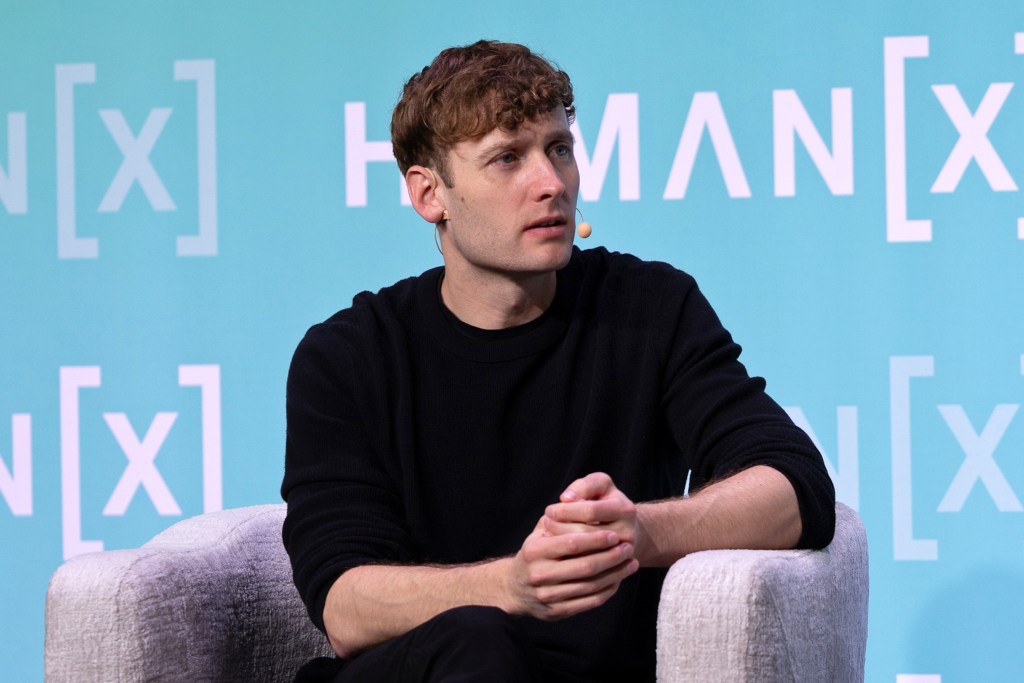
The journey, however, has been anything but linear. A string of missteps and setbacks marked Harvey’s early days, and Weinberg says those failures fundamentally reshaped how he thinks about both success and defeat. For example, in early 2024, when Harvey was valued at around $700 million, Weinberg pursued a merger with a more “traditional” company. The deal ultimately fell through because Harvey would have had to take on too much debt to finance it.
“I remember we had a week of just being like, What is the future of our company? And how do we build this?” Weinberg recalled on The Upstarts Podcast last month.
Weinberg isn’t afraid of failure, telling the Fortune Term Sheet podcast that “it’s a very good way to learn.”
“It’s not just that you have to have a bunch of wins and then have a lot of failures. But you have to get good at taking some time to actually analyze: What did you do right? What did you do wrong?” Weinberg explained. “Most of that is destroying your ego 24/7.”
Other founders put a positive spin on failure
Karim Engelmark Cassimjee, cofounder and CEO of chemical manufacturing startup Enginzyme, told the World Economic Forum last year that at first, his company created “solutions looking for problems.”
“In the company’s early days, we often developed what we thought were great solutions but proved very difficult or even impossible to sell,” he said. “They may have been beautifully engineered, but did not provide as much value as we anticipated.”
Now, the startup has learned from its early failures and tries to engineer solutions that meet customer needs, he added. For example, the company manufactures active skincare ingredients for sustainable skincare products.
Another startup, Versatile AI, develops AI construction technology for workers. Early on, the company “failed an important demo,” cofounder and CEO Meirav Oren told the World Economic Forum.
“Our ability to stand up and to admit the price of that mistake ended up being a big win,” he said. “As an organization, we learned to look for our mistakes in all the steps prior to the demo. This created a level of accountability which supported the team members who were directly interfacing with the client as the demo failed.”
Oren said that within a few hours, his emotions evolved. He went from feeling “a sense of complete failure” to a sense of hope.
“I realized that failure means learning something, and we learned a lot that day,” he said. “We also ended up winning that account, and the rest is history.”
Key Takeaways
- Harvey is an AI startup that develops solutions for legal professionals, like an AI assistant for drafting and research.
- The startup’s 30-year-old CEO, Winston Weinberg, attributes its $11 billion valuation to a mindset of learning aggressively from failure.
- He says it’s important to take the time to analyze failures and determine what you got right and what you got wrong.
Winston Weinberg, the cofounder and CEO of AI legal startup Harvey, says the company’s growth to an $11 billion valuation comes down to one unexpected factor: failure.
“I think it’s really hard to figure this out without failing,” Weinberg said on a recent episode of Fortune’s Term Sheet podcast. “You just have to fail a million times.”
Trained as an attorney, the 30-year-old founder began his career at a securities and antitrust law firm. In 2022, he walked away from that traditional path to launch Harvey, a company building AI tools for lawyers like a smart assistant for drafting and research. He has since attracted investment from the OpenAI Startup Fund, Sequoia Capital and Kleiner Perkins.