He Walked Away From Wall Street at 23 to Open a Frozen Yogurt Shop. Now He’s CEO of the Entire Franchise, Which Brings In Over $20 Million a Year.
Neil Hershman left behind a lucrative but unfulfilling finance career to pursue a new venture.
Key Takeaways
- Neil Hershman, 31, is the CEO of frozen yogurt franchise 16 Handles.
- Hershman started as a customer, became a franchisee and in 2022 acquired the entire brand.
- Hershman says 16 Handles differentiates itself from competitors by experimenting with bold flavors, like French fry yogurt.
Neil Hershman sat in front of his computer at a structured credit asset management firm in New York. Another weekend at the office, another day staring at spreadsheets. He loved the work and the people, but the lifestyle was brutal. There was no physical connection to anything, no human touch point. Just screens and numbers.
After his shifts, Hershman would escape to 16 Handles, a frozen yogurt shop in the East Village. He would go to the shop after the gym or instead of dinner. It became his refuge.
About two years into his finance career, at age 23, he resigned. He had no concrete plan, but he knew he wanted something different, something with that human connection he craved.
Today, at 31, Hershman is the CEO of 16 Handles. He started as a customer, became a franchisee in 2019, and in 2022, acquired the entire brand from founder Solomon Choi. Under his leadership, the company has grown its annual recurring revenue to over $20 million. It has also expanded from under 30 stores to over 80 locations open and in development.
Fortune Business Insights valued the global frozen yogurt market at $1.93 billion in 2025 and projects that it will grow to $2.56 billion by 2034. 16 Handles has locations in Arizona, Connecticut, Florida, New Jersey, New York, South Carolina and Texas.
The following interview has been lightly edited for clarity and concision.
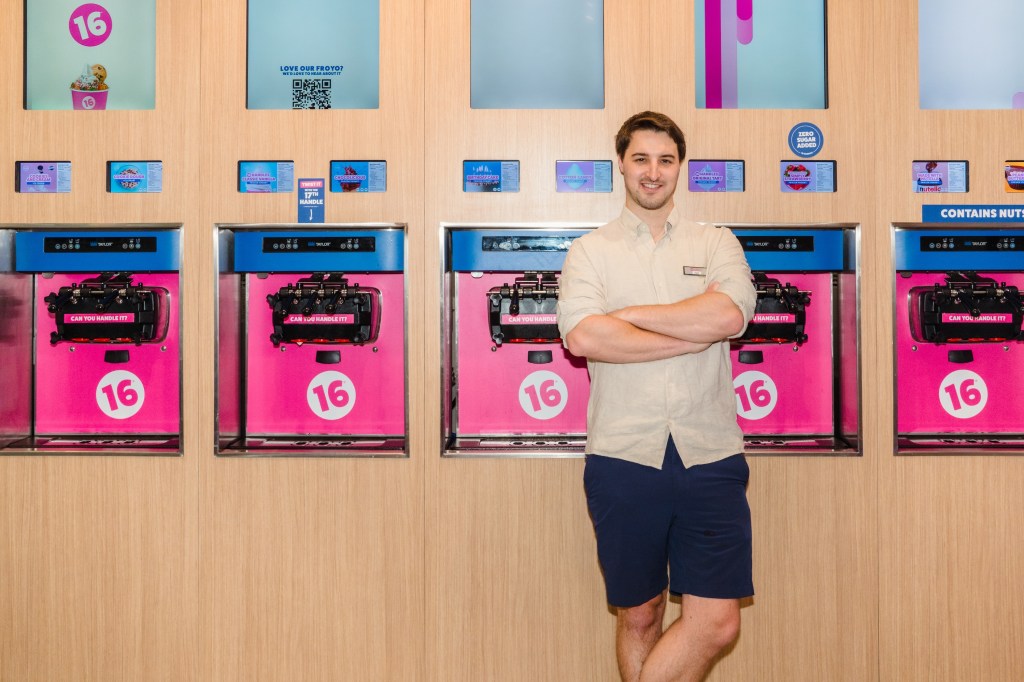
You started as a regular 16 Handles customer before becoming a multi-unit franchisee and eventually acquiring the brand. What was the moment you went from fan to “I want to own this?”
I had moments after I acquired the East Village store, especially, where I walked in and was like, a year ago I was a customer of this brand with no idea about buying it, and now I own the store, and I’ve just made it so much better. I definitely had a special moment where I could look back and reflect on all my success with the brand and how glad I am that all the dots connected.
However, I don’t know that there’s this shift that happened, knowing when I wanted to first become a franchisee and then become the brand owner. They’re more like these longer transitions through many conversations and lots of research. I come from a finance background, so lots of modeling as well, to make sure this is what I wanted to do and that it was the right way to spend my money.
Even with the first store that I bought with an SBA loan, I still had to put in basically all the money I had saved up. My bonus from that year from my finance job went into it. It was very risky, big investments at the time, but I felt secure about them because I had put in the groundwork in advance and knew this was what I wanted to do.
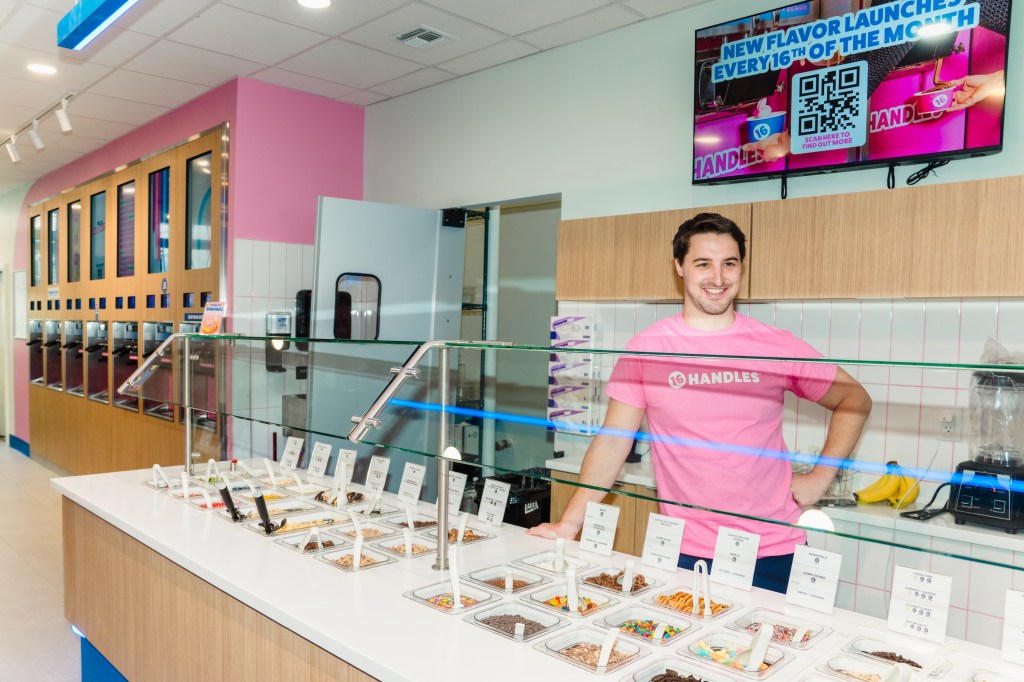
When you acquired 16 Handles in 2022 from founder Solomon Choi, what was the biggest surprise, good or bad, once you saw the entire system from the inside?
I don’t know if it surprised me, but it was definitely a lot of work after buying the brand to update all the old documents — the boring part of the business, but the training manuals and operating handbooks, HR documents, etc.
We knew they were old, but then we would look at some of these Word documents, and they hadn’t been updated since 2013. It was almost like, is it worth even starting from this place, or do we just start fresh? Because now it’s 10 years later, and things have changed. The market has evolved; the product has adapted.
That was obviously a challenge coming in, realizing how much paperwork had to be updated and kind of boring stuff we had to do to make sure that the documentation of the business was all as good as it could be.
What does the frozen yogurt industry get wrong, and how is 16 Handles doing it differently?
A lot of the brands that are out there today — the well-known brands — are mostly just owned by large private equity conglomerates, so they have no innovation or excitement or energy that’s bringing people in and keeping them coming back. That’s one thing I never want to shy away from.
16 Handles was originally formed as a New York City brand. The brand’s always been a little bit edgy, especially in marketing and in trying new flavors that maybe aren’t as popular or as well-known or palatable, but trying it and seeing what sticks and giving guests something to talk about. We’ve been focused on a marketing direction where we do some crazy stuff, and some of it works out and some of it doesn’t work as well, but it’s worthwhile to try because it keeps our guests really excited.
I think we’re only able to do that because we have a great team here, and we don’t have the bureaucracy of these large conglomerates. We just make decisions; we talk to the franchisees daily and know what works in our stores.
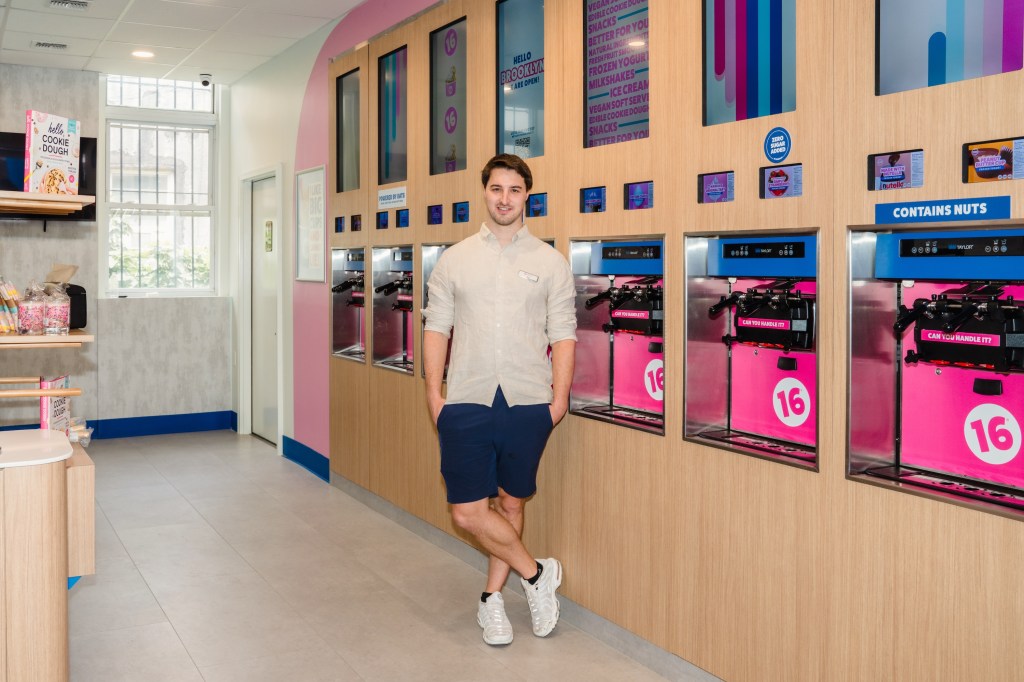
Some examples: Last summer, we launched a French fry frozen yogurt, which no customer had asked for, but every customer came into the store and tried it because you have to try a French fry frozen yogurt that’s made with real Idaho potatoes. We’ve done flavors in the spirit of big movie launches and all sorts of different trending topics.
We recently launched a kefir soft serve, which was the first kefir frozen yogurt soft serve. Kefir is this kind of niche market in the grocery store, but it’s growing, and the people who know it know it, and the people who don’t, this was their first chance to try and experience it and come take a sample at 16 Handles.
We love being early on these journeys for people and being that place you go to try new things all the time. I think that’s really what makes 16 Handles stand out.
What are some tactics you use to grow 16 Handles? What are your secrets?
We’re focused on having this great experience with our franchisees, especially the new ones who are building stores. We’re so hands-on with them in a way that no other franchisor can be. I treat every new build as if it’s my own construction project. For example, I review construction bids with franchisees as if it’s my own money that’s paying for it. I get on these calls for negotiations with the different subcontractors.
We’re focused on our franchisees building really cost-efficiently and having this great experience so they come back and build more stores, because it’s a lot easier for us to manage a brand of 50 franchisees that has 200 stores — each of them having two or three stores — versus 300 franchisees with 300 stores, each having one store. They end up in the same place, but it’s three or four times as many people to manage. We’re really selective about who we choose to work with in terms of franchisees.
We want people who both have that financial capability to become multi-unit operators, but also that kind of oomph and community extroverted personality that they can really become the froyo people of their community and their town, and grow the brand and make those inroads.
What’s some concrete advice you have for founders?
Just get to work. There were many times throughout my process and journey — my process of buying the franchise and just overall my journey through 16 Handles — that I was sure things weren’t going to work out. My SBA loan wasn’t going to fund. The lender had some issues with underwriting. The seller was kind of backtracking on some points. I was so ready to walk away and just give up.
But then you sit down and think about it and figure out how to solve the problem, and you just get to work. If you continue to think about problems and work on them and take action, then you can solve anything, and you can force companies to be successful. You make the people you’re working with also strive to be better workers.
But if you shy away from adversity, it won’t work out. The effort equals the result in a lot of ways, and you’ve really got to be nonstop, especially as a CEO of a growing brand.
How much does it cost to start a 16 Handles franchise?
There’s a range, but we typically try to open stores around $500,000.
What’s one interview question you always ask potential franchisees, and what does it reveal?
One thing we always ask is what the franchisee views their involvement in the store post-opening to be. We get an idea of if this is somebody who’s coming in just as a passive investor — “I’m going to leave the store to run from relatively inexperienced managers” — or if it’s somebody who wants to take accountability, wants to visit the store frequently, check in, make sure everything’s good, interact with customers, make sure people know that this is a locally owned establishment and somebody cares about the experience at the end of the day, somebody who has skin in the game. That’s what we look for from our owners.
