This Surfer Spent $5,000 to Open a Roadside Cart Selling an Unconventional Post-Beach Snack. Now, Her Business Brings in $300 Million a Year.
Abby Taylor created a franchise with 400 locations across the U.S.
This story appears in the September 2026 issue of Entrepreneur. Subscribe »
Key Takeaways
- Abby Taylor turned years of surf travel and a lack of post‑beach lunch options into Playa Bowls, an acai smoothie bowl business.
- She started with a scrappy, $5,000 roadside acai cart in Belmar, New Jersey, in 2014.
- Playa Bowls has now grown into a 400-location franchise with $332 million in systemwide sales in 2025.
On a hot Jersey Shore afternoon in the summer of 2014, Abby Taylor dragged a borrowed patio table and a small refrigeration unit to the side of a road in Belmar, New Jersey, and started making acai bowls.
Surfers and beachgoers walked past, confused and curious. At the time, almost no one on the Shore knew what acai was, let alone why they should trade their usual post-beach pizza or subs for a purple smoothie bowl piled with fruit.
Taylor, a lifelong beach kid and surfer, had seen something different on her travels to Puerto Rico, California, Hawaii and Nicaragua: vibrant bowls that tasted good, made her feel better and offered a more healthful way to refuel after surfing.
“I loved the way it tasted; I loved the way it made me feel; I loved the health benefits of the acai,” she tells Entrepreneur in a new interview.
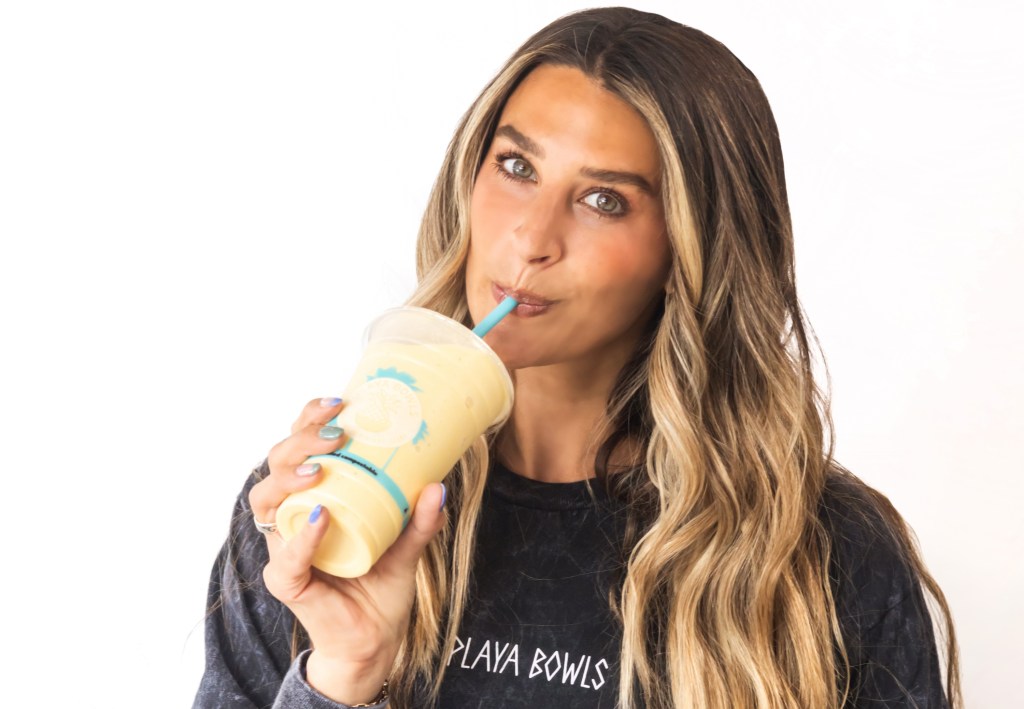
On that sidewalk, with recipes inspired by those trips, she tried to bring that feeling home — laying the foundation for Playa Bowls, an acai bowl and smoothie franchise that did $332 million in systemwide sales in 2025.
Building from grit, not a plan
The company’s humble beginnings as a beachside cart meant that Taylor got it off the ground with less than $5,000 in startup costs. There was no big business plan, just a menu of acai bowls built from flavors she had fallen in love with on her travels. Some of those original recipes are still on the Playa Bowls menu today.
In the beginning, almost no one showed up. “No one knew what acai was,” Taylor says. “So [it was] a lot of explanation, grassroots marketing. I was making flyers at Staples and going on the beach and handing them out.”
She believed that if she could get people to sample the product once, they would be hooked. “I knew if I could get them to try it, that people would be back,” she says. “I still stand by that, getting the product in people’s hands today.”
Balancing Playa Bowls with bartending
When she started Playa Bowls, Taylor was also bartending at a Jersey Shore nightclub, saving money to travel in the winter and doing creative odd jobs like painting dog portraits to fill in the gaps. When the cart launched, she kept the bartending shifts — and added what was essentially a second full-time job.
“I was bartending till 4 in the morning, and then I was getting up at 8 a.m. and making bowls at the cart, and then I was going back and bartending,” Taylor says.
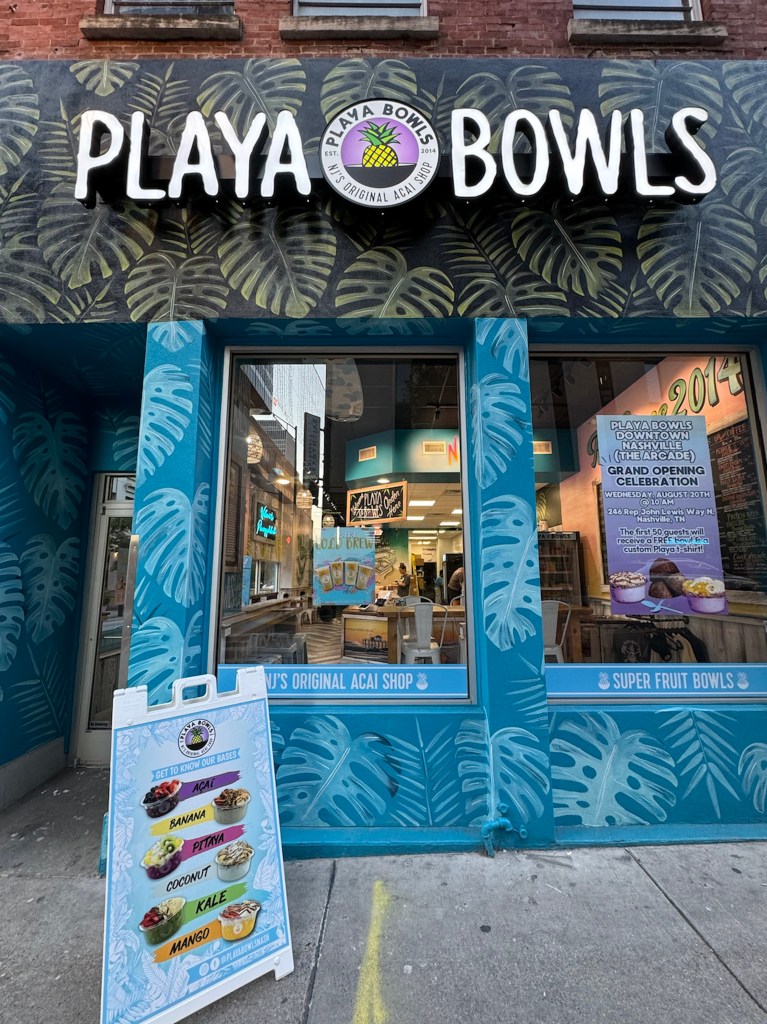
By the next summer, the concept had outgrown the cart. Playa Bowls moved into a brick-and-mortar space directly behind that original location, taking over a gym that had been destroyed by Hurricane Sandy and left in rough shape. Taylor pushed through renovations to open in time for Fourth of July weekend, upgrading Playa Bowls from a pop-up cart to a permanent home on Belmar’s Ocean Avenue.
Within a few years, the business saw consistent monthly revenue, defying Taylor’s early assumption that it would be a seasonal business. Customers kept coming, even through New Jersey winters.
Leveraging social media
Instagram took off around the same time Playa Bowls started to grow, and Taylor jumped on it early. She set up an account and used it as a real-time diary of Playa Bowls’ growth, from cart to storefront. “People were able to grow with us…they were in on this authentic journey that we were having,” she says.
Her strategy was simple: Reply to comments and direct messages, post consistently, stay on-brand and let the product do the talking. “Our products are so beautiful, and they really speak for themselves,” she says. “We were getting so many people tagging us and us reposting.”
Over time, she has placed more emphasis on showcasing the menu itself as the company introduces more items and innovates, while keeping the feed “beachy, bright and fun.”
Expanding into franchising
Even when Playa Bowls was just one shop, Taylor felt protective of what she’d built. She was behind the counter making bowls, greeting customers, working the register and hearing constantly that people wanted to open a Playa Bowls in their towns. “I treated this like it was my baby,” she says. “I was like, no, no, no.”
Then the copycats arrived. Competitors began opening with menus and aesthetics that looked uncomfortably familiar, trying to “jump on the train” and borrow the Playa Bowls vibe, Taylor says. That was the moment she realized expanding would require partners, preferably people aligned with her vision, before others defined the category around her.
Around 2017, she signed her first franchise deal with the landlord who owned the building of Playa Bowls’ original store. “It was a lot of like, I know this person, I know this person. It was all kind of connected,” Taylor recalls.
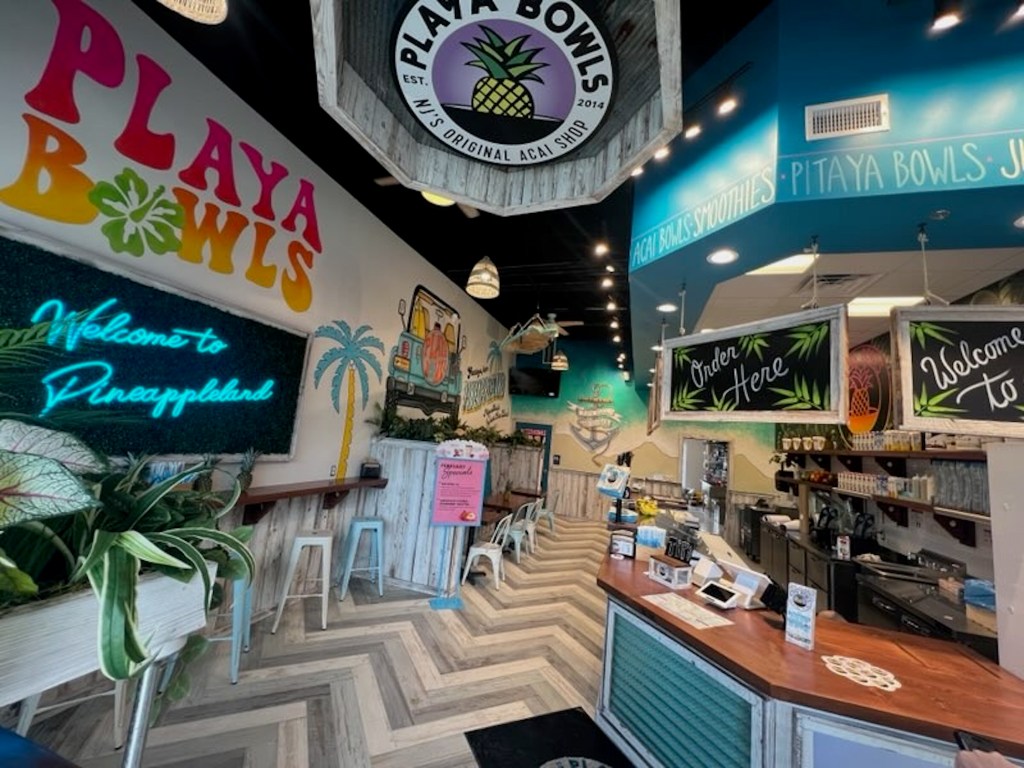
Playa Bowls generated $332 million in sales last year
Franchising quickly became the engine of Playa Bowls’ national push. Last year, the company generated $332 million in systemwide sales, and it is now approaching its 400th location. Today, as Taylor talks to prospective franchisees, she has a clear sense of what separates the top performers.
“The franchisees that are out in the community every single day… they never take their foot off the gas,” she says. “They’re at the events. They’re constantly being a pillar in the community. I think that that’s a big piece of it.”
She looks for owner-operators who genuinely love Playa Bowls, live a lifestyle that fits the brand and are ready to show up in-person, not just on paper. Plus, she wants them to be honest with themselves before they sign. “It’s not just like, let me open up the doors, and the people are gonna come,” she says. “You have to be out there in the community. It’s fair to ask yourself, Am I ready to do that?”
Guarding the brand, welcoming the imitators
One of the most surprising challenges for Taylor came when she saw other businesses mimic Playa Bowls’ concept and brand. Early on, it felt like theft. “I felt like I had put everything into this, and this brand is such a big part of me. I just felt like people were stealing it, and I couldn’t believe it,” she says.
Over time, as more Playa Bowls shops opened and the company solidified its presence, her view shifted. Imitation, she came to realize, could also be a compliment. “I’m just gonna put my blinders on and focus on being the best that we could be,” she says. “Having people copy was kind of the biggest form of flattery.”
Taylor believes that Playa Bowls has a competitive advantage when it comes to product quality, branding and in-store atmosphere. “We always talk about the vibe here at Playa Bowls,” she adds. “You could be in New York City, and you feel like you’re on a little bit of a vacation for lunch.”
Looking ahead and advice
When Taylor looks a decade out, she imagines a business that spans the U.S. and moves further into international markets, starting with an upcoming opening in Canada.
What excites her most isn’t just the store count; it’s the personal stories she hears from would-be franchisees. Many discovered Playa Bowls at a soccer tournament, or started visiting as a weekend ritual with their kids, and now see it as a central part of their family routines. “I love that I’m creating an experience for families or friends,” she says. “It’s a meetup spot, a really cool moment that people could have together.”
For aspiring founders, her advice is simple: “If it were easy, everybody would do it,” she says. “If you want to be successful, you have to act on it. You can’t be half in; it has to be a full commitment.”
