The Director of ‘The Lost Boys’ Musical Reveals the One Rule That Transformed His Career and Business: ‘The Audience Is King’
Michael Arden shares the unconventional business decisions, creative obsessions, and hard-won lessons behind his string of Broadway hits.
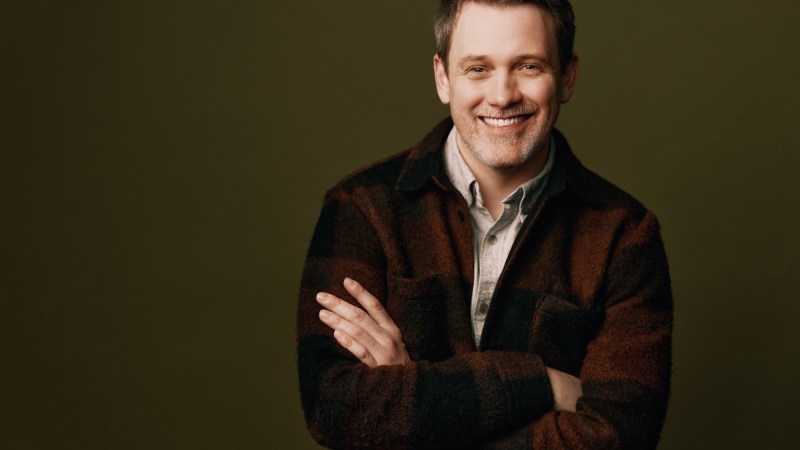
Michael Arden doesn’t just direct Broadway shows — he builds entire worlds from the ground up. A two-time Tony Award-winning director, Arden won for Best Direction of a Musical for Parade in 2023, and then for Maybe Happy Ending in 2025. His latest show, The Lost Boys, earned 12 Tony nominations, including Best Musical and nods for both his direction and his lighting design — an historic first. Beyond the stage, Arden co-founded At Rise Creative, a producing company that has now won three Tony Awards and is rewriting the rules of how theater gets made.
Speaking with Entrepreneur on the eve of this year’s Tony Awards, Arden shared his journey from a kid watching the Tonys on his grandparents’ living room floor in Midland, Texas to becoming Broadway’s most in-demand multi-hyphenate.
What is the process of turning a movie into a musical? Who decides that?
Every show is different. But the story of The Lost Boys is that our producers, Patrick Wilson, James Carpinello, and Marcus Chait, all went to college together, and were huge fans of this movie. They had tried to get the rights for a long time to do it as a musical, and finally I think Patrick Wilson probably made Warner Bros. enough money in his Conjuring franchise that they had to take the meeting in earnest. They managed to get the rights, and then they came to me and said, “Would you be interested?” And I said, “Hold on, I better watch the movie.”
Wait, you never saw the movie?
Not until then. And this was in 2021! When I saw it, I was just taken by this idea that it was so many things in one — an adventure movie, a comedy, a horror movie, a coming-of-age story. But ultimately I thought the kernel of it was a story about a family trying to find their way back to each other. And so it seemed like these themes were really exciting to explore in a musical. And then five years later, here we are on Broadway.
And did you watch it a million times since?
No. I only watched it twice in my life. I didn’t want to be trying to do the movie on stage. I wanted to say, “Okay, what are the things that really stuck with me?” There are certain things that bubble to the top when you only get to see something once — things that feel like the important tent pole moments or set pieces or themes. Because we can’t do a movie on stage. It has to be its own thing, and you have to think about the audience’s needs when walking into a theater to sit there for two and a half hours. You can’t have those close-ups you’d see on screen. You sort of need to mine a little bit deeper.
You made one very big change in the vampires. Can you explain that decision?
It became immediately clear to me that the vampires needed to use music as part of their allure. You can’t do too much motorcycle riding on a stage, so I thought, what can be their signifier? So I thought, we’re doing a musical — they should be rock stars. That’s certainly something every young man wants to be. We’ve joked about the moral of the story of Lost Boys the musical — it’s never join a band. It never ends well, especially for your loved ones.
You co-founded At Rise Creative. What led to that?
We wanted to merge the right and left hands of artists and producers and make sure that the production was aligning with the financial structure. In the theater world, artists and producers have been really sequestered into separate corners of the industry. We really wanted the marketing, the production, the holistic producing to all be telling the same story. And I want to make sure we’re spending the money in the right ways. The most important thing is that the audience feels like they’ve gotten their money’s worth when they come to see a show. The audience is king. Prior to creating this company, we were excluded from a lot of the decision-making. It’s like, “Oh yeah, the artist — you do what you do, but we’re gonna produce the show.” These things have to work together. Looking to people before me, like Hal Prince, who was an incredible producer and director — sort of my idol — he was doing it, but it hasn’t been done in a long time. And we’ve now won three Tonys as producers, which is incredible.
Does your producer brain ever yell at your creative brain about costs?
Absolutely. But what’s great about having a left and right half of your brain is that you don’t even need to get to the argument. It’s part of the decision-making process. A huge part of that on Lost Boys was deciding not to do an out-of-town tryout production. We opened cold on Broadway, which never happens with new musicals. We’re certainly the only new musical this season that’s done it. But we knew that if we went out of town, we were going to spend $5 million we couldn’t get back. So we decided to spend a smaller — but still substantial — amount of money to properly develop it for our Broadway audience. We wanted to put the money on stage and not in trucking or load-ins in a theater in Chicago.
What do you consider your superpower?
I think it is bearing in mind the experience of an audience. That’s listening. It’s saying, what haven’t we seen? Or what have we seen, but how can we look at it from a new perspective on stage? People go to see theater — you’ve got to take people away from their seats. I think we need to deliver something so magical that we forget we’ve come to the theater, because that’s where the greatest possibility for catharsis lives. That’s what we want when we buy a ticket. We want to forget we’re in our seats, forget we have a job, and explore a world we’ve never been to. My job isn’t to direct the show. It’s to create a space in which the artists I’ve assembled can do their best work, and we can all direct the show together.
How do you deal with the panic that many creative people feel when they’re in the midst of the process?
It doesn’t get easier. The panic happens on every project. There is a moment where I’m like, “Well, this is the end of my career. I might as well throw myself off a building. Everyone will realize that I’m a complete charlatan.” That sort of happens on every project, and I think you just get easier at acknowledging that it will happen. It’s about how you move through moments of self-doubt, which in my experience is by actually broadening my vision, remembering that there is life outside of the work I am doing, that I am a person who deserves love and has a dog who doesn’t give a fuck about The Lost Boys or anything I’m doing. And it’s also leaning on the people that you trust. Being able to articulate the truth of your fear is a step to overcoming it. My husband has to remind me at every point in the process, right before opening, “You say this every time.” And I think getting over the finish line means more when the last few miles are treacherous.
Michael Arden doesn’t just direct Broadway shows — he builds entire worlds from the ground up. A two-time Tony Award-winning director, Arden won for Best Direction of a Musical for Parade in 2023, and then for Maybe Happy Ending in 2025. His latest show, The Lost Boys, earned 12 Tony nominations, including Best Musical and nods for both his direction and his lighting design — an historic first. Beyond the stage, Arden co-founded At Rise Creative, a producing company that has now won three Tony Awards and is rewriting the rules of how theater gets made.
Speaking with Entrepreneur on the eve of this year’s Tony Awards, Arden shared his journey from a kid watching the Tonys on his grandparents’ living room floor in Midland, Texas to becoming Broadway’s most in-demand multi-hyphenate.
What is the process of turning a movie into a musical? Who decides that?
Every show is different. But the story of The Lost Boys is that our producers, Patrick Wilson, James Carpinello, and Marcus Chait, all went to college together, and were huge fans of this movie. They had tried to get the rights for a long time to do it as a musical, and finally I think Patrick Wilson probably made Warner Bros. enough money in his Conjuring franchise that they had to take the meeting in earnest. They managed to get the rights, and then they came to me and said, “Would you be interested?” And I said, “Hold on, I better watch the movie.”