The Customer Survey Question That Led This Company to Scrap a Product Worth Hundreds of Millions
How Prezi CEO Jim Szafranski leaned into AI to turn users’ blank-screen panic into a big opportunity for them, and for his company.

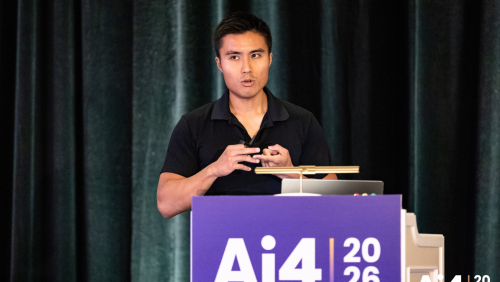
For years, Prezi’s CEO Jim Szafranski focused the company’s strategy on helping customers nail their presentations. But the surprising results of a survey made Szafranski realize that Prezi users’ biggest pain point wasn’t exactly what he thought it was. Tapping the knowledge he gained while writing his Master’s thesis on AI at MIT back in 1992, here’s how Szafranski reshaped the company’s focus to solve users’ “tomorrow problems” with its new AI agent Swoop.
You’ve been CEO of Prezi for six years — please tell us one “holy @#$!” moment that made you think differently about the gig.
One of my biggest such moments came when we realized we weren’t losing to competitors — we were losing to deadlines. For years, we were improving our presentation editor – spending hundreds of millions of dollars to make it more powerful and sophisticated. But when we changed one question in user interviews, from “What’s hard about our product?” to “When is your presentation due?” everything shifted. We saw people weren’t struggling with features. They were staring at a blank screen at 10 p.m. with a presentation due the next day. They had a ‘tomorrow problem.’ No one in that moment wants to learn a tool. The blank canvas is the enemy and they want some momentum. And this is exactly how entrepreneurs should view AI – as a way to clarify and accelerate getting a job done. Creation shifts from “build” to “react.”
What lesson did that teach you?
Go straight to the desired customer outcome. Look for places where your customers are under time pressure. And, if your product or service requires lots of steps before delivering that outcome, AI can probably help you skip steps, delighting your customer and expanding your growth opportunity. The next generation of tools won’t win because they have more features. They’ll win because they eliminate the most steps between intent and outcome. We overcame competing with deadlines by embracing them.
What has embracing AI meant for your business outlook?
Early in Prezi’s shift into AI I realized that we were still just scratching the surface, and the addressable audience is 10x bigger than I thought. And yet so much more accessible. The business logic that we’ve all encoded into our SaaS platforms is juvenile compared to what LLMs can already do and know. AI reasoning is fluid and expansive. The friction of trying things has been compressed.
How has this shift affected your company’s culture?
There’s a famous ownership mindset at Toyota called Jidoka, where anyone can pull a cord and stop the production line if they see an issue, to ensure defects aren’t compounded. With AI, it’s the inverse; each team member should be responsible for creating ideas and compounding them. AI dramatically lowers the cost of trying things. Another key part of Toyota’s Jikoda is the idea of Kaizen, which tells you that you need to learn the process by hand before using the machine, so you’re capable of identifying abnormalities in the machine when they happen. Again, the inverse — AI flattens skills. Tool mastery matters far less than outcome clarity. The mindset shift is that our product isn’t presentations – it’s persuasion about the ideas being presented.
How is the role of CEO changing in an AI world?
AI is the great disruptor of knowledge work. So, the CEO job is shifting from ensuring great “execution” to ensuring widespread “Empowerment.” AI has dramatically lowered the time and cost of developing ideas. Prototypes that used to take weeks can now take hours. That changes what leadership should look like. Instead of having rigorous processes to manage expensive innovation, my job is increasingly to create an environment where innovation can truly come from anywhere, and should.
How does it change how teams work together?
I encourage engineers to think about design and user experience, not just coding. I encourage designers to bring ideas to life in code before handing them off. AI tools make it possible for people to carry ideas much further on their own before they need specialized help. Boundaries based on role and even department should be questioned intensely.
We used to define teams by roles, like engineer, designer, and analyst. Now you must look for people who can take an idea from insight to experience. Collaboration moves from how to do something to what’s best for our goal. In the end, AI doesn’t eliminate teamwork, but it does reshape teams into faster, more self-sufficient units that focus more on ‘what’s best’ vs. ‘how do we get something done?’
For years, Prezi’s CEO Jim Szafranski focused the company’s strategy on helping customers nail their presentations. But the surprising results of a survey made Szafranski realize that Prezi users’ biggest pain point wasn’t exactly what he thought it was. Tapping the knowledge he gained while writing his Master’s thesis on AI at MIT back in 1992, here’s how Szafranski reshaped the company’s focus to solve users’ “tomorrow problems” with its new AI agent Swoop.
You’ve been CEO of Prezi for six years — please tell us one “holy @#$!” moment that made you think differently about the gig.
One of my biggest such moments came when we realized we weren’t losing to competitors — we were losing to deadlines. For years, we were improving our presentation editor – spending hundreds of millions of dollars to make it more powerful and sophisticated. But when we changed one question in user interviews, from “What’s hard about our product?” to “When is your presentation due?” everything shifted. We saw people weren’t struggling with features. They were staring at a blank screen at 10 p.m. with a presentation due the next day. They had a ‘tomorrow problem.’ No one in that moment wants to learn a tool. The blank canvas is the enemy and they want some momentum. And this is exactly how entrepreneurs should view AI – as a way to clarify and accelerate getting a job done. Creation shifts from “build” to “react.”
What lesson did that teach you?
Go straight to the desired customer outcome. Look for places where your customers are under time pressure. And, if your product or service requires lots of steps before delivering that outcome, AI can probably help you skip steps, delighting your customer and expanding your growth opportunity. The next generation of tools won’t win because they have more features. They’ll win because they eliminate the most steps between intent and outcome. We overcame competing with deadlines by embracing them.