He Reached the Top at Google by 28—Then Quit. Here’s His Advice for Anyone Tempted to Leave Corporate Life and Start Their Own Business.
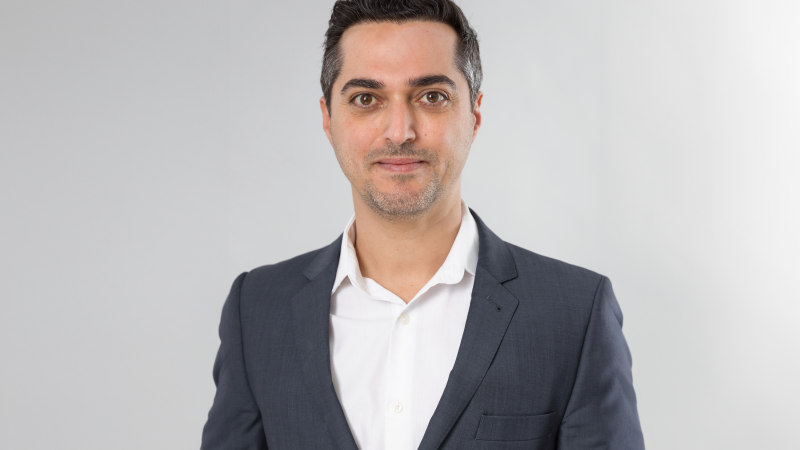
Alon Chen left a high-profile role at Google because he saw startup potential in the shifting dietary habits of his own family.
Key Takeaways
- Alon Chen worked his way up to regional Chief Marketing Officer at Google by age 28.
- He left the job because he felt he could have a greater, clearer impact as a founder in the massive $9 trillion food and beverage industry.
- His startup, Tastewise, was born from observing the rapidly shifting dietary needs of his own family.
By age 28, Alon Chen had what many would consider the pinnacle job: He was a regional Chief Marketing Officer at Google, overseeing programs that would grow into a multi-billion-dollar business across more than 30 markets.
Yet four years after reaching that peak, he walked away from what he calls “the golden cage” to start Tastewise, an AI startup focused on the $9 trillion grocery industry. His decision was less about leaving one of the most coveted employers in the tech industry and more about chasing purpose, ownership and impact.
Building a $2 billion business at Google
Chen’s path into the tech space started early. He says he was a “geeky guy” who started writing code at age 12. But even as a kid he had enough self-awareness to recognize that his best friend was a much better developer, so he might be more effective on the business side.
Chen’s career at Google kicked off at age 22, in a junior role, and he advanced at an unusual speed. “By 28 years old, I got promoted to a regional CMO for a few markets for Google,” he tells Entrepreneur.
His real “claim to fame,” as he puts it, was building the Google Partners program for advertising agencies. “The program started as a small idea and turned into a $2 billion business across more than 30 different markets,” he says. That role had him traveling between the U.K. and the U.S., managing programs that ultimately touched thousands of people, directly and indirectly.
Why he left Google
On paper, it made no sense to leave. Chen calls himself a “really comfortable corporate guy in the golden cage,” well aware of the prestige and security of his position. His mother, he jokes, “thought it was insane” to walk away from Google. But he stands behind the choice: “If you’re asking me, it was the best decision I’ve made.”
The problem was personal impact. Google had grown so large that even meaningful wins started to feel diluted. By the time Chen left, the company was too big to make a big impact like he did with the Google Partners Program again. He had proven he could build a multibillion‑dollar business inside a giant, but he no longer felt sure whether success came from his personal work or the magnitude of the Google brand.
He’d also caught what he calls the “entrepreneurial bug.” So after nine years at Google, by age 31, Chen felt ready. “I got everything I needed to build the confidence that I can build a big venture,” he says.
Coming up with the idea for Tastewise
The idea for Tastewise came from Chen’s family WhatsApp group, of all places. Every Friday, Chen’s Jewish family would gather for dinner, a ritual where absence is “a big thing,” he says. His mother grew exasperated as her children arrived on rotating diets, sometimes on keto, sometimes paleo or pescatarian, while his sister-in-law was “the flexitarian.” The meal Chen’s mother cooked suddenly went untouched by some of the family.
“That made me realize very quickly that if in my low-middle-class family, in the suburbs, there are so many changes in our diets and preferences, it must be a big problem for the industry,” Chen recalls, referring to the grocery industry. The problem he identified was that companies like PepsiCo and Nestlé need a better way to decode real-time consumer behavior to launch products people actually want to buy. That way, if more people are following a diet, companies can tailor their products to cater to that group. Chen started calling on his old network of food brands and agencies from his Google advertising days, asking a basic question: how do they track which products are selling off the shelves?
The answers shocked him. Many were still saying that they were running a survey once a year, once every two years, he says. Chen saw an obvious gap: “If you just look at DoorDash or Uber Eats, or if you just look at how people are cooking at home on social media, you could learn so much. Why don’t you do that?” That friction between how people really eat and how companies study them became the seed of Tastewise, a solution now trusted by giants like PepsiCo, Nestlé and Mars.
An early mistake
When Tastewise launched in 2018, “AI for food and beverage” sounded more like science fiction than a pitch deck category. The company’s first slide deck actually had “AI” written on the first slide, which Chen now considers an early mistake.
“Sometimes, too early is not good,” he says. “If I had to redo everything, I would just not brand it as AI… it was four years too early [before ChatGPT].”
Yet from the beginning, the technology was serious. The first thing the startup sought to do was try to understand consumers and shifts in food trends. So they built AI models to help large companies better understand consumer and market trends, come up with new product lines and improve their marketing. That technical edge helped Tastewise raise $72 million over multiple rounds, with its latest funding round in June 2025.
Principles from Google
Chen brought one principle from Google into his startup: “Transparency above all.” He shares board decks with the entire company and keeps calendars and documents open by default, with only sensitive customer data restricted.
But one big‑company habit had to go. At Google, he says, you really have to think of scale from day one, including millions of customers, hundreds of millions of users and billions of dollars. In a startup, that mindset can cut progress short. Instead, he argues, you must “think big, but start small,” by building “very concrete solutions before you learn what you need to scale.”
He also emphasizes that running a 125‑person startup is far more intense than managing thousands spread across vendors and markets at Google. “Managing five people as an entrepreneur is 10 times more intense than managing 2,000 people in a corporate environment,” he says, because there is “no infrastructure, there’s no HR… everything you need to create out of nothing.”
The number one thing to consider before starting a business
For would‑be founders eyeing a prestigious corporate job and wondering whether to jump, Chen is clear that the crucial question isn’t market timing or funding.
“The number one thing that is overlooked and it’s more important than anything else is resilience,” he says. “You can’t start a venture or a new company if you’re in a fragile time in your life.”
Resilience doesn’t come because you’re born with it. According to Chen, “it takes a whole village,” including mentors and family members, to support founders through starting a venture. Without that village, entrepreneurship becomes unsustainable, he says.
The path ahead
Looking ahead, Chen expects Tastewise to become a unicorn, or a company exceeding $1 billion in valuation, within a few years, and reach $200 million to $300 million in revenue. He declined to disclose current revenue and valuation figures.
However, the metric he cares about most is changing the success rate of food products. Today, he notes, roughly 90% of new products fail. His ambition is to help the industry move toward 100% success rate, so people get the right product they need at the right time, at the right price point.
For him, that is what made leaving Google worth it: not just building another big business, but proving that AI, used well, can make the food system better for both consumers and the planet.
“It really is such an impactful, core thing in life,” Chen says. “Apart from air and oxygen, it’s food and beverage.”
Sign up for How Success Happens and learn from well-known business leaders and celebrities, uncovering the shifts, strategies and lessons that powered their rise. Get it in your inbox.
