His Business Sells a Nostalgic Childhood Hobby That Gets Kids Off Screens. It’s On Track for $12 Million This Year: ‘Absolutely Life-Changing.’
Andy Loveland didn’t want to raise his kids on screens. His business offers a solution.
Key Takeaways
- Loveland founded his children’s bike business in 2006 with a focus on the balance bike.
- Though some initially rebuked the pedal-less model, Early Rider continued to grow.
- Early Rider saw $10 million in annual revenue last year and is on track for $12 million this year.
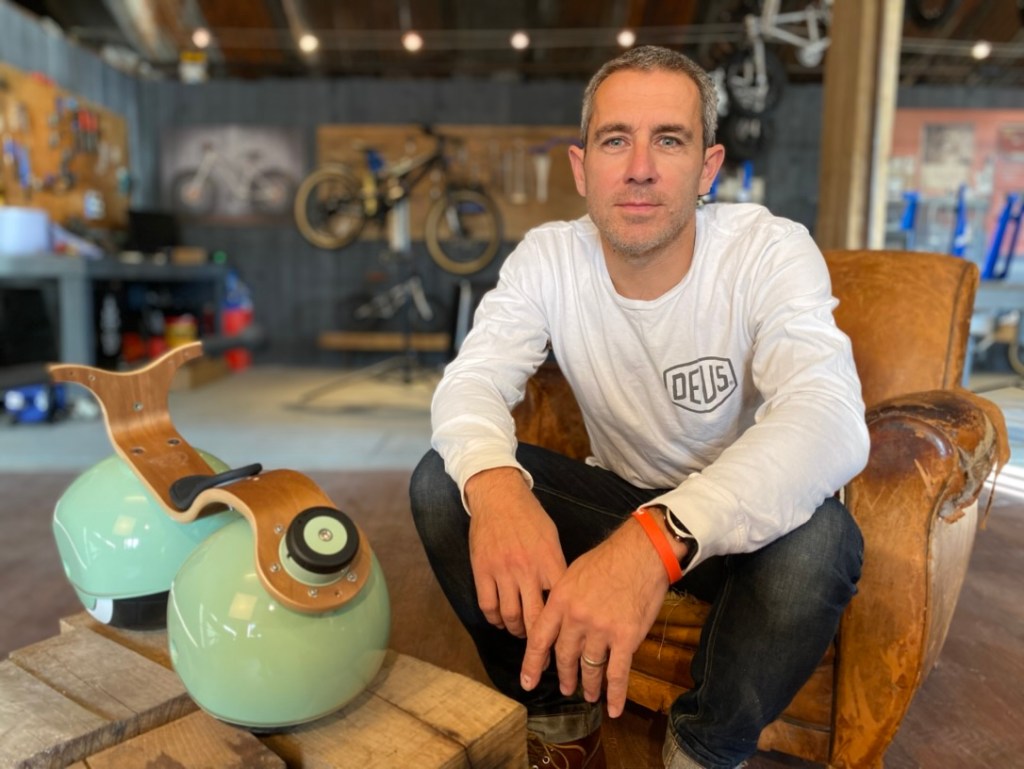
In 2005, Andy Loveland and his wife were parents to a two-year-old son, Freddy, and expecting their second, Luke. It was an exciting time, Loveland recalls, but even two decades back, the U.K.-based father noticed a troubling trend. Kids were more connected to their screens than to the outdoors. And a lot of people just accepted it.
These days, in an increasingly online world and amid the rise of social media, it’s even more common to see children glued to their screens. By age two, 40% of U.S. kids have their own tablet, and more than half of kids age eight and younger have their own mobile device, such as a tablet or cellphone, per research from Common Sense Media.
Loveland and his wife refused to surrender to a screen-based childhood. “It was just not something that we were prepared to accept for Freddy and Luke,” he says. “We were going to make sure they spent as much time outside as possible.”
Around the same time, Freddy’s godfather, who lived in Germany, came across a pedal-less bicycle developed as a therapy tool to support kids’ physical and cognitive development. He gifted one to Freddy, who was too young for a traditional bike — and it was off to the races.
“ He was just flying around, never to be in his chair again,” Loveland says. “It was absolutely life-changing. The freedom, the mobility, the quality of the time we would spend together. It was transformative.”
Fewer kids ride their bikes amid screen-based childhoods
In the U.S. and parts of Europe, children riding bikes used to be a more frequent sight.
An average of 20.5 million U.S. kids ages seven to 17 rode a bike six or more times per year in the 1990s; that figure plunged by almost 50% to 10.9 million in 2023, The Atlantic reported. In Great Britain, children’s bike sales decreased more than 30% between 2019 and 2024, per The Times.
As Loveland watched his young son explore the world on the balance bike, which allows younger children and toddlers to push themselves with their feet while seated, he saw the product as a sort of “death knell” for the traditional first bikes manufactured with heavy steel and pedals.
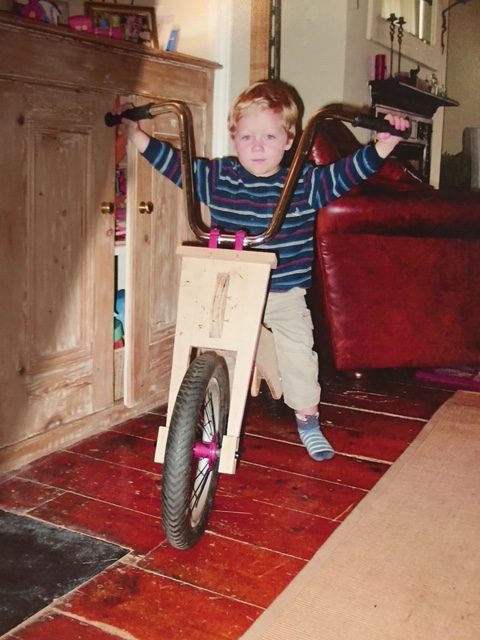
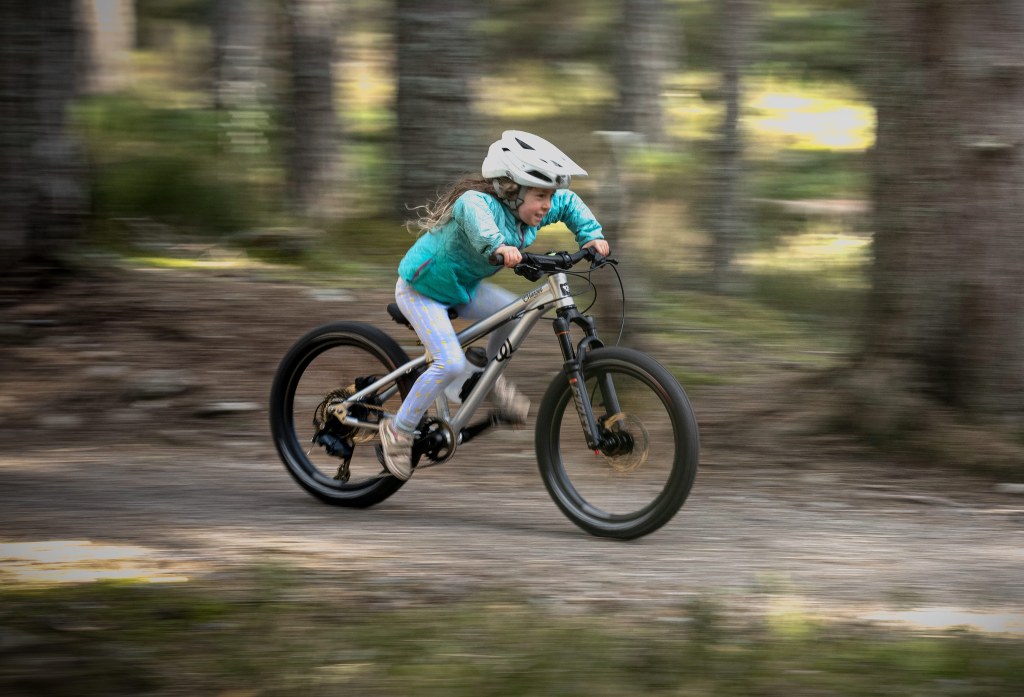
The lightweight, lower-to-the-ground balance bikes help kids start their riding journeys earlier, teaching them how to steer, navigate different terrains safely, and sharpen body awareness and balance.
Loveland believed the balance bike would reshape the entire children’s bike market. So he started thinking about bike design, and how to change people’s perception of what riding was really about.
From running a snowboard side hustle to starting Early Rider
“A bit of a dreamer,” Loveland always had a love for business. In 1994, he worked his day job in telecommunications contracts and ran a snowboard shop as a side hustle. However, by the time Loveland considered starting his bicycle business, he’d been rooted in city life, working in banking software, for years. He was ready for a change.
So, in 2006, Early Rider was born. Loveland persuaded his sister to join him in the venture, which they bootstrapped with their savings.
The business’s name was never meant to be prescriptive, Loveland notes. (Today Early Rider offers products for kids of many different ages). A play on the counterculture film Easy Rider, the idea was to position the business as a counterculture brand “or even a movement.”
Building a business and responding to critical feedback
Like most new businesses, Early Rider had to navigate common growing pains: sourcing, managing supply chains, hiring employees and communicating with customers.
But in those early days, getting potential suppliers to buy into the balance bike proved one of the biggest challenges. Loveland recalls selling a container of balance bikes to a U.K. retail chain — then receiving some harsh feedback. People bristled at the idea of spending 100 quid (about $135 today) on a bike that “doesn’t even have f—ing pedals on it.”
Convincing people of the bike’s utility was a battle, Loveland admits. But the business forged on, positioning the balance bike as not solely a developmental tool, but as a means to a lifestyle change with the potential to give kids active, fulfilling childhoods.
Designing Early Rider’s bikes, expanding the product line
Despite the hurdles, developing Early Rider’s bikes has always been one of Loveland’s favorite parts of running the business. “Our ethos is really driven around the principle of making progression easier, safer, in order to take kids further, earlier,” Loveland says.
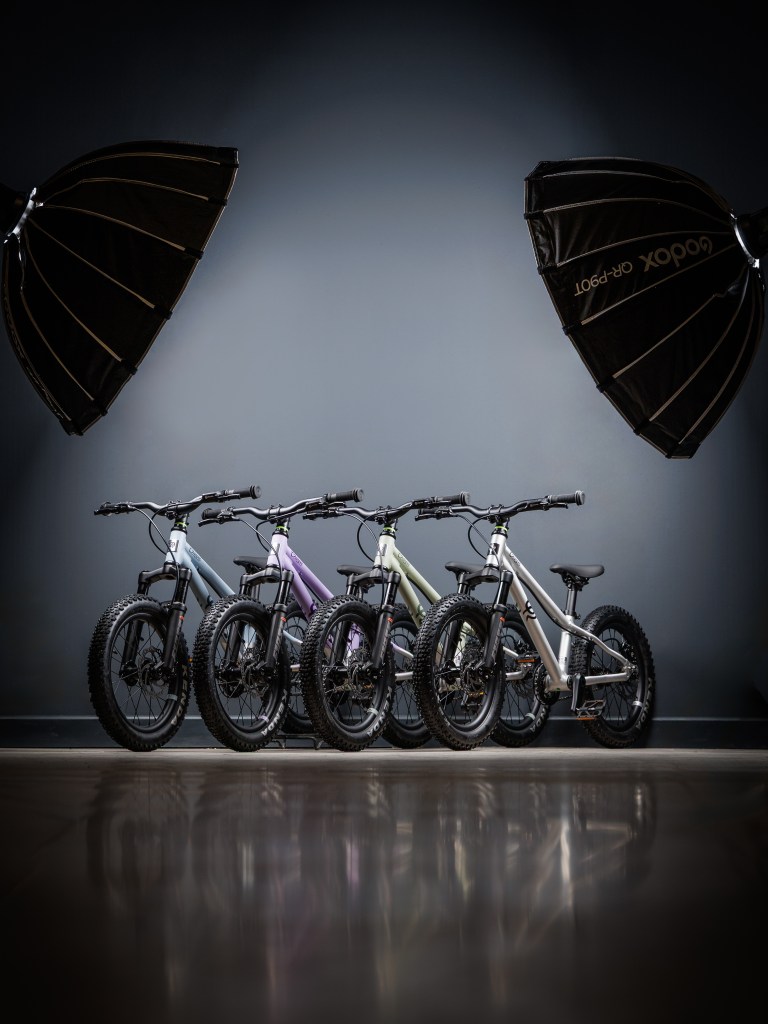
Early Rider currently sells bicycles for children aged six months to 11 years, with models ranging from $199 to $2,199. All product design and testing takes place in the U.K. The majority of production happens in Taiwan and China, the bike industry’s “most influential players.”
Loveland looks forward to expanding the brand’s line to account for even more rider progression. “ The more of these [design] problems that we fix, the more potential we unlock,” he says. “And it sort of becomes never ending. You solve one problem, the kids evolve and show more potential, and then you have to figure out a way to continue to do that.”
Early Rider is on track for $12 million in revenue in 2026
Early Rider remained self-funded until October 2024 when it took a small investment from a 10% minority shareholder. The business hit $10 million in annual revenue in 2025 and is on track to see $12 million in revenue this year.
“ We feel as though we’ve been ahead of the market for a long time,” Loveland says. “And we feel like the consumer is starting to catch up because ultimately, the people who see value in our design are the people who value the bicycle.”
Loveland’s son Freddy leads the business’s Swiss operation
In a full-circle next chapter, Freddy, whose first foray on the balance bike inspired the business, joined the company to lead Early Rider’s Swiss operation last year.
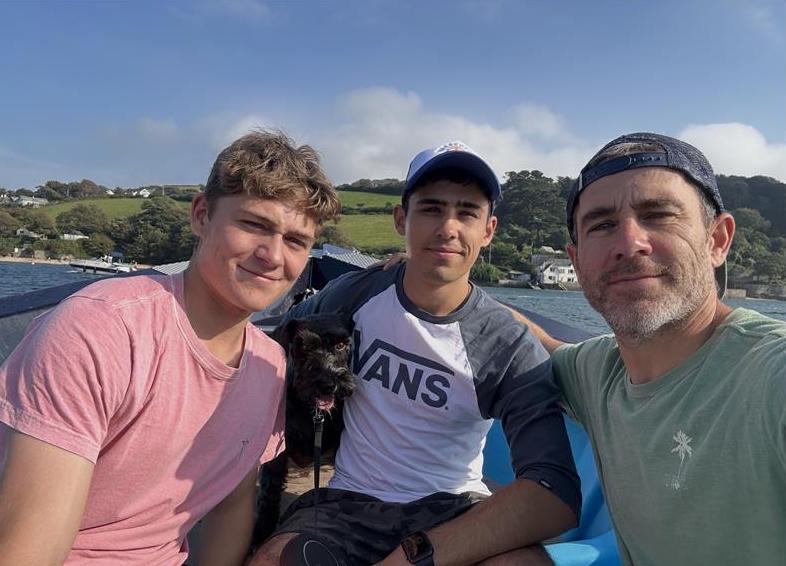
Freddy, who graduated from university 10 months ago, had plenty of firsthand experience in the family business growing up — from scavenging for parts to design custom bikes when he was in his early teens to doing pre-delivery inspections and ecommerce strategy when he was a bit older. He’s excited to help steer Early Rider’s next phase of growth.
“ We transitioned from a distribution model a few years ago in Switzerland to a more direct approach and strategy, which is a lot of what I’m working on, establishing new partnerships with dealers and building that network,” Freddy says.
Additionally, Freddy notes that Early Rider’s strengths currently lie in B2B in Europe and in DTC in the U.S. Thinking bigger picture and long term, he’s excited by the possibility of building out the opposite strategy in both places.
Now, one of Early Rider’s most critical goals is continuing to communicate the value of the bike in today’s increasingly screen-saturated landscape.
“We are really trying to have people to see it beyond a milestone,” Loveland explains, “but a functioning tool that can make us so much more connected to the world around us, and happier.”
Key Takeaways
- Loveland founded his children’s bike business in 2006 with a focus on the balance bike.
- Though some initially rebuked the pedal-less model, Early Rider continued to grow.
- Early Rider saw $10 million in annual revenue last year and is on track for $12 million this year.
In 2005, Andy Loveland and his wife were parents to a two-year-old son, Freddy, and expecting their second, Luke. It was an exciting time, Loveland recalls, but even two decades back, the U.K.-based father noticed a troubling trend. Kids were more connected to their screens than to the outdoors. And a lot of people just accepted it.
These days, in an increasingly online world and amid the rise of social media, it’s even more common to see children glued to their screens. By age two, 40% of U.S. kids have their own tablet, and more than half of kids age eight and younger have their own mobile device, such as a tablet or cellphone, per research from Common Sense Media.
Loveland and his wife refused to surrender to a screen-based childhood. “It was just not something that we were prepared to accept for Freddy and Luke,” he says. “We were going to make sure they spent as much time outside as possible.”