She Watched Doctors Give Her 92-Year-Old Grandmother ‘the Worst of the Worst’ Nutrition. Now She’s Coming for a $6 Billion Market: ‘If Not Me, Then Who?’
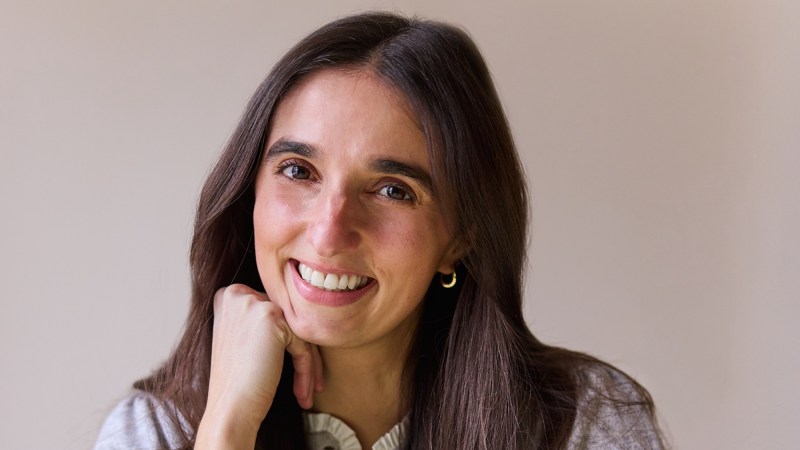
Jess Haghani never set out to be a founder. Now she’s betting her brand, Lucille Health, can take on the older-adult nutrition market.
Opinions expressed by Entrepreneur contributors are their own.
Key Takeaways
- Haghani never planned to be a founder until her grandmother’s post-surgery recovery exposed how bad senior nutrition had become.
- With no money or medical background, she built Lucille Health by assembling experts from Harvard, Erewhon and a Chicago lab.
- Now her 92-year-old grandmother is a tester and customer, and Haghani is chasing a $6 billion market with almost no competition.
When Jess Haghani’s grandmother Lucille came home from heart surgery, the family did everything the doctors told them to. They bought the recommended food and shakes, feeding her a steady diet of ultra-processed products whose formulas hadn’t changed in decades. Haghani was stunned at what the medical system was handing an older woman in recovery.
“It was just the worst of the worst nutrition out there,” she says.
It was at that moment that Haghani, then a Harvard MBA student, decided this might be a category ripe for disruption. Older adults make up 20% of the population and are the fastest-growing demographic of the next decade, yet less than 1% of food and beverage innovation is aimed at them. She is now the founder and CEO of Lucille Health, a better-for-you nutrition brand for older adults, named after the grandmother who inspired it.
The company makes ready-to-drink shakes with higher protein, five grams of fiber and a shorter, cleaner ingredient list than the legacy brands she found so disappointing. Haghani recently came on the One Day with Jon Bier podcast to talk about taking on a $6 billion market most companies overlook, building a brand with no money and no medical background and why Lucille herself is still her toughest tester.
<strong>Frozen in time</strong><br>
Walk down any grocery aisle and you will find category after category remade by better-for-you brands. Then you reach adult nutrition, and the same products from the 1970s and 1980s still sit on the shelf in nearly the same packaging. The space is dominated by two giants, Nestlé’s Boost and Abbott’s Ensure, that hold long-term contracts with hospital systems and sell roughly the same high-margin formulas they always have. The result is a product people are ashamed to be seen with. In the early days, Haghani stood in stores watching shoppers grab these shakes, tuck them under an arm, and hurry to the register.
“It’s stigmatized. It’s embarrassing. There’s a lot of shame associated with these products,” she says.
Related: The Entrepreneur’s Guide to Eating for Energy, Not Just Losing Weight
<strong>‘If not me, then who?’</strong><br><br>
Haghani had no money, no medical background and had never built a company. But she did have a vision and a question she kept asking herself: “If not me, then who?” she says.
Through Harvard, she connected with nutrition researchers at the Harvard Chan School of Public Health to validate the formulas. She tapped contacts from a stint at Erewhon to recruit food scientists, then found an R&D facility in Chicago that specialized in high-protein, ready-to-drink beverages. “I might not have all of the exact skills, but I can assemble a team,” she says.
Related: He Ran a Furniture Business for 20 Years. Now He and His Son Are Taking On Smoothie King and Jamba.
<strong>Grandma knows best</strong><br>
But perhaps her best resource was Lucille herself. At 92, she is the company’s most relentless product tester, and she does not hold back. She calls about the vanilla, calls about the chocolate and lobbies for the tweaks she wants. One day she phoned from her bridge tournament, where she had been showing the other women her Lucille shake. The problem was that as she sipped it, the logo faced her instead of the table, so her friends saw the barcode and the nutrition panel rather than the name.
“Don’t you think that you can change where the pull tab and the straw insert is,” she asked.
Haghani listened, because Lucille is also the customer. She places her own orders on the website. She leaves reviews. She tells her friends about it. The authenticity most brands spend millions trying to manufacture is, for Lucille Health, just family.
Related: Are You Really Listening to Your Customers?
<strong>Beyond shakes</strong><br><br>
As Lucille Health finds its footing and raises funds, Haghani sees it as more than a shake company. To her, the entire category is stuck in the same old oral supplements, fifteen versions of essentially the same drink, too entrenched to become anything else. That leaves the rest of the aisle wide open. Within a few years she expects shoppers to find a full range of Lucille products where the old shakes used to sit, the Once Upon a Farm of older-adult nutrition rather than its Ensure.
She points to Japan, where roughly 30% of new products each year are built for older adults, against a small fraction of that in the United States. The gap, to her, is the whole opportunity. The idea is no longer the hard part.
“The idea has almost become a commodity. It’s all about execution now,” she says.
For all the giants in her way, the thing that keeps Haghani certain is the empty space where her competition should be.
“We’ve seen everything, and we’ve never seen this. There’s still no one who is doing it,” she says.
Key Takeaways
- Haghani never planned to be a founder until her grandmother’s post-surgery recovery exposed how bad senior nutrition had become.
- With no money or medical background, she built Lucille Health by assembling experts from Harvard, Erewhon and a Chicago lab.
- Now her 92-year-old grandmother is a tester and customer, and Haghani is chasing a $6 billion market with almost no competition.
When Jess Haghani’s grandmother Lucille came home from heart surgery, the family did everything the doctors told them to. They bought the recommended food and shakes, feeding her a steady diet of ultra-processed products whose formulas hadn’t changed in decades. Haghani was stunned at what the medical system was handing an older woman in recovery.
“It was just the worst of the worst nutrition out there,” she says.
It was at that moment that Haghani, then a Harvard MBA student, decided this might be a category ripe for disruption. Older adults make up 20% of the population and are the fastest-growing demographic of the next decade, yet less than 1% of food and beverage innovation is aimed at them. She is now the founder and CEO of Lucille Health, a better-for-you nutrition brand for older adults, named after the grandmother who inspired it.