This College Student Launched His Business When He Was 16. Now It’s Making Mid-Five Figures Every Month and Growing: ‘You Can Not Quit’
Youth 4 Youth FC founder Brando Babini breaks down his mission to provide real-world mentorship to aspiring collegiate and professional soccer players.
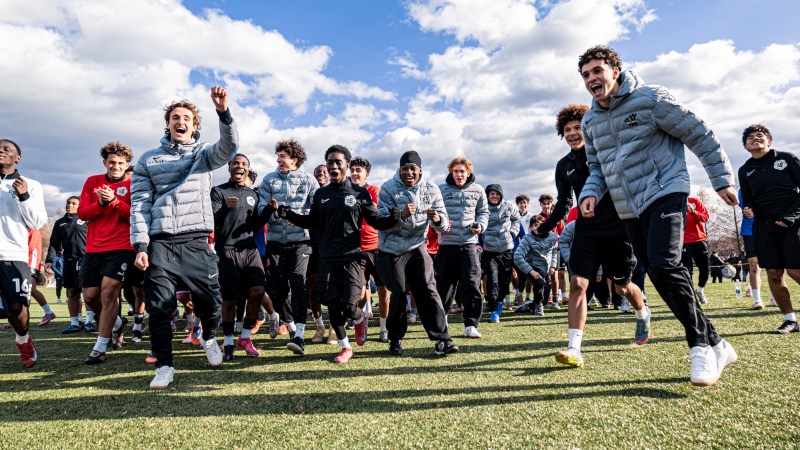
Brando Babini is a 21-year-old student at Brown University and the founder of Youth 4 Youth FC, a player-led soccer development platform run by active college and professional players that provides training, mentorship, and recruiting support to nearly 1,000 athletes. “This isn’t a club,” Babini told Entrepreneur. “Youth 4 Youth was built by players who are currently living the journey. We’re taking the doors we’ve walked through and holding them open for the next generation.” Here’s how Babini went about starting the business, and where he plans to bring it.
What inspired you to create it?
I grew up playing at several academies in New York and always dreamed of going pro. Around 16, I realized that path wasn’t going to happen for me. Watching close friends begin their professional careers made me reflect on what my journey was missing. That led to my “aha moment” — most young players lack access to mentors who are actively living the path, and having those voices in your corner can completely change development.
Please tell us one “holy @#$!” moment about running your business.
Starting the business at 16 with no credentials or coaching license meant constantly pushing against the status quo of youth soccer. Early on, I DM’d 250 parents and only one responded – but that taught me everything about momentum and belief. People don’t take you seriously until they do. When Nike reached out after seeing our content, I thought it was a prank at first. That’s when it clicked: if a brand like Nike took us seriously, anyone could. We’ve converted 30 million views on socials into 4,000 player applications in 2025.
Any moments that made you doubt this was going to work?
In my first session ever at 16, one of my players got hit in the temple by a baseball. He was okay, but I remember thinking, “I’m never doing this again.” Three weeks later, his mom reached out asking if he could train again and we picked up right where we left off. It was the earliest lesson of entrepreneurship: you cannot quit when chaos strikes.
Please tell us about a time when you felt particularly proud of what you’ve put together.
Two things really stand out to me. One was an athlete who applied to our program over 10 times without being selected, but showed up to our free 1v1 event, nearly won, joined the program, and received his first college offer a month later. Another athlete reached out on Christmas Eve asking for an opportunity. He didn’t come from a big club, didn’t have the traditional pipeline, and couldn’t afford pay-to-play showcases. He went on to earn two offers after attending our showcase. It was his first time playing in front of college coaches. Moments like these reinforce that access – not ability – is often the real barrier. Some players just need a chance, and we’re able to provide that.
Can you tell me about a time you made a decision that everyone around you disagreed with?
Launching our first college showcase was a decision almost everyone disagreed with. I was a college freshman. People thought it was unrealistic that a group of teenagers could run a credible event. We started small with four coaches. Just over a year later, that number grew to 52 on one sideline. If you commit to an idea and execute, you can figure things out as you go. Skepticism is proof of concept.
What’s something small, like a daily routine or mindset shift, that helps you be a good leader?
I’ve realized that everything in business comes down to communication. So I write every day – whether it’s reflections, planning, or ideas. Every morning, before checking my phone, I spend 20–30 minutes writing. It gives me clarity and direction. I also try to stay in a constant growth mindset, pushing myself on and off the field because improvement in one area carries into everything else.
Please tell us about your current revenue and your outlook.
We’re currently generating mid-five-figure monthly revenue, growing over 350% year-over-year with roughly 50% margins, while also delivering more than $10,000 in scholarships each month. More importantly, we’re proving that you can build a scalable, sustainable business while prioritizing access and impact. We’re just getting started, and we’re willing to trade margin for meaningful outcomes if it means changing a player’s future.
What does the word “entrepreneur” mean to you?
To me, entrepreneurship is self-led creation. It’s not just founders, it’s artists, filmmakers, and anyone who takes an idea and brings it to life. Looking back, even school projects felt like opportunities to build something from scratch. That mindset still drives everything I do today.
This article is part of our ongoing Young Entrepreneur® series highlighting the stories, challenges and triumphs of being a young business owner.
Brando Babini is a 21-year-old student at Brown University and the founder of Youth 4 Youth FC, a player-led soccer development platform run by active college and professional players that provides training, mentorship, and recruiting support to nearly 1,000 athletes. “This isn’t a club,” Babini told Entrepreneur. “Youth 4 Youth was built by players who are currently living the journey. We’re taking the doors we’ve walked through and holding them open for the next generation.” Here’s how Babini went about starting the business, and where he plans to bring it.
What inspired you to create it?
I grew up playing at several academies in New York and always dreamed of going pro. Around 16, I realized that path wasn’t going to happen for me. Watching close friends begin their professional careers made me reflect on what my journey was missing. That led to my “aha moment” — most young players lack access to mentors who are actively living the path, and having those voices in your corner can completely change development.
Please tell us one “holy @#$!” moment about running your business.
Starting the business at 16 with no credentials or coaching license meant constantly pushing against the status quo of youth soccer. Early on, I DM’d 250 parents and only one responded – but that taught me everything about momentum and belief. People don’t take you seriously until they do. When Nike reached out after seeing our content, I thought it was a prank at first. That’s when it clicked: if a brand like Nike took us seriously, anyone could. We’ve converted 30 million views on socials into 4,000 player applications in 2025.