A Cornell Instructor Is Using a Creative Old School Method to Combat AI Cheating in Class
Once a semester, a Cornell instructor has her students experience what it is like to write the old-fashioned way.
Key Takeaways
- Grit Matthias Phelps, who teaches German at Cornell, brings typewriters into the classroom once a semester.
- The purpose of going old school is to have her students experience what it is like to write without screens, online dictionaries or even spellcheck.
- Students noticed that working on a typewriter meant that they had to think more intentionally about their writing.
Imagine a classroom full of students completing an assignment on manual typewriters, pounding away on machines that make a dinging sound as they complete each line.
The scene is straight out of a Cornell University classroom. Once a semester, Grit Matthias Phelps, who teaches German at Cornell, has her students experience what it is like to write the old-fashioned way — no screens, no online dictionaries, no spellcheck, not even a delete key, AP recently reported.
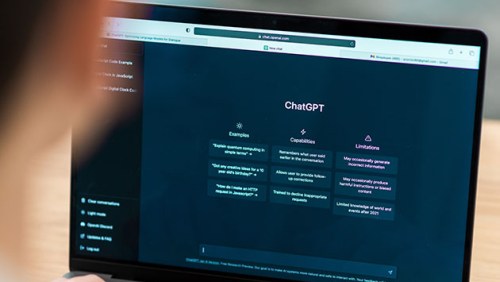
Phelps started the exercise in spring 2023 after noticing that many students were turning to generative AI and online translation tools to produce flawless, machine-polished assignments.
“What’s the point of me reading it if it’s already correct anyway and you didn’t write it yourself?” Phelps told AP. “Could you produce it without your computer?”
She wanted her students to write assignments without the assistance of ChatGPT or Google Translate, and get a feel for what writing, thinking and learning were like before everything went digital. So she located a few dozen old-school manual typewriters from thrift stores and online marketplaces and created a new, “analog” assignment: write in German using typewriters in class instead of using digital tools at home.
Students responded positively
Phelps’ students arrived at class earlier this month to find typewriters on their desks. They were confused at first.
“I had no idea what was happening. I’d seen typewriters in movies, but they don’t tell you how a typewriter works,” Catherine Mong, 19, a freshman in Phelps’ Intro to German class, told AP. “I didn’t know there was a whole science to using a typewriter.”
Phelps showed the class how to use a typewriter, demonstrating how to insert the paper manually and press the keys with enough force. She brought her two children, ages 7 and 9, to serve as “tech support” and ensure no one in class was using their phones.
Students noticed that working on a typewriter meant that they didn’t have notifications distracting them from their work. They had to think more intentionally about their writing because they didn’t have a delete key. They also couldn’t consult Google or ChatGPT and instead had to ask their peers for help, which Phelps encouraged.
“While writing the essay, I had to talk a lot more, socialize a lot more,” computer science major Ratchaphon Lertdamrongwong, a sophomore, told AP. His class had to write a critique of a German movie they had watched.
“I was forced to actually think about the problem on my own instead of delegating to AI or Google search,” Lertdamrongwong told the outlet.
Phelps isn’t the only instructor creatively responding to AI in the classroom. Other teachers are turning to old-school methods, like pen-and-paper exams, to ensure that students don’t use AI to cheat. The Wall Street Journal reported last year that more professors are using blue books, or inexpensive, stapled exam booklets with a blue cover, to AI-proof the classroom. Students have to write their essays by hand in the blue books under a professor’s supervision.
Regardless of how they do it, teachers are responding to AI use creeping into the classroom. What method will appear next?
Key Takeaways
- Grit Matthias Phelps, who teaches German at Cornell, brings typewriters into the classroom once a semester.
- The purpose of going old school is to have her students experience what it is like to write without screens, online dictionaries or even spellcheck.
- Students noticed that working on a typewriter meant that they had to think more intentionally about their writing.
Imagine a classroom full of students completing an assignment on manual typewriters, pounding away on machines that make a dinging sound as they complete each line.
The scene is straight out of a Cornell University classroom. Once a semester, Grit Matthias Phelps, who teaches German at Cornell, has her students experience what it is like to write the old-fashioned way — no screens, no online dictionaries, no spellcheck, not even a delete key, AP recently reported.
Phelps started the exercise in spring 2023 after noticing that many students were turning to generative AI and online translation tools to produce flawless, machine-polished assignments.