Flying Cars Could Hit the Skies as Soon as This Summer: ‘It’s Not Science Fiction’
Eight states in the U.S. have been selected for a three-year pilot program that will allow aircraft models to transport passengers and cargo.
Key Takeaways
- The U.S. Department of Transportation announced this week that flying cars will start flying in U.S. airspace as early as June.
- Eight regions in the U.S. have been selected for a three-year pilot program that will allow new aircraft models to transport passengers and cargo.
- The companies developing these technologies claim that their aircraft are quieter, more affordable and emit far less pollution than traditional helicopters and planes.
Flying cars will soon take to the skies.
The U.S. Department of Transportation announced this week, per Wired, that flying cars will start flying in U.S. airspace as early as June. These cars can land with little space like helicopters, but act as airplanes, shuttling groups of people from one location to another.
Eight regions in the United States, including New York, New Jersey, Texas, Florida, and Albuquerque, New Mexico, have been selected for a three-year pilot program that will allow new aircraft models to transport passengers and cargo. These flying cars will be functional even before receiving full, traditional certifications from the Federal Aviation Administration (FAA).
The new federal pilot program will let a mix of ultralight aircraft and electric vertical takeoff and landing vehicles (eVTOLs) operate in those eight U.S. regions. The aim is to gather real-world data on safety, noise, operations and public reactions while giving manufacturers a tightly controlled path into the national airspace.
The companies developing these technologies claim that their aircraft are quieter, more affordable and emit far less pollution than traditional helicopters and planes. Some even envision fully autonomous flights.
Many of the vehicles in the initiative need only minimal space to operate, allowing them to depart and land outside major airports, closer to homes and workplaces. Their creators imagine a future where commuters glide between nearby cities in minutes, bypassing traffic and transforming how the economy moves.
The end goal: make science fiction a reality
During an earnings call with investors earlier this month, Adam Goldstein, the CEO and founder of Archer Aviation, one of the participating companies, described the federal pilot initiative as “our Waymo moment,” likening it to a sci‑fi vision becoming reality. He said the company’s goal is for hundreds of thousands of people in major U.S. cities to eventually view these new aircraft as a routine part of commuting, much like how self-driving Waymo cars became a familiar sight on city streets.
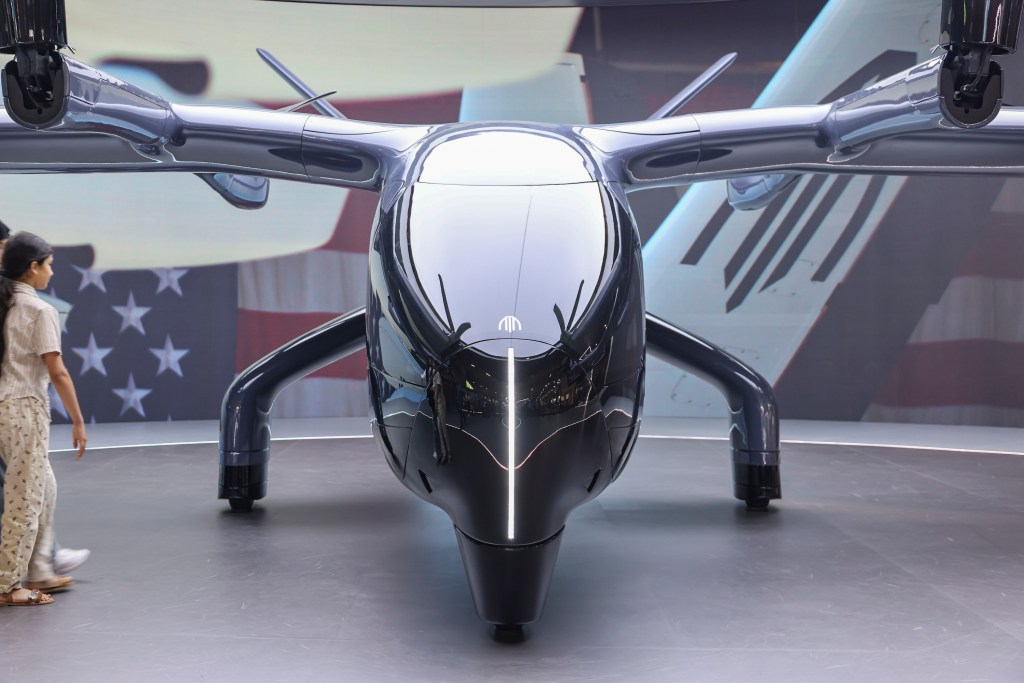
Archer designed its electric air taxi to carry four passengers on trips lasting between 60 minutes and 90 minutes. The company will participate in federal pilot programs in New York, Florida and Texas. Major investors, including automaker Stellantis and United Airlines, back Archer.
Other flying car manufacturers include Beta Technologies, Joby Aviation and Electra.
“What we love about the pilot is the chance to demonstrate that this is not fantasy,” Electra CEO Marc Allen told Wired. “It’s not science fiction. It’s in the real world.”
How much will rides cost?
Archer has said it aims to price its air taxi rides at roughly $3 to $4 per passenger mile, comparable to a premium rideshare service like Uber Black. For example, a 15‑mile urban trip could cost around $40, while an 8‑ to 10‑mile airport hop might land in the mid‑$20s to low‑$30s per person range if the cabin is full. Pricing is still preliminary and based on company projections rather than real-world fares, since commercial passenger service has not yet launched.
What are the safety standards?
Because eVTOLs are a new type of aircraft, companies have spent years seeking full federal approval. They must meet new safety rules and pass multiple certification stages before carrying paying passengers. So far, none of the firms in the pilot program has completed the process, per Wired.
FAA spokesperson Donnell Evans told Wired that the pilot program is meant to guide future safety standards and policies, not skip certification steps. All aircraft in the program must already be going through the FAA’s formal certification process, Evans added.
Key Takeaways
- The U.S. Department of Transportation announced this week that flying cars will start flying in U.S. airspace as early as June.
- Eight regions in the U.S. have been selected for a three-year pilot program that will allow new aircraft models to transport passengers and cargo.
- The companies developing these technologies claim that their aircraft are quieter, more affordable and emit far less pollution than traditional helicopters and planes.
Flying cars will soon take to the skies.
The U.S. Department of Transportation announced this week, per Wired, that flying cars will start flying in U.S. airspace as early as June. These cars can land with little space like helicopters, but act as airplanes, shuttling groups of people from one location to another.
Eight regions in the United States, including New York, New Jersey, Texas, Florida, and Albuquerque, New Mexico, have been selected for a three-year pilot program that will allow new aircraft models to transport passengers and cargo. These flying cars will be functional even before receiving full, traditional certifications from the Federal Aviation Administration (FAA).