I’m an AI Engineer — These Are the Mistakes I See Every Company Make When Adopting AI
Many generative AI projects will be abandoned after proof of concept — and not because the technology doesn’t work, but because the engineering is falling short. Here’s how to fix it.
Opinions expressed by Entrepreneur contributors are their own.
Key Takeaways
- LLMs like ChatGPT will generate answers that sound authoritative but are completely wrong, if you don’t monitor it.
- You can make AI work for your business by using different prompts and implementing retrieval-augmented generation.
- Don’t forget to add guardrails and validation layers to maintain security and avoid touching sensitive data.
This is the gap most companies don’t see coming. They spend months evaluating which large language model (LLM) to use (GPT-4o, Claude, Gemini) and almost no time thinking about the infrastructure that will keep it running reliably. That’s the wrong order of operations. The model is usually the least of your problems.
According to Garner, at least 30% of generative AI projects will be abandoned after proof of concept by the end of 2025, due to poor data quality, inadequate risk controls, escalating costs or unclear business value. The technology works. The engineering around it is where companies fall short.
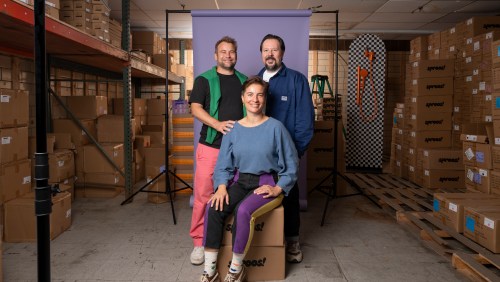
As an engineer working across MLOps and LLMOps at ChatMakr, with the help of my business partner, who delivered AI projects for banks, I will walk you through what we see every time a company ships an AI system into production.
The first crack: Hallucination
Left alone, an LLM will generate answers that sound authoritative and are completely wrong. It has no access to your data, your policies, your product catalog or last quarter’s numbers. It generates what’s plausible, not what’s true.
The standard fix is retrieval-augmented generation (RAG). As IBM describes it, RAG is an architecture for optimizing AI model performance by connecting it with external knowledge bases. Getting it right takes real engineering: choosing what to index, how to chunk documents, how to score relevance and how to handle cases where nothing retrieved is actually useful.
And it can still fail when source documents are poorly structured, when user queries are too vague or when the retrieved context is technically relevant but doesn’t actually answer the question. Most production AI systems end up with some version of RAG. The teams that skip it are the ones whose systems erode user trust within weeks.
The second crack: Prompts that no one owns
Early on, prompting feels informal. You write something, it works, you move on. That stops working at scale.
A small change to a prompt (a reworded instruction, a different example, an added sentence) can completely change how the model behaves. A customer support assistant starts responding in the wrong language. A product recommendation tool begins surfacing items that were discontinued. If no one is tracking versions, comparing outputs and testing changes systematically, you’re flying blind. You ship a prompt update, something breaks downstream and you have no way to know why or what changed.
Mature teams treat prompts the way they treat code: versioned, tested and reviewed before deployment. It feels like overhead until the day something breaks in production and you have no trail to follow. Anthropic’s official documentation on prompt engineering is the reference we use most.
The third crack: You can’t debug what you can’t see
When a response is wrong, the question isn’t just, “What did the model say?” It’s, “Was the retrieved context relevant? Was the prompt clear? Did the model follow the instructions? Where did the logic break down?”
Without tracing the full request (input, retrieval step, prompt assembly, output), you’re guessing. And in production, guessing is just a slower way to lose customers. Observability isn’t optional. It’s the difference between fixing a problem in an hour and spending three days narrowing it down. Tools like LangSmith or Langfuse exist specifically for this: They let you trace every step of a request and pinpoint exactly where things went wrong.
The fourth crack: Security becomes your problem
The moment an LLM interacts with users or touches sensitive data, it becomes an attack surface. OpenAI defines prompt injection as “a type of social engineering attack specific to conversational AI.” It is documented, repeatable and increasingly common. Data leakage, where the model surfaces information it shouldn’t, is equally real.
Companies don’t add guardrails and validation layers because it’s best practice. They add them because the first time something goes wrong in public, the cost isn’t just technical. It’s reputational.
The bottom line
Your LLM is probably good enough. The model you’re already using can handle most of what you’re trying to do. The question isn’t whether to upgrade it. The question is whether you’ve built something around it that can survive contact with real users.
LLMOps isn’t a product you buy. It’s the discipline of building reliable systems around language models: retrieval pipelines, prompt management, observability, cost controls and security layers. It’s the difference between a prototype and a product.
The companies that get this right share one thing in common: They stopped treating the model as the product and started treating the system as the product. Most companies haven’t figured this out yet. The ones that do first won’t win because they found a better model. They’ll win because they built a better system.
Key Takeaways
- LLMs like ChatGPT will generate answers that sound authoritative but are completely wrong, if you don’t monitor it.
- You can make AI work for your business by using different prompts and implementing retrieval-augmented generation.
- Don’t forget to add guardrails and validation layers to maintain security and avoid touching sensitive data.
This is the gap most companies don’t see coming. They spend months evaluating which large language model (LLM) to use (GPT-4o, Claude, Gemini) and almost no time thinking about the infrastructure that will keep it running reliably. That’s the wrong order of operations. The model is usually the least of your problems.
According to Garner, at least 30% of generative AI projects will be abandoned after proof of concept by the end of 2025, due to poor data quality, inadequate risk controls, escalating costs or unclear business value. The technology works. The engineering around it is where companies fall short.
As an engineer working across MLOps and LLMOps at ChatMakr, with the help of my business partner, who delivered AI projects for banks, I will walk you through what we see every time a company ships an AI system into production.