This 31-Year-Old Ex-Microsoft Worker Used $3,000 to Start a Side Hustle — Now the Product’s in Erewhon and Eyeing $1 Million in Revenue
Aadit Patel’s desire to stay connected to his Indian-American identity inspired him to start a business.
Key Takeaways
- Patel launched his Indian-American fusion brand Confusion Snacks as a side hustle in May 2022.
- By 2023, he was focused on the business full-time — here’s how he’s kept it growing since.
This Side Hustle Spotlight Q&A features New York City-based entrepreneur Aadit Patel, 31, founder of Indian-American fusion snack brand Confusion Snacks.
After college, Patel worked on Microsoft’s surface hardware team, where he saw firsthand how physical products come to life at scale; in 2016, he moved to Seattle, where he launched his chai-blend passion project Chaitheory. By 2019, he’d joined Scale AI and was running pilot programs acquiring enterprise customers to gain the experience needed to make a new snack brand side hustle successful.
Responses have been edited for length and clarity.
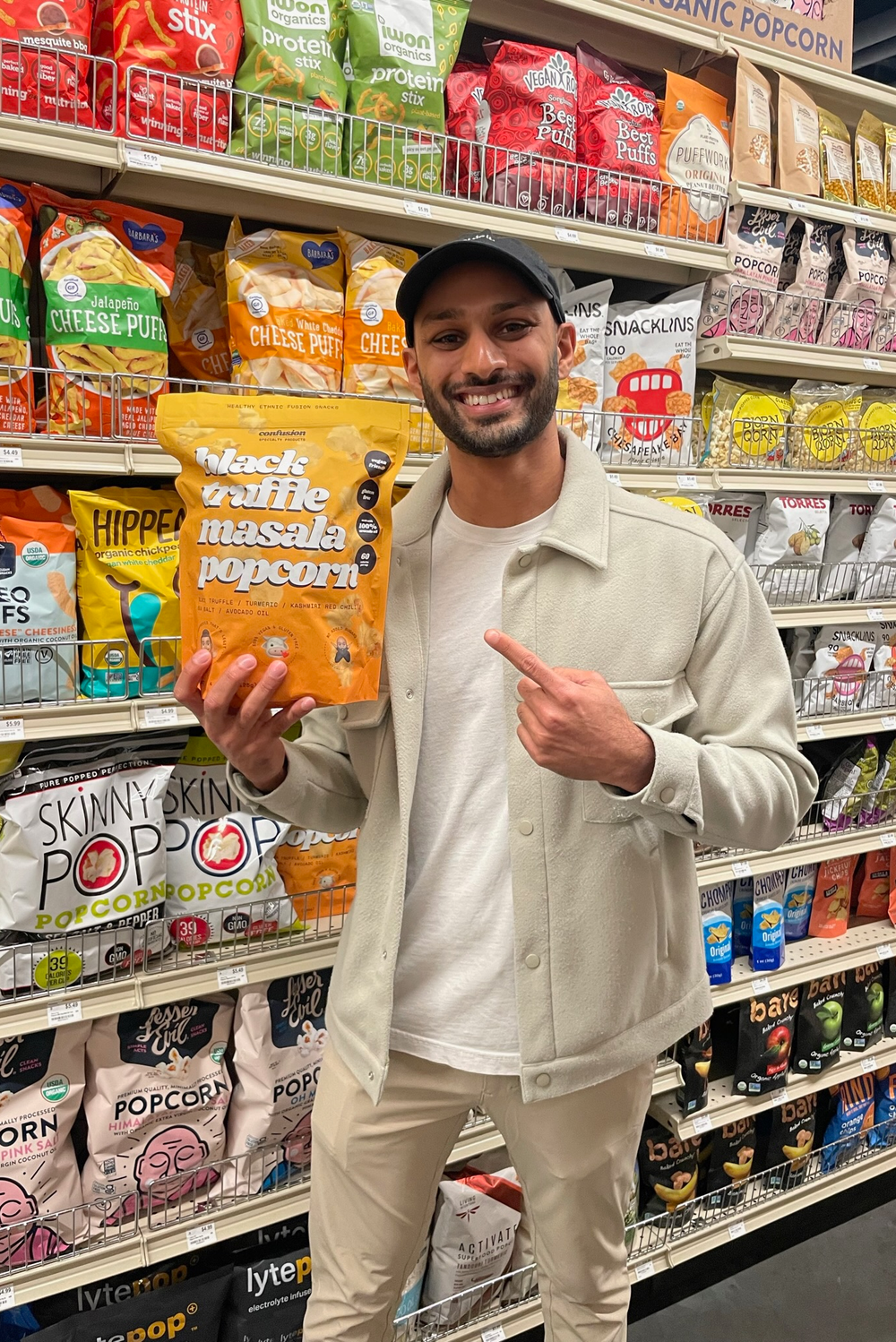
Image Credit: Courtesy of Confusion Snacks. Aadit Patel.
Want to read more stories like this? Subscribe to Money Makers, our free newsletter packed with creative side hustle ideas and successful strategies. Sign up here.
When did you start your side hustle, and where did you find the inspiration for it?
In May 2022, I launched Confusion Snacks to bring global flavors to everyday snacking using clean, guilt-free ingredients.
It didn’t begin with the intention of starting a business. It began as a way for me to stay connected to my Indian-American identity.
Growing up, I lived at the intersection of two cultures, constantly learning how to carry forward my immigrant roots while adapting to American life. Many times, those identities felt like opposites. One side of me was devouring my mom’s homemade meals and dancing to Bollywood hits; the other side was crushing a bag of Hot Cheetos while singing Justin Bieber in the shower.
I loved both sides, but never fully felt “at home.” Eventually, I embraced the truth: I’m both Indian and American. And I wanted to create something that celebrated that duality instead of forcing a choice between them.
Related: Sisters’ Savory Side Hustle Averages $7,000 a Month: ‘Reward We Didn’t Feel in a Corporate Job’
For me, the most natural way to build that “home” was through food — specifically snacks. I come from a family of avid snackers, and I’ve always felt that food is one of the best ways to bridge cultures. I wanted a snack that felt like me: not 100% Indian, not 100% American, but somewhere in that beautifully confusing middle.
At the same time, I noticed a cultural shift happening in the U.S. Snackers were becoming more curious and health-conscious, looking for global flavors, cleaner ingredients and options beyond the typical salty-sweet-cheesy aisle. Restaurants had brought ethnic flavors mainstream, followed by frozen meals and sauces — but the snacking aisle hadn’t caught up.
So, like any naive entrepreneur, I decided to shake things up.
I left Scale AI in 2023 and focused on building the business full-time.
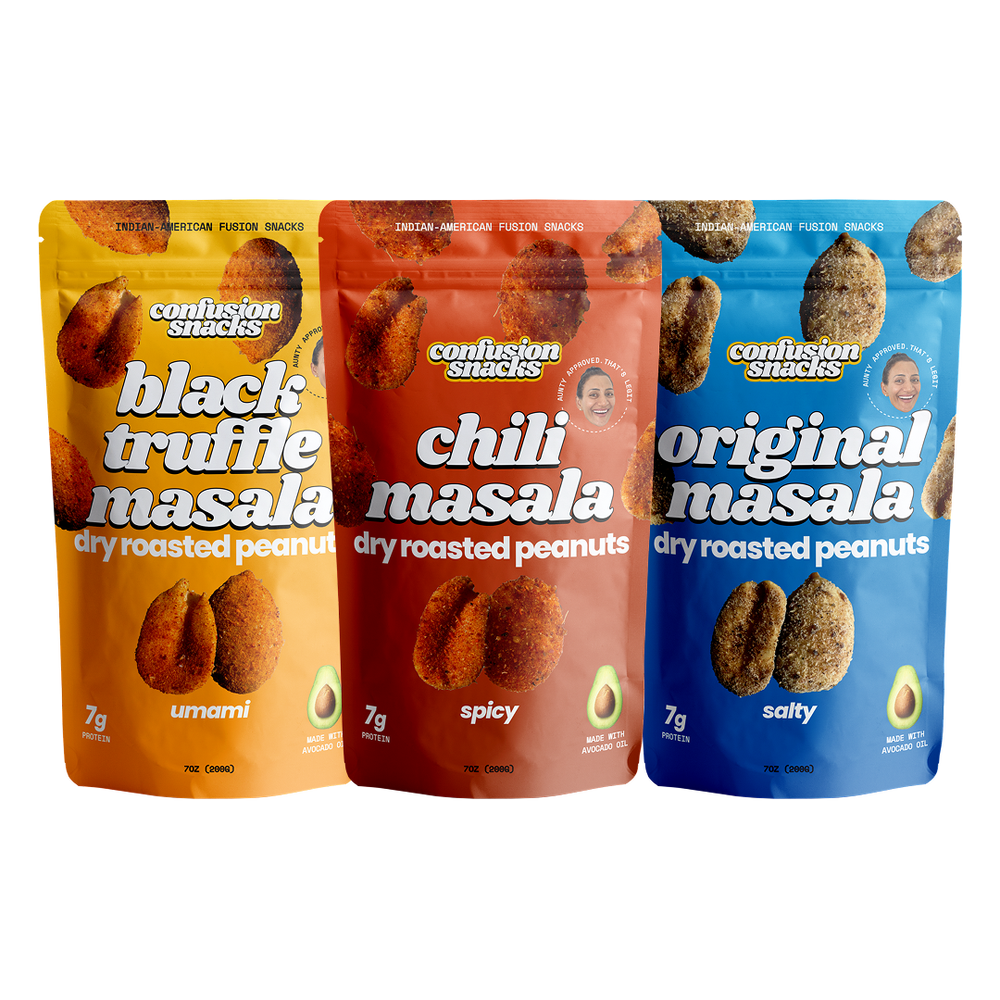
“Body language is the most unfiltered feedback you’ll ever get.”
What were some of the first steps you took to get your side hustle off the ground? How much money/investment did it take to launch?
The very first step was an online soft launch. We shared our variety pack link with family and friends, then watched something very exciting happen — people started sharing it with their circles. Suddenly, strangers were buying our snacks, which gave us our first real spark of confidence.
From there, we called about a hundred of those early adopters to capture their honest feedback. We wanted to understand what was working, what wasn’t and what flavors actually made people light up.
We took the next few months to refine the recipe, tighten up the branding and make sure the product matched the story we wanted to tell. Once we felt like things were headed in the right direction, we sold the snacks at our local LA farmers market. There’s nothing quite like watching someone try your product in front of you — body language is the most unfiltered feedback you’ll ever get.
Related: This Couple’s Spicy Side Hustle Is About to Hit $15,000 a Month: ‘Small Things Feel Huge’
And when that farmers market momentum kept building, we knew we had something worth taking further. So we took our first big leap into retail. Just four months later, in October 2022, we launched into Erewhon — our first major retail partner and the moment where this side hustle started to feel like a real company in the making.
To get everything off the ground, I invested about $3,000 of my savings — most of it spent on custom packaging, ingredients and cooking equipment. Luckily, years of tinkering with side projects meant I already knew how to build websites, design packaging and handle social content. And since my mom and I were making every single batch ourselves, we saved a ton by keeping so much in-house.
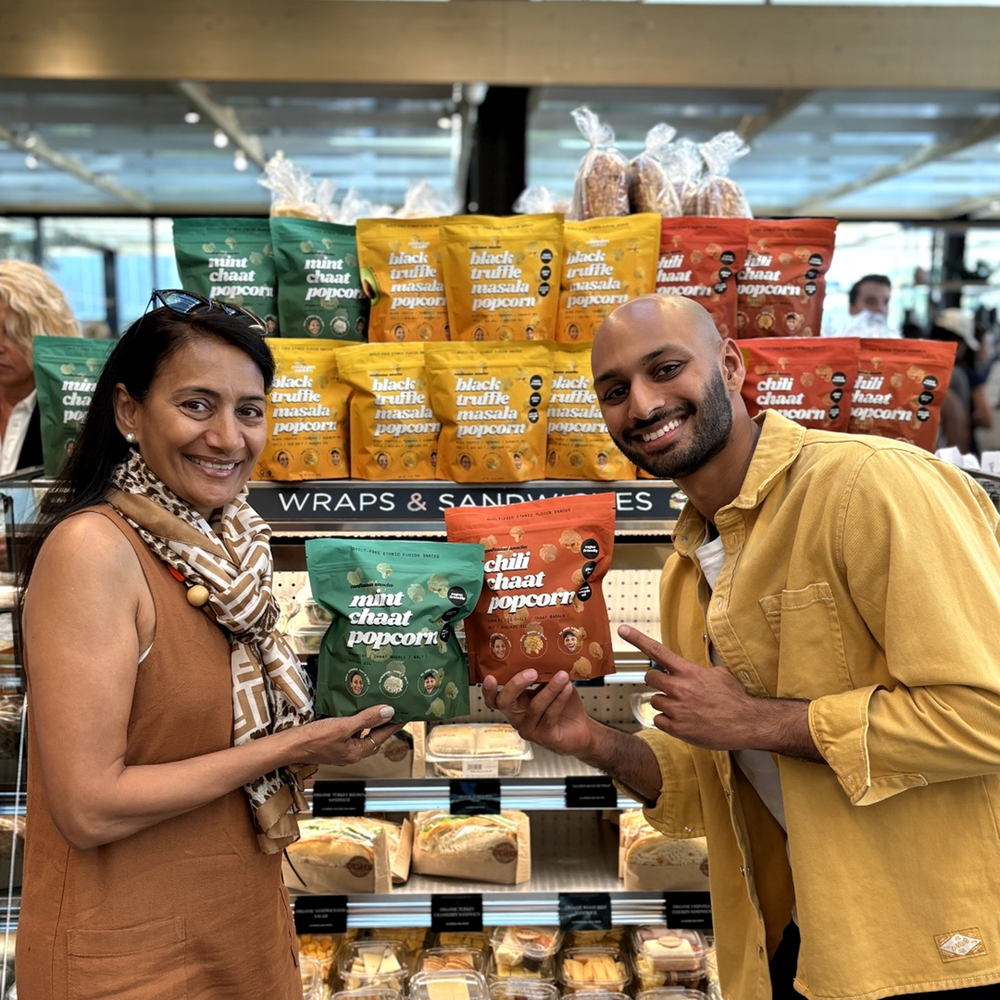
Image Credit: Courtesy of Confusion Snacks. The founder and his mom.
Are there any free or paid resources that have been especially helpful for you in starting and running this business?
Joining the Startup CPG community is an absolute must if you’re launching a consumer packaged goods (CPG) brand. It’s a free, highly engaged community where you can connect with other founders, service providers and subject-matter experts who openly share what they’ve learned.
In the beginning, we truly didn’t know what we didn’t know. Being able to drop a question into their Slack and get real, practical answers from people who’ve been through it was priceless. Over time, we’ve also built incredible founder friendships and mentorships through that community — relationships that are genuinely invaluable.
Startup CPG also has chapters across many major cities and constantly hosts events, meetups and programs. It’s an amazing way to meet others in the space and get your product in front of real consumers early on.
Related: This 27-Year-Old’s ‘Chewy, Bouncy’ Side Hustle Turned Full-Time Business Made $100,000 in Month 1
If you could go back in your business journey and change one process or approach, what would it be, and how do you wish you’d done it differently?
In the beginning, everything feels electric. Innovation naturally draws curiosity — customers get excited, retailers want to try something fresh and you start seeing little sparks everywhere. I call this the novelty phase. It’s validating, energizing and honestly…kind of intoxicating. Those early moments of attention make you feel like you’ve cracked product-market fit or product-channel fit before you really have.
The mistake we made was assuming every spark was a signal. We doubled down on channels where we saw early excitement instead of slowing down to understand which ones actually had the potential to become sustainable pillars of the business. And what I mean by that is: getting crystal clear on who your core customer really is, designing your product in a way that naturally invites repeat purchase (everything from flavors to naming to pack size to price) and identifying the channels that can deliver your product to that customer profitably and consistently. Without those pieces, early excitement doesn’t convert into long-term traction.
Instead of building that clarity, we spread ourselves thin chasing fragmented pockets of demand — trying to support multiple retail accounts, dabbling in different online channels and reacting to every new opportunity because it felt like progress. That’s how you end up making decisions that feel “right in the moment” but aren’t rooted in long-term strategy. For us, that meant prematurely changing packaging to fit one specific channel and investing time and energy into channels that weren’t set up to deliver the economics or repeat purchases we needed.
Looking back, I wouldn’t ignore those early signals — they’re valuable. But I’d treat them as data points, not destinations. I’d be more disciplined about identifying one winning channel, proving strong sales and repeat behavior there and then expanding outward from a place of strength.
Related: This 29-Year-Old Quit Her Job to Pursue a $13k-a-Month Side Hustle
When it comes to this specific business, what is something you’ve found particularly challenging or surprising?
One of the biggest challenges has been building a brand in a category that doesn’t really have a playbook.
Our value proposition is bringing global flavors into everyday snacking. We’ve seen those flavors shine in restaurants, frozen meals and sauces that help you cook at home, but not yet in the snacking aisle. That’s still a pretty new, emerging category. The closest examples we could find were snacks imported from Asia and sold in specialty grocers or online marketplaces. But our goal wasn’t just to serve that audience; we wanted to bring those flavors to everyone — the Indian kid craving something familiar, the American snacker looking for something new and everyone in between.
So we didn’t have a “look at what they did and copy that” roadmap. Instead, we turned to what every emerging founder turns to in 2025: LinkedIn. CPG founders were sharing huge wins, new retailer announcements, crazy sell-through stats — and we subconsciously started absorbing those stories as our playbook. If they were winning those dream accounts, then surely landing those same accounts meant we were on the right track too…right?
Not always.
What we eventually learned is that chasing the accounts everyone else is celebrating isn’t the same as building a successful business. Those big retailer wins look shiny (and honestly, they feel validating), but they’re not always aligned with your economics, your operations, your customer or your long-term vision. What works for someone else may not be the path that works for you.
The real challenge is staying anchored in your version of success, not the industry’s highlight reel. It means keeping your head down, understanding your consumer better than anyone else, figuring out where they actually shop and building your business around that — even if it’s not the buzzy path everyone is cheering for online.
It takes discipline to put your horse blinders on, especially when the internet keeps telling you to run in every direction at once. But in this industry, clarity beats FOMO every single time.
Related: His College Side Hustle Made $12,000 on Amazon in 2 Weeks — Then It Surpassed $250 Million

Image Credit: Courtesy of Confusion Snacks
“When something falls apart, it might clear the path for something sturdier.”
Can you recall a specific instance when something went very wrong — how did you fix it?
I woke up one morning to an email from our manufacturing partner saying that they no longer could produce for us due to an internal strategy shift where they focused on working with larger clients.
I told them that we respected their business decision and hoped to reconnect down the road, but without warning or a transition plan, our challenge was finding an alternative quickly.
What made it sting even more was how much we had poured into that partnership. We had spent a full year preparing them for our upcoming Whole Foods launch — weekly calls, on-site visits, transferring tribal knowledge, smoothing out quality issues, building trust. I genuinely believed we were growing together.
But their decisiveness became a strange sort of gift. Once I got past the initial shock, it forced me to flip into problem-solving mode. Instead of scrambling from a place of fear, I framed it as an opportunity: take everything I learned over the past 12 months and find a manufacturing partner who actually had the capacity and desire to build with us long-term.
We had to problem-solve asap with our Whole Foods launch on the horizon, and we could not afford to miss that launch.
This is where our values saved us. The one thing we always had — even when we were tiny, scrappy and making popcorn in a commercial kitchen — was the ability to build genuine relationships. We always led with: “We’re here for the long haul. We’re going to work our butts off. And we’re going to be the kind of partner who shows up — good days or bad.”
I picked up the phone and called the owner of the first manufacturer we ever worked with. They were the ones who helped us graduate from making popcorn by hand to an industrial process. That relationship hadn’t been flawless — we had plenty of scheduling and quality battles — but underneath it all was mutual respect. Even after we moved on, we stayed in touch, checked in and shared updates.
I told him what happened and asked if he knew anyone who might be a fit. By this point, he knew our product, our story and me well enough to point us in the right direction. He introduced us to a father-and-son team in the Midwest — a 40-year-old family-run manufacturer that specialized in working with small and medium brands. From the first conversation, it felt right. They understood the urgency without exploiting it. They communicated transparently. They cared about building something that made sense for both sides. No nickel-and-diming, no weird pressure, no drama.
Within three months, they were our new manufacturer and we were on track for our Whole Foods launch.
Looking back, I learned two big lessons:
- When something falls apart, it might clear the path for something sturdier.
- Lead with humanity. Always. Real relationships will carry you in ways luck never will.
How long did it take you to see consistent monthly revenue? What does growth and revenue look like now?
It took about six months for us to start seeing consistent monthly revenue — this was when we started selling at Erewhon, our first major retail chain. The monthly revenue was just enough to cover the working capital needed to fund production runs, raw materials and in-store demos.
Our goal is to reach $1 million in revenue by the end of 2026.
Related: Friends’ Side Hustle Saw ‘Explosive Growth’ and Hit 8 Figures Fast: ‘Have to Pinch Ourselves’
What is your best piece of specific, actionable business advice?
Especially for founders bootstrapping their business, first focus on building channels that you can control and make profitable, rather than chasing every opportunity that comes your way.
In the early days, there’s a constant tug-of-war: the accounts with the highest potential for your product to win aren’t always ready to work with you yet, and the ones willing to say yes might not be the right fit long-term. Sometimes the right channels take months or even years to win, and some promising opportunities can fizzle out before the finish line. Those long, fickle sales cycles are tough, especially when you need to keep the business afloat.
Instead, identify channels where your core customers live that allow you to fully control the experience — sales, distribution and retention, and generate enough cash flow to fund and grow the channel itself.
When you focus here, you can test the market faster, design SKUs specifically for that channel and drive repeat purchases through promotions, bundles and campaigns. These self-sustaining channels become a foundation you can scale from when larger, high-potential accounts are ready.
Building those profitable, controllable channels will keep your business growing and give you the stability to go after the bigger wins when the timing is right.
Key Takeaways
- Patel launched his Indian-American fusion brand Confusion Snacks as a side hustle in May 2022.
- By 2023, he was focused on the business full-time — here’s how he’s kept it growing since.
This Side Hustle Spotlight Q&A features New York City-based entrepreneur Aadit Patel, 31, founder of Indian-American fusion snack brand Confusion Snacks.
After college, Patel worked on Microsoft’s surface hardware team, where he saw firsthand how physical products come to life at scale; in 2016, he moved to Seattle, where he launched his chai-blend passion project Chaitheory. By 2019, he’d joined Scale AI and was running pilot programs acquiring enterprise customers to gain the experience needed to make a new snack brand side hustle successful.
Responses have been edited for length and clarity.