At Age 50, She Started a Business From Her Kitchen Table. Now Her Everyday Household Product Makes $31 Million a Year.
Paula Blankenship inherited her mother’s eye for DIY furniture.
Key Takeaways
- Blankenship drew on her design background to showcase DIY projects and sell paint.
- The business quickly outgrew her kitchen table — then she and her husband went all-in.
- Now, Heirloom Traditions is a $100 million company with a new facility opening in July.
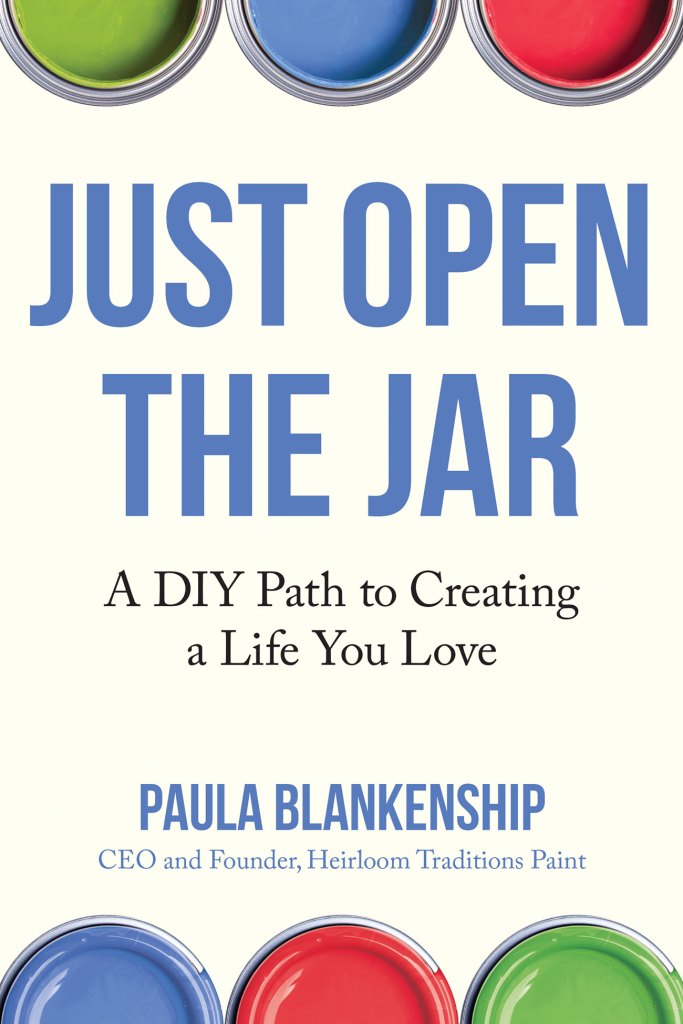
Paula Blankenship, the 63-year-old founder of Heirloom Traditions Paint and author of the forthcoming memoir Just Open the Jar: A DIY Path to Creating a Life You Love, comes from a family of entrepreneurs.
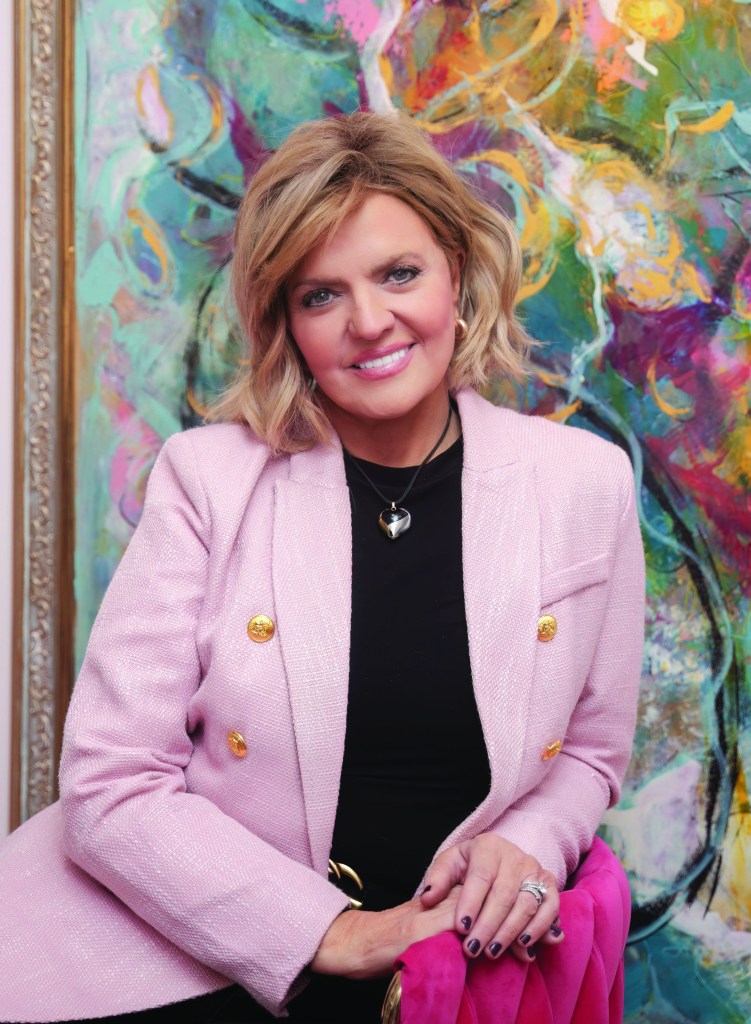
She grew up in Oneida, Tennessee, watching her parents run a retail business. Blankenship was interested in doing the same. She didn’t graduate from high school; at 16, her mother helped her open her first shop selling clothes. After that, she and her sister opened a retail store selling floor covering, paint and other items for home decoration.
“ I never want to look down on that because it was where I really learned to hone my selling skills, design skills and all that,” Blankenship tells Entrepreneur. After a chance meeting with a young billionaire who appreciated her eye for interior design, she applied her expertise to properties in New York and Connecticut.
But when her parents passed away, Blankenship, a single mother then, cut down on her travel to be with her teenage son. He earned a place at a private school in Louisville, Kentucky, and when they made the move — one her son wasn’t all that thrilled about — Blankenship began to brainstorm ways to fill some of their evenings.
Starting a paint business with help from Facebook
With her background in furniture and interior design, starting a paint business seemed like a strong fit. “I thought, You know, maybe that is something I could do,” Blankenship recalls. “I’m going to paint some of this ornate, heavy furniture that I’ve dragged up here to this home.”
Blankenship’s mother had loved to go to auctions, purchase furniture and revamp it. “ I hated painted furniture,” Blankenship says. “I would say, ‘Mom, take the new stuff home. Why do you paint this junk?’ And she said, ‘Because I enjoy it.’ Well, here I am, how many years later, being her.”
Blankenship posted a picture of a dining table she’d painted on Facebook, not understanding the complexities or reach of social media at the time.
Then, the comments flooded in from people across the country. She’d thought everyone knew how to paint furniture, but they all wanted to learn how she’d done it. It was 2013, and the beginning of Heirloom Traditions Paint.
Blankenship continued to share photos of her furniture projects on Facebook, and people continued to ask questions about them. The interest motivated her to take the leap. Blankenship started a paint business, figuring she would tap into the community on Facebook and use the platform “like QVC.”
Returning to an older supplier and a fortuitous phone call
The floor covering store she’d run with her sister had sold paint, so Blankenship reached out to her old supplier in Louisville. Unfortunately, it seemed like a dead end: The business had been sold to another company and no longer existed in Louisville. But Blankenship didn’t give up.
She called that company, and says the grace of the woman on the other end of the line changed her life. She told Blankenship the company no longer made paint, so she was about to wrap up the call when the woman told her a small faction of the company still existed in Louisville and suggested Blankenship get in touch with them.
The woman gave Blankenship the number for Lanning Chemical and said she should tell them she needed toll made paint. So Blankenship did. The man who answered, Aaron Lanning, asked her what kind of paint she needed. She asked him if he’d ever heard of chalk paint. He hadn’t — but he was willing to make it.
A business meeting helps bring Heirloom Traditions to life
Aaron invited Blankenship to come to the shop and meet the team. “I remember this so well,” Blankenship says. “I had a white BMW at the time, and I put on a beautiful suit, thinking this is a business, I’m going to this stainless steel factory paint place that’s going to look like a milk factory, clean. It was the total opposite of that.”
Aaron’s father, the chemist Nick Lanning, came out of the back and sniffed the paint sample she’d brought. He’d never heard of chalk paint either, but after his quick assessment, he determined what Blankenship needed and said they’d be happy to manufacture it.
One week later, Aaron called to tell her the paint was ready to be tinted — all 100 gallons of it. Blankenship had already put 50 bright, saturated colors online; now, she’d have to make those a reality. “So now I’m thinking, I’ve got to go buy this paint and tint it in these circus colors that I’d made up on Facebook,” she recalls.
An early order for $1,200 sets the stage for growth
An early order for $1,200 worth of paint from a friend helped motivate Blankenship to see the process through. Then, she listed the product on eBay. Her initial goal was to sell $100 worth of paint a day. Just about a month in, she was hitting $200 a day.
As the orders rolled in, so did the reviews. At first, Blankenship was too scared to read them. She knew she was selling a good product, but she wasn’t sure how it might compare to other paints on the market. Fortunately, once she started reading those reviews, the consensus was clear. People were responding well; the business kept growing.
Soon, the operation became too big to run from Blankenship’s kitchen table. Her now-husband encouraged her to find a larger space for the business. “‘You’re going to blow this house up,’” she remembers him saying. “‘It smells like a meth lab in here.’ Because I was making wax to go over the paint. I was making that on the stove, and it did have an aroma.”
Transitioning the business out of the kitchen to a flex space
Blankeship found an office and warehouse space and hired her first employee to help her label and ship the paint. At that point, with the help of social media, the business continued to gain significant traction. Then, when Blankenship’s husband lost his job in insurance, she suggested he join her and go all-in on the business.
They weren’t yet married, but he said, “ I’ve got $100,000 in severance package, and I’ve got three months of pay. That’s all I’ve got.” Blankenship had a piece of land she could sell for $80,000, along with a house, to help fund the venture.
“We basically pushed our chips in the middle and said, ‘One more round,’” Blankenship says.
Old school marketing lands the business in 300 retailers
“ In the beginning, because I’m an old school marketer, the only channel I knew was to go to the mom and pops and try to get it into a retail store,” Blankenship says. “That’s all I knew. So that’s what I did.”
It wasn’t long before Blankenship landed her product in 50 retailers. Eventually, that number ballooned to 300. Unfortunately, the more Blankenship experienced distributing in retailers, the more it became clear that the terms were often unfavorable for her growing business.
Many retailers wanted dedicated territories, precluding competitors from selling the same product. Blankenship might agree to a 30-mile radius, but without an ongoing commitment to stock the product, those partnerships could stagnate and prevent her from forging more. So Blankenship turned back to Facebook, creating a retail group on the platform.
The idea to create content and sell via affiliate links
Blankenship thought she could create content featuring the product and encourage retailers to share it and sell it with affiliate links.
“So if you’re a retailer in Colorado, you might sell something in New York from your post,” Blankenship explains. “You’ll make money on that. But they hated that idea. Because they’re old folk. They were like, ‘No, you can’t have a website competing with us.’ So then I see I’m building a camp against me. I’m not building a camp for me.”
What’s more, Blankenship knew the business’s future lay in online sales. In addition to the terms that kept her from expanding in some locations, of the hundreds of retailers that did stock her product, “half of them were deadwood” — not even opening their doors regularly. And it had started to derail growth.
In 2016, Heirloom Traditions Paint had hit $1.3 million in annual sales. By the following year, the business had dipped $50,000 to $60,000 below that. With revenue trending down, Blankenship had to find more committed business partners. That’s when she resolved to try her luck with hardware chains like Ace Hardware, Do It Best and True Value.
A “ladies’ night” event leads to a lightbulb moment
Blankenship landed a display in a Do It Best store in Louisville and had the opportunity to put on a “ladies’ night,” during which she showed her product and taught people how to use it. But Blankenship quickly realized that the employees in the paint department would not be advocating for her product with customers.
“ They were never going to talk about my product because they already sold Benjamin Moore,” Blankenship explains. “Why would they talk about this stuff sitting over here on a little shelf on its own?”
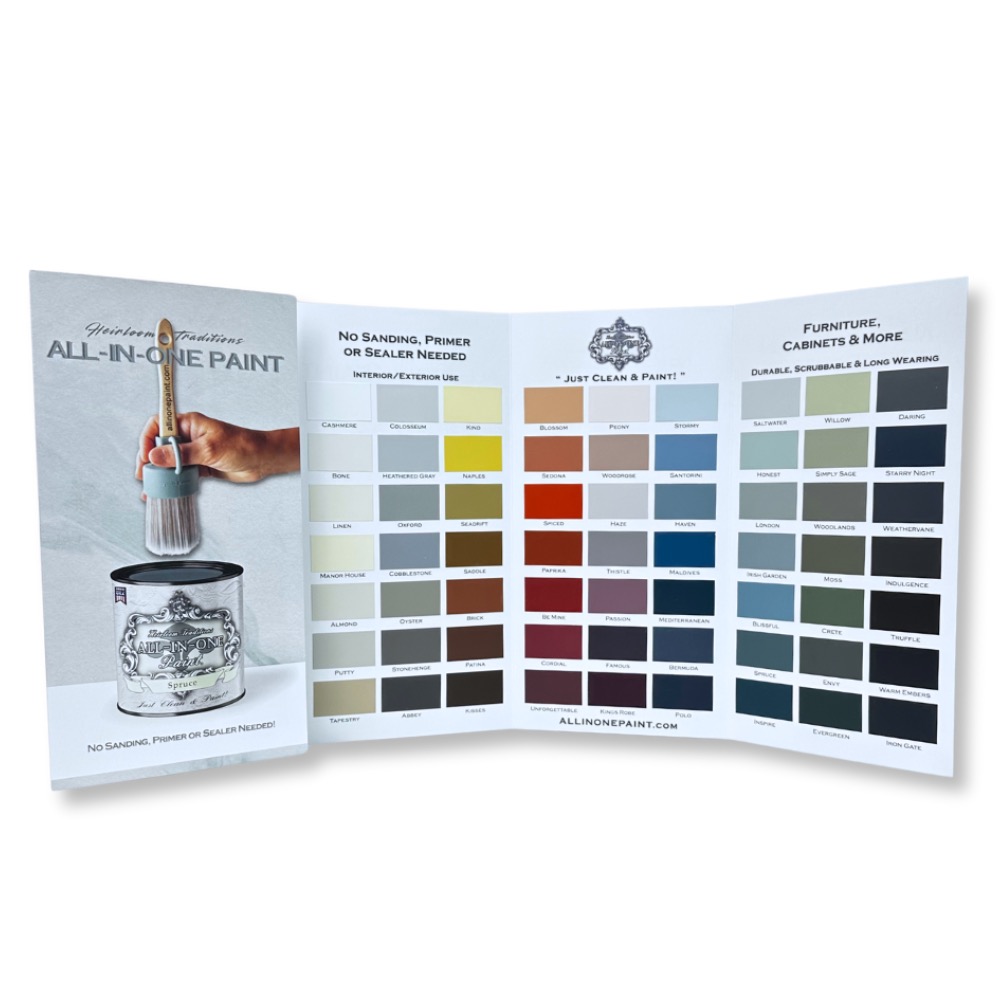
That’s when Blankenship realized the opportunity to develop a product that streamlined the painting process: an “all-in-one” product with everything in a single can. She took the URL allinonepaint.com and got to work, pivoting from wholesale to direct-to-consumer. She found a chemist to create the new product.
“ It painted smooth fabrics,” Blankenship says. “It painted leather. It bonded to literally everything. It was a magnificent paint that was like no other. And it’s not just marketing. It actually exceeded people’s expectations, which in today’s world, that’s pretty strong.”
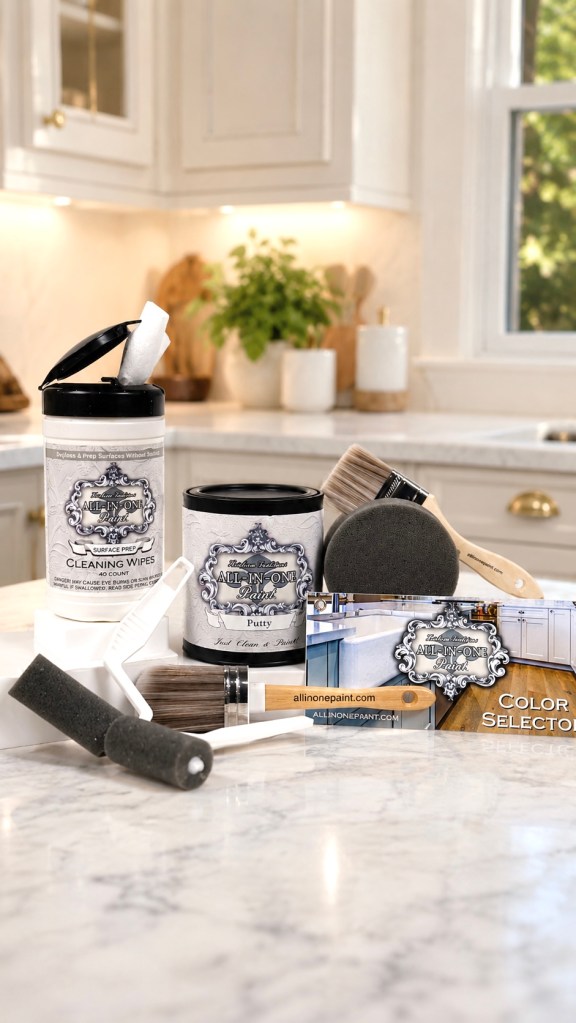
Running her first digital ad made with an iPhone camera
Blankenship put together her first digital ad in 2018. “I didn’t even know I could make a video on my iPhone,” she says. She started running Facebook ads and rolled out a surefire customer acquisition strategy: free samples.
For just a $6.99 shipping fee, people could receive an eight-ounce sample to paint whatever they wanted — and appreciate the product in action.
The result? A movement within the DIY community that empowered women, Blankenship says, to decorate their homes without worrying about budgetary constraints. “Even women who are 70 and 80 are painting their kitchen cabinets, and that is huge,” she explains. “You’re painting something that’s physically nailed down, and your largest asset you own.”
Heirloom Traditions is a $100M business and still growing
Amid so much growth, Heirloom Traditions had gone on to partner with another local manufacturing company to support the operation. When the owner of that company passed away, Blankenship and her husband wondered what would happen next.
Ultimately, his widow agreed to sell. Now, Heirloom Traditions has doubled the size of its revenue and headcount. The company is valued at more than $100 million, brought in $31 million in annual revenue last year and employs 60 people.
Additionally, in 2021, the company became an Employee Stock Ownership Plan (ESOP), granting half the business to employees, Blankenship notes.
Heirloom Traditions’ physical footprint is also expanding. Blankenship opted to sell the plants 30 miles away from her home and build a larger campus in Taylorsville, Kentucky, which should be complete in July.
A full-circle moment makes the business journey worth it
There’s a lot to admire in Heirloom Traditions’ decade-plus of transformation and growth, but Blankenship says one “very full-circle moment” stands out — and has made the entire journey worth it.
She sold one of her Louisville plants to Lanning Chemical, the business that helped her start it all.
When the senior Lanning arrived to see the building, the outgoing team knew all about him, considering him longstanding “royalty” in the Louisville coatings industry. They had some old photos featuring Lanning and other major industry players.
“ I still have this mental picture of him carrying out, this little frail man, all these little black and white images of him, going down the stairs, holding those images, walking out with those,” Blankenship says. “And I thought, Wow, life comes down to that — that little picture.”
Blankenship encourages anyone inclined to start a business to follow their heart and see how far they can go.
Key Takeaways
- Blankenship drew on her design background to showcase DIY projects and sell paint.
- The business quickly outgrew her kitchen table — then she and her husband went all-in.
- Now, Heirloom Traditions is a $100 million company with a new facility opening in July.
Paula Blankenship, the 63-year-old founder of Heirloom Traditions Paint and author of the forthcoming memoir Just Open the Jar: A DIY Path to Creating a Life You Love, comes from a family of entrepreneurs.
She grew up in Oneida, Tennessee, watching her parents run a retail business. Blankenship was interested in doing the same. She didn’t graduate from high school; at 16, her mother helped her open her first shop selling clothes. After that, she and her sister opened a retail store selling floor covering, paint and other items for home decoration.
“ I never want to look down on that because it was where I really learned to hone my selling skills, design skills and all that,” Blankenship tells Entrepreneur. After a chance meeting with a young billionaire who appreciated her eye for interior design, she applied her expertise to properties in New York and Connecticut.