I Turned My Childhood Hobby Into a $2K-a-Month Business. Then I Quit My Corporate Job and Hit $100K+ a Month.
Danielle Meyer, founder of Spicy Dan, always had an “entrepreneurial mindset.”
Key Takeaways
- Meyer launched her jewelry brand Spicy Dan, know for its bold beading and carabiner claps, in 2023.
- In the beginning, she sold mostly to family and friends; that changed with a viral TikTok moment.
- Meyer continues to scale Spicy Dan with a small team and strategic collaborations.
This as-told-to essay is based on a conversation with Danielle Meyer, the New York-based founder of jewelry brand Spicy Dan. Meyer officially launched her business in 2023; now, the brand is on track for $2.5 million this year. Here’s how she did it. Responses have been edited for length and clarity.
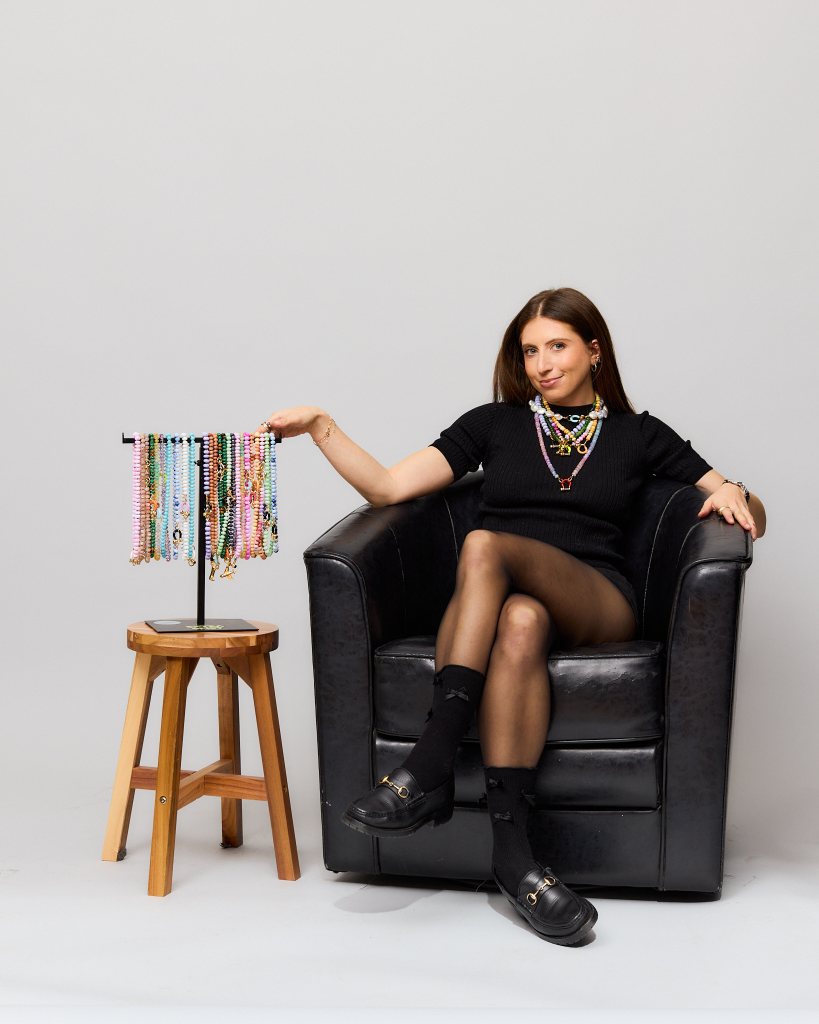
I’ve always loved making jewelry, since I was little. My mom would take me to bead stores. In my twenties, I graduated college and immediately went into tech sales. That wasn’t for me because I had a more entrepreneurial mindset, so I went into working in venture capital in non-investing relationship-management roles. I did that for about three years, then pivoted to a role at American Express, where I managed their startup strategy program.
I immediately knew that that job was not for me. I continued to make jewelry as a hobby. Then, during the pandemic, there was a brief period of time where I was unemployed. I had gotten laid off and was making a ton of jewelry. I sourced beads from Etsy and other stores online, selling the jewelry and making-your-own jewelry kits to friends. Still, I never really envisioned it as a full-time business.
During that same period of time, I was studying for the GMATs and considering getting an MBA to advance a career in venture capital. But while working at American Express, I had built up a decent amount of jewelry clients. People were reaching out, asking me to make gifts for themselves, family and friends. I began sourcing a lot of chunkier, vintage hardware, dead-stock chains and different pearls that I would make into charms — anything that I could find. I also launched my website.
Relentlessly selling at farmers markets and pop-ups
Shortly after that, my dad ended up passing away fairly surprisingly. At that point, I was like, I can’t do my job. My life is over. I went camera off on my American Express meetings and just made jewelry all day long. I would sign up for farmers markets and do pop-up, literally anywhere that would have me. I loved it and was relentless for about a year and half — that’s when the pieces started to sell.
Then, in 2024, an influencer, Hannah Chody, wore a necklace of mine in a video talking about Sweetgreen. I’d responded to an Instagram story of hers asking where to get fun jewelry for the spring and summer, and offered to send her some. When she posted her video, people in the comments kept asking where the necklace was from. I went from selling maybe two necklaces a month to friends and family to having 40 orders in 24 hours. I seized the chance to capitalize on those 24 hours of virality.
Capitalizing on a viral TikTok moment, sustaining growth
When we had that initial viral video on TikTok, I went on Facebook Marketplace to find women who could help me bead. These women come to my apartment and make jewelry at my kitchen table from nine to five while I was working on my corporate job on my laptop. In the end, that was not a sustainable way to run the business. My fiance and I were both working from home in a New York City apartment, with people beading at our kitchen table all day long. So I tried to find a more scalable solution. I wanted to keep everything local and handmade.
That’s when I came across this website, jewelryassembly.com, run by a woman named Melinda. She was an hour and 15 minutes away. I got on a call with her that day. She asked me to send her a few designs and materials and she would make some samples for me and send them back within the week. She did — and they were honestly done better than I was making them myself.
So, I continued growing the brand.
Quitting corporate to work on the business full-time
By late 2024, my manager at Amex, who’s amazing, basically told me I needed to do my job or leave. In the nicest way, she said she thought I was ready and going all-in on my business would be the best thing. So I left that job and reached back out to Hannah Chody. I asked her how to work with influencers and about her experiences working with smaller brands. That initial conversation ultimately led to our collaborative piece in early December of that year.
Spicy Dan has been completely self-funded. Because it’s seen slow growth over time, it’s been really nice to watch it sustain itself. We went from making $2,000 a month on a good month, just selling to friends and family, to $9,000 the first month that Hannah posted a necklace. The next month we made $22,000. The month after that, we made $55,000. The collaboration with Hannah Chody made more than $100,000 during holiday sales. That chunk of money really helped me scale. Now, Spicy Dan is on track to surpass $2.5 million in 2026.
The challenges of running a self-funded business
Running a business, especially a self-funded one, requires figuring out the right time to relinquish control and hire people to help. When I was still a team of one and had that $100,000 sales month, I was still fulfilling orders, and getting residual orders, in early January. Then, I came down with the flu. I couldn’t move. At that point, I had help with beading, but I was still packing and fulfilling every order. Answering every email. Taking every meeting. So, when I couldn’t pack a box and received angry customer service emails about order delays, I realized I could no longer do everything on my own.
I found a 3PL to help with fulfillment and packing. That said, as our business and team has grown, we’ve maintained our focus on craftsmanship and customization. And, ultimately, I even made the decision to bring fulfillment back in-house. Given how personal and customizable our jewelry is, we didn’t want to outsource that special touch. Knowing when to scale up, and back, has been critical.
Spicy Dan has three full-time, in-house employees, including myself. We also still have Melinda’s team, about six women in their fifties and seventies who live in upstate New York and Westchester County, beading and making all of our products.
Spicy Dan’s collaborations, including recent Cozyland launch
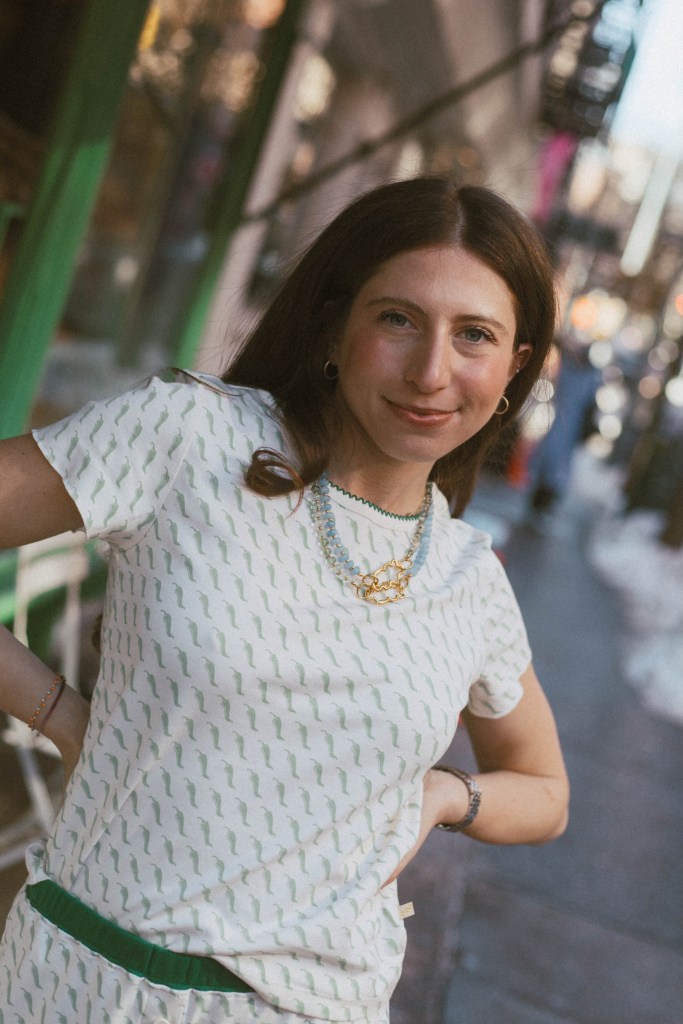
It’s also been so much fun to partner with brands, founders and designers. We did one with the clothing brand Parke last May. And we just launched a collaboration with the sleepwear and clothing brand Cozyland. We collaborated on a pajama set and two necklaces with their team. We have a few collaborations in the works for this summer as well.
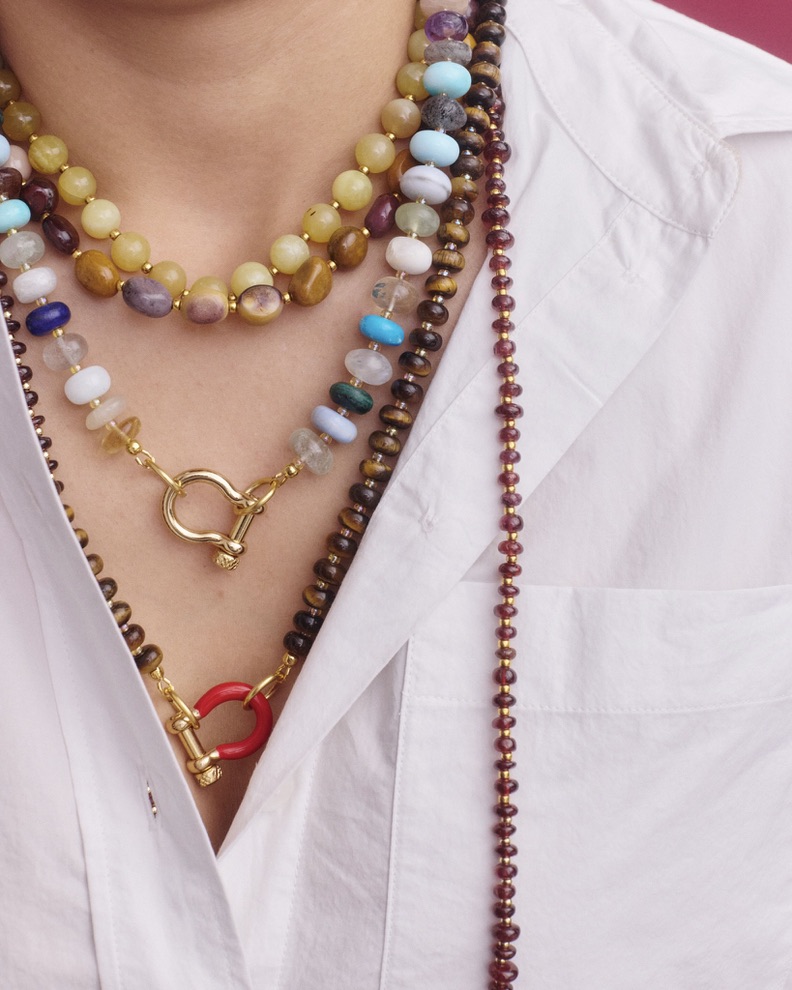
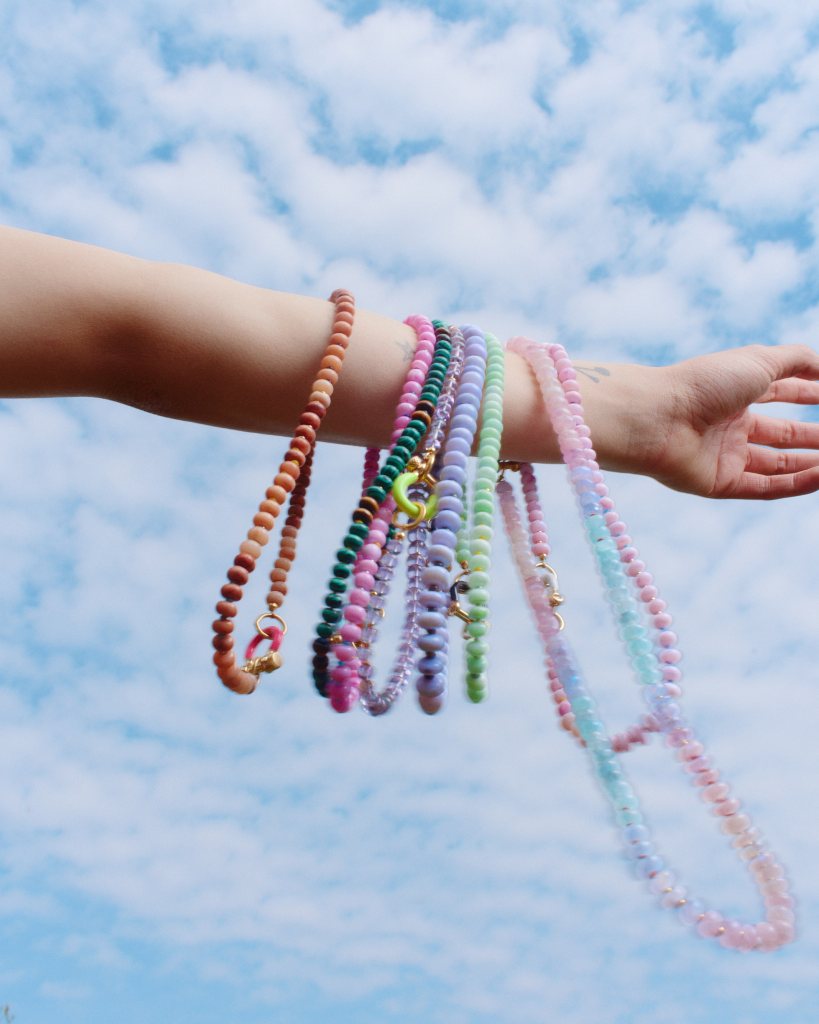
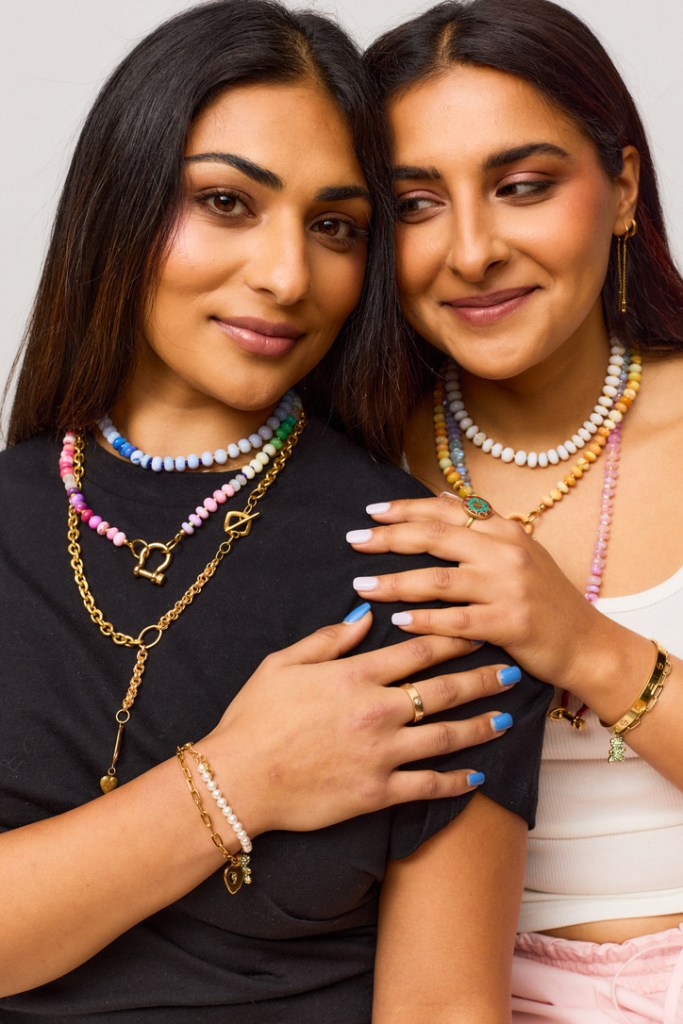
Looking to the future of Spicy Dan, I’m excited about adding to our designs and expanding into new categories. While obviously I love our signature carabiner clasp with the chunky beads, I can’t wait to build on that while sticking to the core of our brand — everyday, statement jewelry. We are launching our mini gemstone, encrusted carabiners and some chain options because we know not everyone loves the chunky bead option. We want to make more layerable options. We also plan to excitement with earrings, bracelets and different materials.
You can’t learn or iterate until you’re getting feedback.
I’d tell any young, aspiring founder that things don’t need to be perfect for you to put them out there. In general, I stand by the “Done is better than perfect” mentality. I look at the early versions of our jewelry, packaging and branding, and cringe. But if I hadn’t put the brand out there and continued to grow, I wouldn’t be where I am today. People tend to get paralyzed, wanting to release the perfect product, but my advice is to abandon that way of thinking — because you can’t learn or iterate until you’re getting feedback.
Key Takeaways
- Meyer launched her jewelry brand Spicy Dan, know for its bold beading and carabiner claps, in 2023.
- In the beginning, she sold mostly to family and friends; that changed with a viral TikTok moment.
- Meyer continues to scale Spicy Dan with a small team and strategic collaborations.
This as-told-to essay is based on a conversation with Danielle Meyer, the New York-based founder of jewelry brand Spicy Dan. Meyer officially launched her business in 2023; now, the brand is on track for $2.5 million this year. Here’s how she did it. Responses have been edited for length and clarity.
I’ve always loved making jewelry, since I was little. My mom would take me to bead stores. In my twenties, I graduated college and immediately went into tech sales. That wasn’t for me because I had a more entrepreneurial mindset, so I went into working in venture capital in non-investing relationship-management roles. I did that for about three years, then pivoted to a role at American Express, where I managed their startup strategy program.
I immediately knew that that job was not for me. I continued to make jewelry as a hobby. Then, during the pandemic, there was a brief period of time where I was unemployed. I had gotten laid off and was making a ton of jewelry. I sourced beads from Etsy and other stores online, selling the jewelry and making-your-own jewelry kits to friends. Still, I never really envisioned it as a full-time business.