She Started Using a Wheelchair and Saw a Serious ‘Chasm.’ Her Business Solution Led to $75M in Under a Year.
Karen Morales listened to her “spidey sense” and embraced an exciting opportunity.
Key Takeaways
- After Morales’s mobility changed in 2020, the inaccessibility of luxury travel surprised her.
- A life-long trip planner, Morales joined Fora as a travel advisor and spearheaded its accessibility initiative.
- The business pillar now boasts over 300 travel advisors and $75 million in bookings in less than a year.
“Traveling and being a planner has been part of my identity my whole life,” Karen Morales tells Entrepreneur. Growing up, Morales plotted trips to Disney World; as an adult, she architected bachelorette trips and company travel during a career in advertising. But in 2020, Morales’s perspective on planning her travel adventures shifted.
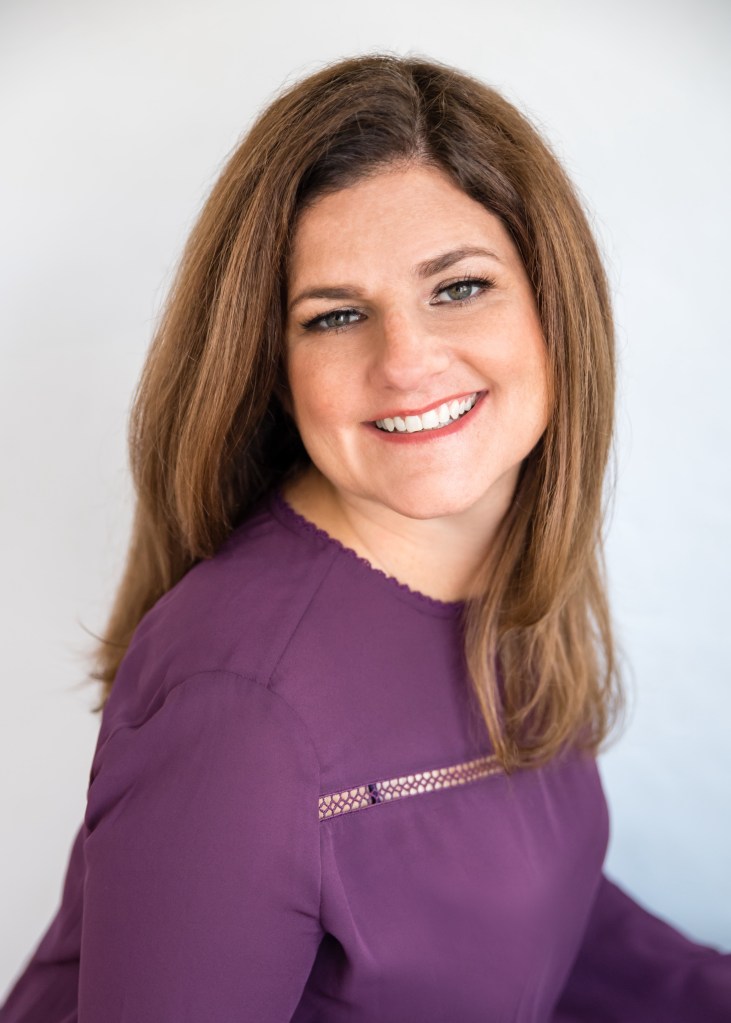
The progression of her muscular dystrophy required her to start using a wheelchair. “ I tripped and fell during Covid,” Morales recalls. “I was homeschooling two elementary-age kids, baking brownies, doing Zooms, and I tripped on an area rug. It was not the huge swelling music moment that most people have, but all of a sudden, I couldn’t go anywhere independently without a wheelchair.”
Upgrading to luxury resorts didn’t mean accessible travel
For the first couple of trips, Morales upgraded to very nice resorts, thinking that they’d be able to accommodate her wheelchair. But they could not. During one stay in Hawaii — “at a hotel we’ve all heard of” — they gave her a room upstairs and suggested she enter and exit through the lanai, a covered patio. But the door couldn’t be locked from the outside.
A similar scenario unfolded when she attended the opening of a spa in New England. She had to travel half a mile through a parking lot to avoid contending with 22 steps.
“ I just didn’t understand this chasm is in the market,” Morales says. “That all of a sudden if you need help, a little something extra, why is it expected that you either have pretty medium-level taste, like you can go to a Holiday Inn without problems, but if you want to do a five-star experience, there’s a gap. I thought this cannot be real.”
Her consulting business gave her a head start on all things travel
An entrepreneur at heart, Morales had the experience to make all aspects of travel accessible, including the luxury end. She’d started a consulting business in 2017, and in planning her clients’ corporate travel, also fielded questions about how to take grandmothers with limited mobility on safaris, or elderly people who’d suffered strokes to Europe. She saw the potential for a sort of side hustle adjacent to her primary business.
So Morales began shopping around with different travel agencies. (It’s similar to the way a real estate agent chooses an agency to join, she explains). When Morales stumbled upon the travel agency Fora, her “spidey sense” went off.
Fora has booked over $2 billion in travel since 2021
Co-founders Henley Vazquez, Evan Frank and Jake Peters launched Fora in 2021. Since then, the agency’s global network of travel advisors has booked more than $2 billion in travel across over 180 countries.
Within a few weeks of Morales starting with the agency, the co-founders had her training other advisors on accessible travel. And after the first training call, they resolved to build out Fora’s accessibility pillar in an official capacity.
“We started quietly at first, just like every lean startup,” Morales says. “We had a few of us that were paid to consult and spend a lot of time building training and developing our own lists of top hotels and properties around the world.”
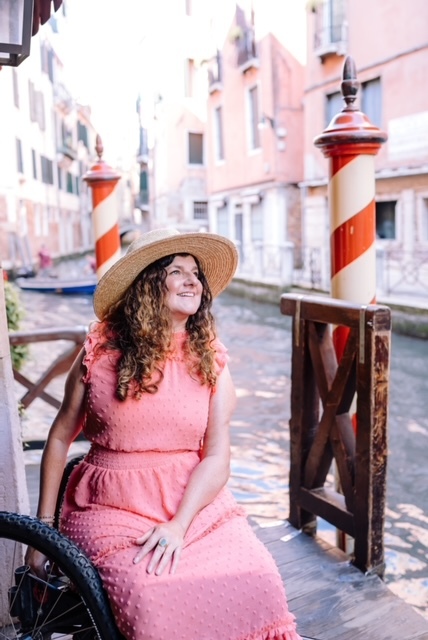
Morales had visited nearly 50 countries by that point, and Judy Tudor, another Fora advisor who also uses a wheelchair, has been to more than 50 — which meant a lot of helpful data points.
Travel agents and suppliers learn more about the accessibility initiative
It wasn’t surprising that a lot of agents wanted to get involved (after all, they’ve answered hundreds and hundreds of questions about accessible travel), Morales says.
However, a pleasant twist was just how many luxury suppliers — hotels, resorts, etcetera — wanted to get in on the program.
“ They’re really looking to understand this market more,” Morales says, “which is beautiful. We’ve had people offer to buy beach wheelchairs or ask for us to give them a review of how something really works. And I think that’s how things change. It’s about the actual hoteliers leaning in and saying, with true interest, How could I do this a little bit better?”
In training Fora’s advisors on accessible travel, the first focus was mobility. But they branched out into other accommodations, like food allergies, even though this is a more difficult space to navigate. (For instance, it’s relatively straightforward to track how many accessible rooms a hotel has. It’s more difficult to gauge its responsiveness to a dairy or wheat allergy.) Still, despite the challenges, Fora’s advisors now account for any accommodation possibility, including service animals.
The issue of un-advertised accessibility accommodations
Fora’s accessibility work also uncovered another critical point: Although some luxury hotels do lack fundamental accessibility features, others do have them — they’re just not advertised.
For example, Morales once spoke with a sales director who mentioned that she has a nonverbal granddaughter who communicates via tablet, and that the property she works with welcomes children in need of accommodations like that at their kids’ club, and makes sure they’re well integrated into the program.
That was news to Morales. No one would know that information without digging deeper, but some properties might be wary of leading with it amid fears of cancel culture, Morales says.
“It’s a feeling that we’re going to get sued or in trouble if we get it wrong,” Morales explains. “And that can’t be our motto. In disability or in travel or in luxury, it has to be, let people do their best to welcome you in, and you make the decision on whether that is going to work for you or not. If we come at it with a really combative attitude, nothing’s going to change.”
Travel suppliers should prioritize inclusivity upfront
Instead, travel suppliers should focus on making every guest feel special and included upfront — and that means not being afraid to have important conversations early, ahead of challenges that arise in the moment.
As a starting point, though, all properties should make sure their accessible rooms can be viewed easily on their website. That doesn’t have to entail an expensive IT overhaul, either — even a simple landing page with a list of accessible offerings can go a long way, Morales says. Additionally, a property’s ability to accommodate food allergies should be noted clearly online.
“Let’s make it findable and searchable,” Morales says. “Otherwise, it doesn’t give people a lot of confidence.”
That transparency and visibility should also include showing people with different abilities in marketing materials.
“ There seems to be this bias that we just don’t photograph as well, or it doesn’t look as good in brand marketing,” Morales says. “But people are traveling with wheelchairs and mobility devices, and it would be good to see some of that out in the world, even if it’s just in the socials or in the stories that you read.”
Fora’s accessibility initiative has generated $75 million
With Morales at the helm, Fora’s accessibility initiative has grown to include more than 300 advisors specializing in accessible travel and generating $75 million in accessible travel bookings.
But it’s only the beginning, especially as the nearly 70 million Baby Boomers continue to age. Baby Boomers hold about 50% of the wealth in the U.S., and by 2030, all of them will be over 65 years old. Many of them will want to spend their money on travel — and need accessibility accommodations to do it, Morales says.
“ If you are not catering to grandmas and grandpas, I don’t know what you’re doing,” she adds. “Because they’re not only traveling, but they’re often bringing a three-generational troop of family members with them. I’ve seen that in my own book of business this year. I’m up about 300%. And it’s all driven by celebratory trips, where grandparents need a little extra help.”
Luxury accessible travel’s growth and promising future
Morales looks forward to continuing to drive accessibility in the luxury travel space. What’s more, she and Fora are in a unique position to show, as they already have, hotel brands the major growth potential in prioritizing accessibility — and how many devoted fans, eager to spread the word, they stand to gain.
“ We’re also in a really unique position to give a lot of caretakers and people like myself who have this lived experience the chance to really have a career in travel,” Morales says. “And help people [in need of accommodations] do what they already do anyway. There is nothing more fulfilling.”
Key Takeaways
- After Morales’s mobility changed in 2020, the inaccessibility of luxury travel surprised her.
- A life-long trip planner, Morales joined Fora as a travel advisor and spearheaded its accessibility initiative.
- The business pillar now boasts over 300 travel advisors and $75 million in bookings in less than a year.
“Traveling and being a planner has been part of my identity my whole life,” Karen Morales tells Entrepreneur. Growing up, Morales plotted trips to Disney World; as an adult, she architected bachelorette trips and company travel during a career in advertising. But in 2020, Morales’s perspective on planning her travel adventures shifted.
The progression of her muscular dystrophy required her to start using a wheelchair. “ I tripped and fell during Covid,” Morales recalls. “I was homeschooling two elementary-age kids, baking brownies, doing Zooms, and I tripped on an area rug. It was not the huge swelling music moment that most people have, but all of a sudden, I couldn’t go anywhere independently without a wheelchair.”
Upgrading to luxury resorts didn’t mean accessible travel
For the first couple of trips, Morales upgraded to very nice resorts, thinking that they’d be able to accommodate her wheelchair. But they could not. During one stay in Hawaii — “at a hotel we’ve all heard of” — they gave her a room upstairs and suggested she enter and exit through the lanai, a covered patio. But the door couldn’t be locked from the outside.