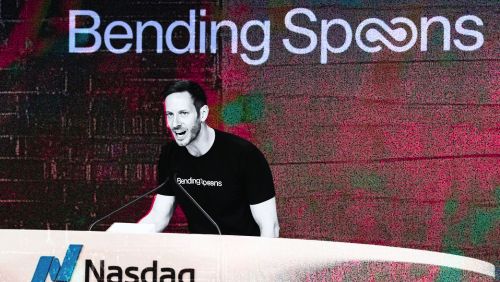
He Bet His Business on Young Athletes and Gen Z Fans. Now Zack Weiner’s Overtime Has 120 Million Followers and Is Rewriting the Sports Media Playbook.
Zack Weiner, co-founder of Overtime, shares how he spotted a gap in fan content and built a vertically integrated sports brand.
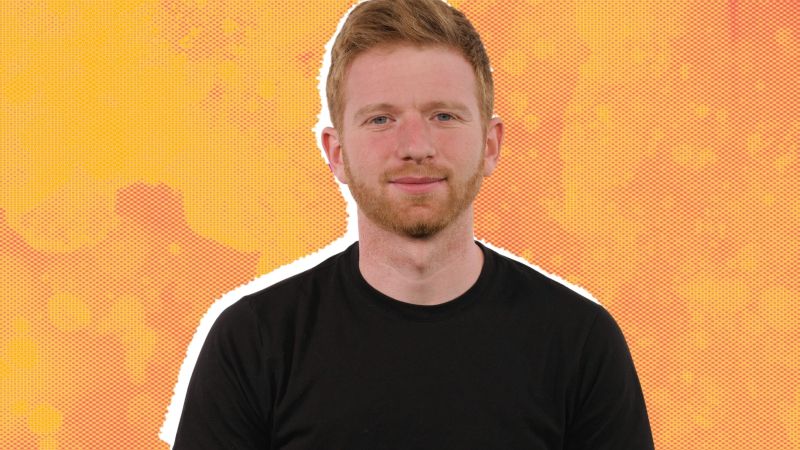
Zack Weiner is the co-founder of Overtime, the massive sports community brand that launched when he was just 24 years old. With over 120 million global social media fans driving billions of video views a month, Overtime built its massive base by keeping a laser focus on its key user: the Gen Z sports fan.
Zack also co-created OTE (Overtime Elite), a groundbreaking basketball league for elite, young players that combines high-level competition with content. As the NBA Championship consumes the hearts and minds and attention spans of sports fans, we talked to Zack about the explosive growth of his platforms, pushing through setbacks, and the true meaning and value of a strong team.
What’s different about Overtime compared to other media companies?
First, we’re incredibly focused on our audience: the Gen Z sports fan. That’s been true from day one, and I think it shows up in a few key ways. The most obvious — and maybe the most important — is the voice of Overtime. Fans often say Overtime sounds like their friend, and I think that’s a huge differentiator for us. It’s part of the reason people want to wear our hoodies and T-shirts. We’re not an apparel company, but we’ve built a brand that genuinely resonates with young people and creates a real connection with them.
It also shapes who and what we cover. We spend more time covering young athletes than the average media company. We’re known for spotlighting the next generation of NBA, WNBA and NFL stars. While we absolutely cover current professional athletes, we place a real premium on emerging talent because we believe that’s what resonates most with the next generation of fans.
The other thing I’d add is that we’re fully vertically integrated. We have the audience, the distribution, and the content, but importantly, we also own and operate our own leagues. That’s still a pretty rare model today. A lot of leagues have launched in the past five years, but I don’t think any of them entered the market with the unique advantage of already having more than 100 million followers and a deep understanding of the audience because we built the media company first.
What inspired you to create this business?
I think the biggest inspiration from a business perspective was the gap in the marketplace. Legacy media and legacy leagues are incredible, but their average audience is decades older than the average Overtime fan, and that’s where we initially saw the opportunity. But very quickly, once you actually start building the company, the inspiration becomes the fans themselves. Seeing how they react to what we create and how much they care about it is truly inspiring — not just for me, but for the entire team as well.
Can you tell us about a setback and how you pushed forward?
Yeah, of course we’ve had setbacks, just like any company. And honestly, if you’re not experimenting — and experiencing some failures along the way — you’re probably not pushing the envelope enough.
One of the more interesting examples came in the early days of Overtime. We had a strong hunch that young people wanted to watch other young people, which ultimately proved true, but we initially took a bit of a wrong turn. We believed there would be significant interest at the local level, and our goal was essentially to create the SportsCenter for every high school.
What we realized, though, was that audiences weren’t as interested in the long tail of high school sports. We invested time and resources there, and in hindsight that was a setback. But it led us to a much clearer insight: the real intensity of fandom centered around the top athletes in a given sport — maybe the top 100. And it wasn’t just about sports performance. Fans also connected with their personalities, their comfort in front of the camera, and eventually things like TikTok dances and other off-court content.
Any standout moments that make you particularly proud?
One that immediately comes to mind is when the Thompson twins were drafted fourth and fifth overall from Overtime Elite directly into the NBA. For many people at our company, it was probably the closest we’ll ever feel to being drafted into the NBA ourselves. They were the third and fourth athletes ever signed to Overtime Elite, so they took a huge bet on us, and we still root for them every day.
Another moment that stands out is also athlete-driven. We had a player participate in the first season of Overtime Select, our women’s basketball league, and the following year she became a captain, which was incredibly rewarding to see. I remember her telling one of our employees that Overtime Select was the first time she truly felt like she could be herself.
What’s a productivity tip that you swear by?
One productivity tip I swear by is writing almost everything down. If I have an idea in a meeting, or someone mentions something to me, it may not end up being valuable in the end, but I think it’s important to capture it in the moment.
Then I have a process where I go back through my notes at the end of each week. Sometimes I’ll mark an idea as good or bad right away, but giving myself time to revisit it helps me reflect on whether it’s actually worth prioritizing. And honestly, sometimes I can get through 50 notes in three minutes just skimming and thinking, “This is a waste of time, this is a waste of time… okay, this one is actually worth thinking more about.”
Subscribe to the How Success Happens podcast: Apple | Spotify | YouTube
What’s one thing you wish you knew when you started out that people looking to get into your field should know?
One thing I didn’t fully appreciate early on was just how many stakeholders exist across the ecosystem. With owners, you’ll have 30-plus major stakeholders, not including minority owners. And beyond that, you also have the league office, the players association, broadcasters, sponsors, and so many other parties involved.
What makes sports unique is that every major decision often requires alignment across a very broad group of stakeholders, all with different incentives and priorities. That complexity is something I understood much more deeply over time. I think the more I’ve learned about that, the more I’ve realized that, over time, we actually have a unique advantage in that we do not have a lot of those same constituents, so it allows us to innovate really quickly and ultimately serve the stakeholder of the fan, which drives the business.
What does the word “entrepreneur” mean to you?
At its core, I think it’s someone who creates something out of nothing. That’s an incredibly difficult thing to do, but it’s also very exhilarating.
I think entrepreneurship requires a lot of different parts of your brain firing at once — resourcefulness, insightfulness, curiosity, persistence. You might meet an entrepreneur who’s missing one of those traits, but if they’re successful, they’ve usually complemented it with other strong skills.
What is your definition of success?
My definition of success is rooted in something that’s really important to Overtime: community. We talk about our fans as a community, and I genuinely believe that’s true. But even outside of work, my personal community is incredibly important to me.
I want to have a positive and uplifting impact on the people around me — whether that’s through curiosity, empathy, connection, or helping others. I don’t think this is a secret; hopefully most people eventually realize that this is one of the greatest joys in life. And for me, being able to do that consistently would represent real success.
Zack Weiner is the co-founder of Overtime, the massive sports community brand that launched when he was just 24 years old. With over 120 million global social media fans driving billions of video views a month, Overtime built its massive base by keeping a laser focus on its key user: the Gen Z sports fan.
Zack also co-created OTE (Overtime Elite), a groundbreaking basketball league for elite, young players that combines high-level competition with content. As the NBA Championship consumes the hearts and minds and attention spans of sports fans, we talked to Zack about the explosive growth of his platforms, pushing through setbacks, and the true meaning and value of a strong team.
What’s different about Overtime compared to other media companies?
First, we’re incredibly focused on our audience: the Gen Z sports fan. That’s been true from day one, and I think it shows up in a few key ways. The most obvious — and maybe the most important — is the voice of Overtime. Fans often say Overtime sounds like their friend, and I think that’s a huge differentiator for us. It’s part of the reason people want to wear our hoodies and T-shirts. We’re not an apparel company, but we’ve built a brand that genuinely resonates with young people and creates a real connection with them.