I’m a History Buff Who Started a Unique Side Hustle. It Surpassed $1M a Year and Landed On ‘Shark Tank.’
A letter written by President Abraham Lincoln inspired Ari Siegel’s business.
Key Takeaways
- Siegel began to replicate historical documents for family and friends.
- Interest grew, so Siegel turned it into a subscription and set up a Shopify site.
- Partnering with Uncommon Goods and appearing on Shark Tank fueled the business.
This as-told-to story is based on a conversation with Ari Siegel, founder of History By Mail, a subscription-based business selling replicas of historical documents. The piece has been edited for length and clarity.
Growing up, I was always a history buff. Both of my grandfathers were in World War II, so I heard them tell war stories.

I went on to become an intern at the U.S. Senate. I gave tours of the U.S. Capitol building. One day, when I was at the Library of Congress, they had some documents on display. They had recently discovered they were just sitting in boxes. One was a letter from President Abraham Lincoln. It gave me chills. I felt transported back to the Civil War era. It didn’t seem right that documents that belong to the American people are just sitting in a box, in a warehouse somewhere.
Using Shopify and Facebook ads to start the side hustle
So I started to replicate the letter for family and friends, not as a side hustle or business. They loved it. So I created more documents. They wanted it in a regular cadence, so I made it a subscription. Then, in 2019, in January, I put up a Shopify site and put a little bit of money towards Facebook ads. That’s when the project actually formally became a business, History By Mail. By that time, I was working for a real estate developer in Brooklyn.
There’s a whole process when it comes to manufacturing and printing. First, we have to search for documents that tell a compelling story and look visually appealing. If it’s an interesting story, but doesn’t look like much, it’s not going to capture people’s attention. And vice versa, if it looks really cool, but there’s no real story, there’s nothing to tell. Then, I have to obtain the use rights to actually replicate the document. Oftentimes, we’re licensing a document from a museum, private collection or university. Then we have to touch it up. We have to replicate it on paper to make it as close to the original as possible. Then I write a context story that goes along with it, and that needs to be edited.
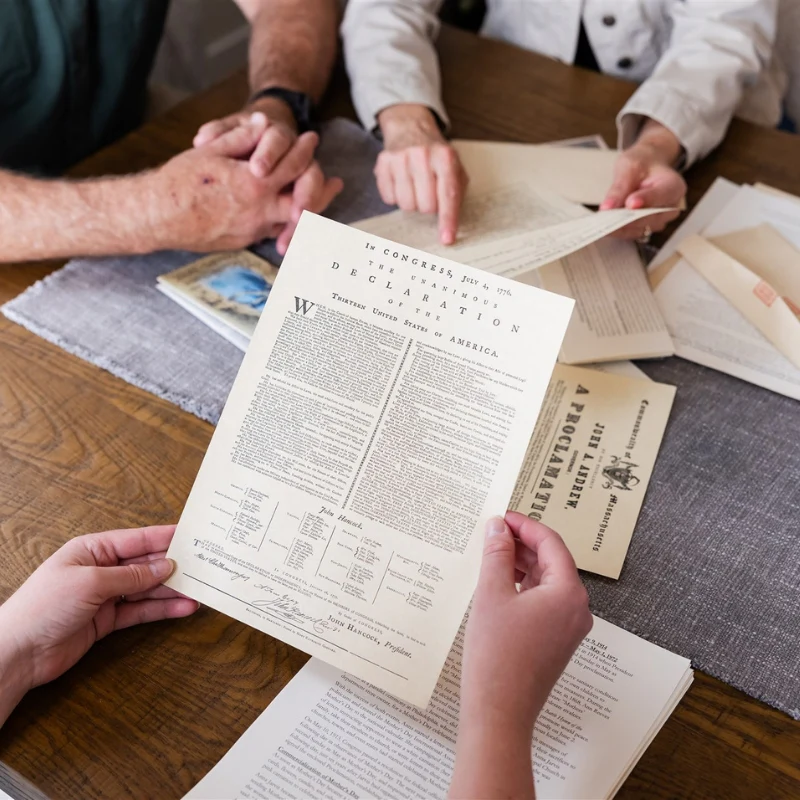
Then there are all the business aspects: marketing, sales, accounting. I did everything in the beginning. Now we’ve grown to a remote staff of 12 people. But each piece of the business had to be figured out, organically from scratch.
Partnering with Uncommon Goods accelerates the side hustle
In 2020, we partnered with Uncommon Goods. That took a lot of hustle. I would send out samples, but getting in front of buyers is tough. There’s so much competition. I’d spend part of my week reaching out to buyers from different museums, websites, gift sites, both in person and online. I would go to shows as well to talk to people. Then a buyer took a risk on us. We were Uncommon Goods’s first subscription. They had wanted to get into subscriptions. But they didn’t know how to handle it from a technical standpoint.
There’s a lot of management that goes into a subscription. If someone wants to change their address, pause or cancel, or one piece gets lost in the mail or something, it can be complicated. It’s not like if you purchase a deck of cards, and you either got it or you didn’t. With a subscription, you have a relationship with a customer over the length of the subscription, which could be up to two years in our case.
Uncommon Goods has been an incredible partner. With the collaboration, we got a ton of national press and exposure. I think that’s why we were invited to appear on Shark Tank.
Preparing for ‘Shark Tank’ and pitching the business
I went overboard preparing for the show because I knew it was highly competitive and thought it would be my only shot. I hired a Broadway producer to help me think through all the little elements of TV, hair, makeup, wardrobe, props, body language, vocal intonation, scriptwriting, everything. Then I watched every episode and wrote down all the questions. I put them on notecards and practiced constantly for the better part of a year. I also made giant cardboard cutouts of the sharks so that I could practice talking to them and not feel nervous. Or upset when they throw something at you. You have to stay positive and keep your cool.
Also, I took clips of the sharks and had my graphics team mash them up into a YouTube video that’s like a half hour. So as I’m practicing, I’m seeing their faces looking at me with different expressions on it. So if they’re happy, sad, frustrated, whatever, I’m still staying focused.
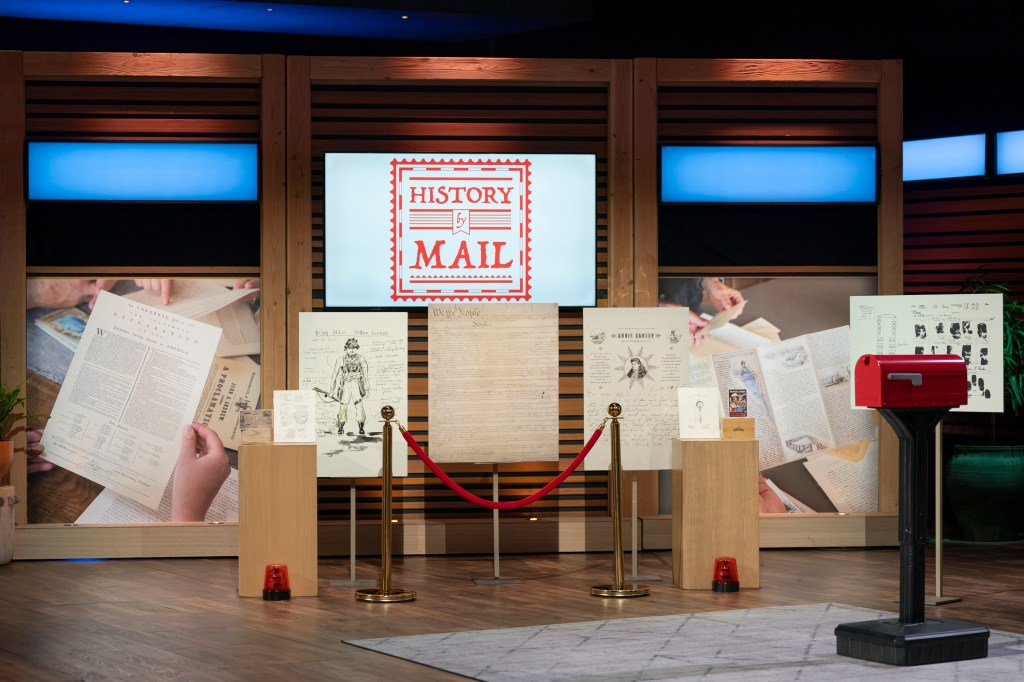
The preparation paid off. When we filmed, I wasn’t nervous. I was just excited. It was really fun.
On the show, I had the opportunity to showcase five particular documents, including the check that was used to purchase Alaska. That’s such an interesting document. People get fascinated by it. They might know that Alaska was purchased, but didn’t even think that it was purchased with an actual piece of paper. And how much was that and who wrote that and where was it cashed? It opens sort of all these questions.
Landing the deal and an additional on-air segment
We got a Shark Tank deal, which was amazing. In our case, Barbara Corcoran and Daniel Lubetzky went in together, but after the due diligence phase, only Daniel continued. He’s been an amazing partner. We can come to him with any problem, and he and his world class team can help us solve it.
I thought that would be my one day in Hollywood. But I actually got a second day because we filmed an update that aired in January with David Copperfield. Daniel is friends with David Copperfield, who has the largest private magic collection in the world. And he let us replicate a letter from Harry Houdini that inspired his career. So we did an update episode with David in his private museum this past January.
After Shark Tank, History By Mail wasn’t a side hustle anymore. I decided to work on the business full time.
No longer a side hustle, the business continues to grow
We’d fallen into a niche and were successful with gifting, growing organically through that, but the seasonality also boxed us in. For instance, March isn’t really a gifting month, so then sales go down. So, now, we’re trying to get into more corporate gifting, which is a bit more evergreen. We’re trying to get into more schools and museums. Additionally, we’re doing a big push for America’s 250th anniversary as well.
We’ve already seen significant revenue growth and plan to keep it up. In 2019, we did $2,300 — so very small. When we started working with Uncommon Goods in 2020, we did $153,000, so about a 6,500% increase. During our first full year with Uncommon Goods in 2021, we saw $639,000. In 2022, we did $824,000, and in 2023, we hit $1 million. We did $1.24 million in 2024, and last year, we pulled in just over $2 million. We’re projecting $3 million this year.
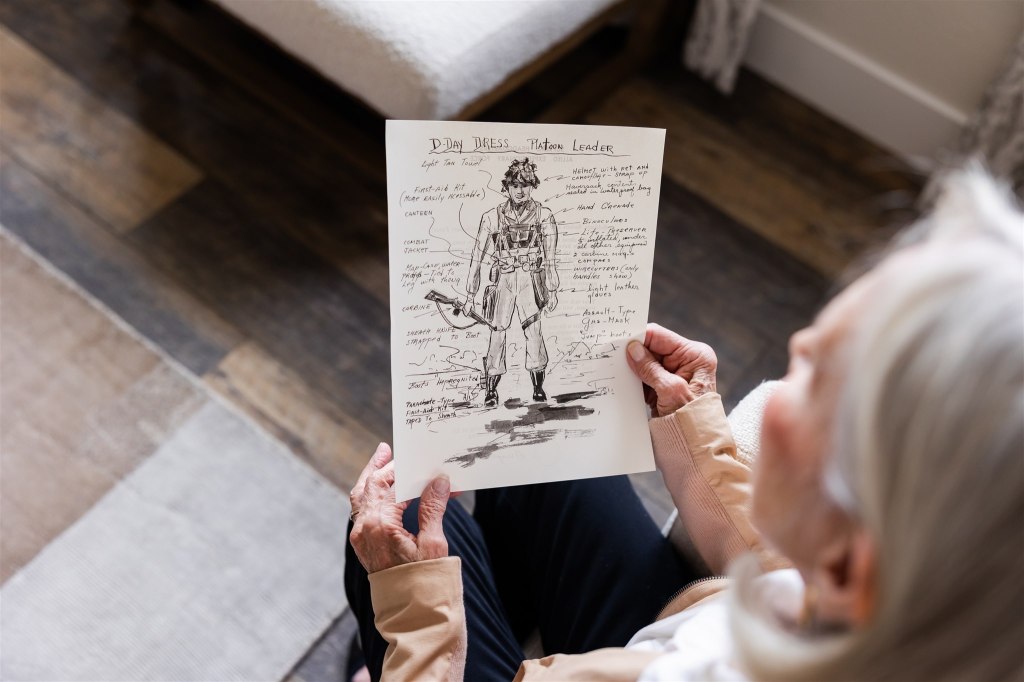
As a business owner, there’s always a major goal you’re looking forward to. The last few years, it’s been media driven. We wanted to get on Shark Tank, and we wanted to rerun and do an update. Now that that’s all done, we can drive our own ship and determine what we want to do next.
Following passion — and a willingness to solve problems
Just last month, we hit our one millionth letter sent. So that was a big milestone for us. Our mission is to make history tangible and exciting for people, so the more people that we’re reaching, the more we’re furthering that mission. We’re looking forward to our two millionth letter.
I followed my passion for history into a side hustle, then a full-time business, but I wouldn’t say passion itself is enough to sustain a business long term.
Business owners have to fall in love with solving problems. All businesses have problems, and they’ll always have problems. The bigger you get, the bigger the problems get, and the more complex they get. If you can fall in love with the process of solving a problem — you identify it, brainstorm solutions, open as many doors as you can, close those that aren’t working, constantly iterate and learn — those are skills you need in business. And those skills support your passion.
Key Takeaways
- Siegel began to replicate historical documents for family and friends.
- Interest grew, so Siegel turned it into a subscription and set up a Shopify site.
- Partnering with Uncommon Goods and appearing on Shark Tank fueled the business.
This as-told-to story is based on a conversation with Ari Siegel, founder of History By Mail, a subscription-based business selling replicas of historical documents. The piece has been edited for length and clarity.
Growing up, I was always a history buff. Both of my grandfathers were in World War II, so I heard them tell war stories.
I went on to become an intern at the U.S. Senate. I gave tours of the U.S. Capitol building. One day, when I was at the Library of Congress, they had some documents on display. They had recently discovered they were just sitting in boxes. One was a letter from President Abraham Lincoln. It gave me chills. I felt transported back to the Civil War era. It didn’t seem right that documents that belong to the American people are just sitting in a box, in a warehouse somewhere.