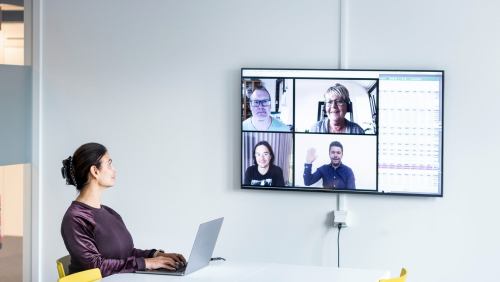
In a world where we've seen five consecutive quarters of declining productivity in the U.S., one would think that CEOs and company leaders would question their tactics. Yet despite the overwhelming evidence that flexible hybrid work is more productive than forced in-office work for the same roles, top executives are stubbornly herding employees back to the office like lost sheep.
It certainly takes more work to have hybrid employees participate in co-creating the return office, but the long-term gain is very much worth the short-term pain.
The number of stay-at-home mothers nearly doubled from 2022 to 2023, leaping from 15% to 25%, because of the forced return to office and resultant lack of flexibility
While big tech itself has laid off unprecedented numbers in a very short span and continues to navigate various economic headwinds, the broader tech industry continues its focus on innovation and strategic growth.
You're stuck between a rock and a hard place: You need to ensure the continuity of your team and company through mentoring junior staff, which happens best in person, but senior staff doesn't want to come in three to five days a week just to ensure mentoring by osmosis. However, there's a much more effective approach that results in a win-win-win for all.
Miriam Groom specializes in employee experience and development. She shares her advice about overcoming the pitfalls and challenges of being a remote worker.
In an era where hybrid work is becoming the norm, JPMorgan Chase CEO Jamie Dimon seems to be swimming against the tide. With the recent news of the bank's request for managing directors to return to the office full-time, it's clear that Dimon's crusade to bring employees back in person is not only a sign of weakness but also exposes an inability to adapt to the evolving world of work.
There's a slew of misinformation about remote and hybrid work floating around. If you don't separate fact from fiction, your company's future is bleak.
Here are a few tips on how to successfully implement a hybrid work model, along with some ways in which companies might make better strategic hybrid work decisions.
Not all hybrid schedules are created equal. If you or your company are considering shaking up your work schedule, consider some of the following models.