This Dad’s ‘Horrible’ Smelling Bachelor Pad Inspired His Business. It Hit $12K a Month Fast — Now On Track for $100M a Year.
Scott Dancy’s friend gave him a game-changing solution — and it led to a business.
Key Takeaways
- Dancy officially launched Azuna in 2019 and saw sales accelerate during the pandemic.
- For the first couple of years, Dancy handled everything himself — all the way to $3 million in sales.
- Now, Azuna has a team of 50, nearly $100 million in annual sales, and is eyeing an eventual sale.
Serial entrepreneur Scott Dancy has only had an employer for about three months in his entire life — and that’s fine by him.

In 1995, a new college graduate of University of Rochester in upstate New York, Dancy moved to Atlanta for a job as a recruiter. Around 90 days into that role, he thought, I could do this myself. So he and a colleague did just that. They started their own staffing business, which made millions within four years.
Other ventures followed, including an information security software company, which sold, and a second staffing business. After that, Dancy got involved in the oil and gas industry, managing limited partnerships and ultimately raising more than $500 million to be the largest driller in the Illinois basin. Then he invested in a sand and gravel pit — which “was a complete disaster.” “We lost everything,” Dancy says.
Dancy’s smelly apartment leads to a business idea
By 2017, Dancy, a father of two, was going through a divorce and living on his own in Buffalo, New York. His washing machine broke one day, and the smell from the standing water was “horrible.” His friend gave him an odor-elimination solution: tea tree oil, which has natural antibacterial and antimicrobial properties.
“It got rid of the smells,” Dancy recalls. “I was like, This is amazing — how do we market this?”
A couple of years later, Dancy set out to turn the vision into a reality, motivated by the idea of developing a line of odor-eliminating tea tree oil products in a category of their own.
“ Other products just mask what the smell with fragrance,” Dancy explains. “While we do have fragrance, the tea tree oil, basically in layman’s terms, is effective against mold, mildew and bacteria — and that’s the source of all your smells.”
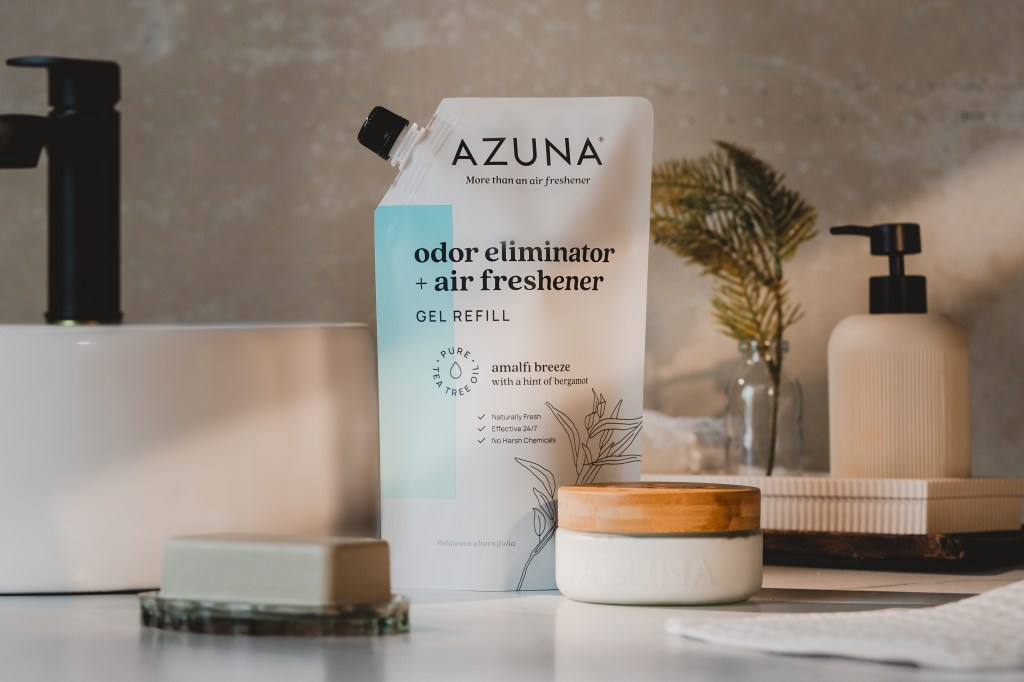
Starting a business selling tea tree oil: Azuna
Dancy officially launched Azuna in 2019. The friend who had introduced him to tea tree oil worked in contract packaging, so they forged a partnership on that front.
Another friend of Dancy’s worked in the domain industry. Dancy asked him for a name, and he came back with “Azoona.” Dancy liked the sound of it, and when his designer swapped the double “o” out for a “u,” spelling it “Azuna,” the name stuck.
Next, Dancy put the product online and took a hands-on approach to building his business.
“ No idea what I’m doing, literally writing the ad copy myself,” Dancy says. “For three years, I set an alarm every day for two hours to wake up to see if there were things I needed to respond to, whether it was customer service questions or Facebook comments.”
Dancy tracked the number of orders received, then picked up the product from the warehouse and went to the post office to ship it off. The product cost about $10 and sold for $20, so between that and the labor required to fulfill the orders, it was a rough profit margin, Dancy admits.
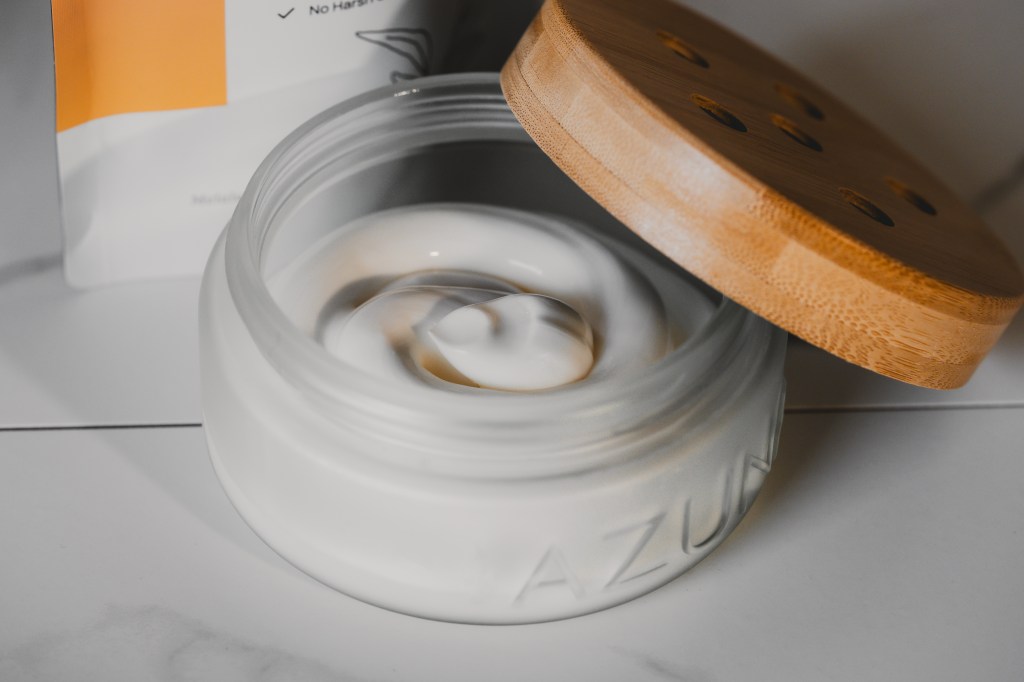
The business goes from $12k to $105k in the span of 1 month
But he wasn’t deterred. The business saw $12,000 in monthly sales by April 2020. With the pandemic underway and millions of people staying in homes they wanted to smell better, sales only accelerated. In May 2020, Azuna pulled in $105,000 in sales.
At that point, Azuna secured its own third-party logistics (3PL) as business operations shifted to keep pace with demand. But it was still two years before Dancy hired anyone to join the team. “I got us up to about $3 million in sales for the most part on my own,” Dancy says.
Over the last several years, Azuna’s sales have continued to skyrocket. The business hit $53 million in sales last year and is on track to see more than $100 million in sales this year.
What’s more, the initially bootstrapped business has taken on little investment along the way compared to competitors, Dancy says, noting that to reach Azuna’s level, most companies would have taken about $50 million in equity. Azuna has raised less than $10 million to date.
Navigating operations amid the business’s rapid growth
One of the biggest challenges Azuna has faced over its growth trajectory is the sheer speed of its scale.
“ I’m not an operations person,” Dancy admits. “I’m an entrepreneur. They just put up a job description for an executive assistant for me, and someone wrote in there, ‘Cleaning up after the Tasmanian devil.’ So that puts it in perspective. That’s me.”
When a business goes from making $500,000 a month to $3 million a month within four months, it requires a significant operational shift, Dancy says. It’s crucial to go beyond thinking about having enough inventory on hand for sales the following week — and instead look to six or nine months down the line.
Additionally, although some Azuna product components are purchased overseas, everything is produced in and ships out of the U.S., Dancy notes.
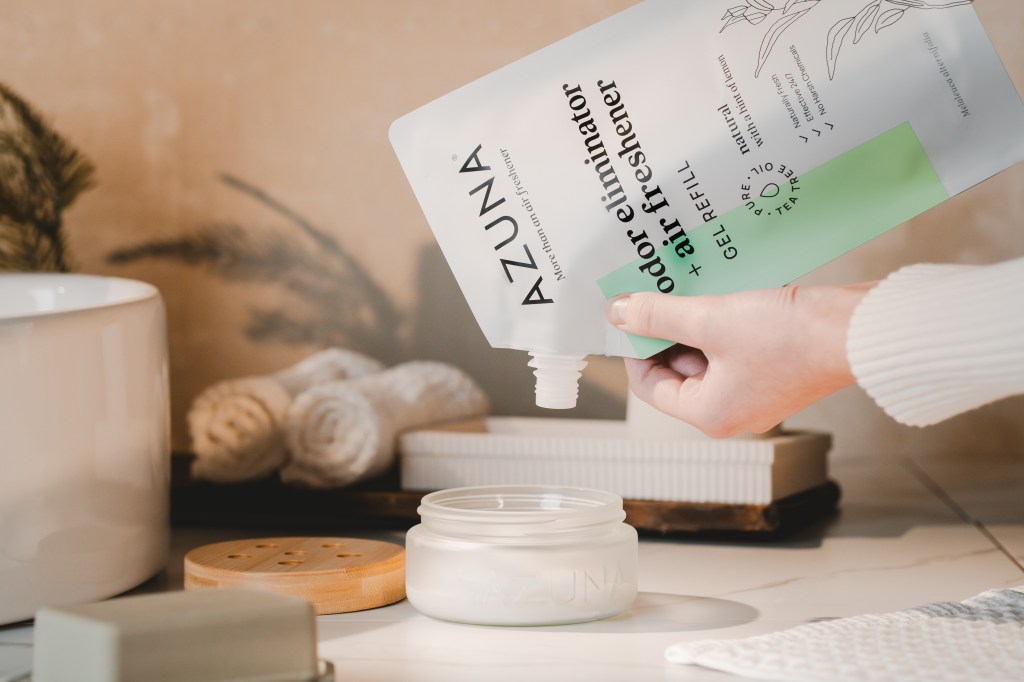
$100k a month and beyond: Azuna racks up sales milestones
Dancy began hiring more people to help Azuna navigate its new normal. Azuna currently has about 50 employees across its marketing and manufacturing teams. For a time, Dancy would host a celebratory dinner every time Azuna ticked off another milestone: a $100,000 month, a $500,000 month, a $1 million month (the business had about eight employees when it achieved the latter).
But very soon the team had ballooned beyond the size of a standard dinner reservation.
“I can’t even do it anymore because there are so many people,” Dancy says. “I can’t find a restaurant we could fit that many people in. And we’d be celebrating every month, which is awesome, but also kind of takes away from the fun entrepreneurial side. When you’re growing so fast, you can’t even take the time to pat yourself on the back.”
Dancy plans to sell the business when the time is right
Still an entrepreneur at heart, Dancy intends to sell Azuna as soon as the time is right. The business will do more than $100 million in direct-to-consumer sales this year between its website and Amazon. It also just started distribution in the Midwest-based grocery chain Fresh Thyme and is actively exploring partnerships with other major retailers.
“ My goal this year is we’ll probably take on an institutional investment for the first time, but they have to have really good retail experience,” Dancy says. “Grüns [a gummy supplement brand] just sold for $1.2 billion, and they had similar revenues last year to what we’ll have this year.”
Dancy estimates Azuna’s sale about a year and a half from now, as he anticipates doing about $20 million a month in sales by that point.
Azuna has another advantage as the world’s largest buyer of Australian tea tree oil with non-compete contracts locked in place, Dancy says.

“ I’d like to eventually build a R&D company and a marketing company.”
After Azuna’s sale, Dancy sees himself starting another venture — “but only after throwing his phone in the ocean so he doesn’t have to talk to anybody for a year.”
“ I’d like to eventually build a R&D company and a marketing company that shows what we did to bring in the money to then pay for the investments for others,” Dancy says. “I’d love to build a community of CPG brands out of Buffalo after I take a little bit of time off.”
As someone who has “had some really good successes and some really big failures” in business over the years, Dancy suggests aspiring entrepreneurs reconsider framing their next venture as a side hustle. Although the founder admits that can be useful when it comes to starting a business, it can also be valuable to go all in on a business from day one.
“Plan for the worst and be delusional a little bit,” Dancy says. “Some decisions that I look back on could’ve gone really bad, but they were also the things that shaped the success of the business, whether they worked or not. So I would tell people to be reasonably delusional and super passionate and do something where you can accept the potential of the loss on it — but you have that eye on the gain.”
Key Takeaways
- Dancy officially launched Azuna in 2019 and saw sales accelerate during the pandemic.
- For the first couple of years, Dancy handled everything himself — all the way to $3 million in sales.
- Now, Azuna has a team of 50, nearly $100 million in annual sales, and is eyeing an eventual sale.
Serial entrepreneur Scott Dancy has only had an employer for about three months in his entire life — and that’s fine by him.
In 1995, a new college graduate of University of Rochester in upstate New York, Dancy moved to Atlanta for a job as a recruiter. Around 90 days into that role, he thought, I could do this myself. So he and a colleague did just that. They started their own staffing business, which made millions within four years.
Other ventures followed, including an information security software company, which sold, and a second staffing business. After that, Dancy got involved in the oil and gas industry, managing limited partnerships and ultimately raising more than $500 million to be the largest driller in the Illinois basin. Then he invested in a sand and gravel pit — which “was a complete disaster.” “We lost everything,” Dancy says.