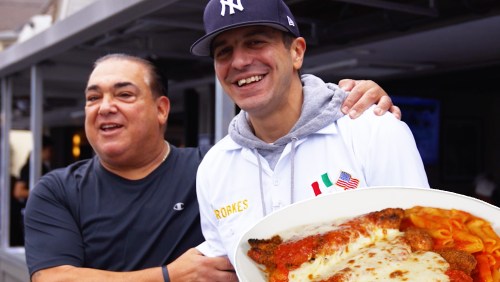
I Pitched My Product From a Citi Bike — And Ate It for 100 Days Straight. Now It’s in Whole Foods and Surpassing $700,000 a Year.
Damiano Messineo merged his two passions: business and food.
Key Takeaways
- Messineo used a spreadsheet to come up with his ideal nutrition label.
- His research unearthed the lupini bean: a complete protein packed with fiber.
- He and his co-founder used pitch competitions and on-the-ground tactics to grow the business.
This as-told-to story is based on a conversation with New York City-based entrepreneur Damiano Messineo. Messineo and Alessandro Pignataro co-founded Loopini, a high-protein pizza brand made with lupini beans that has surpassed $700,000 in revenue this year. The piece has been edited for length and clarity.

I’ve always been interested in being an entrepreneur. The first venture that I tried to start while growing up in Italy failed after five minutes. My mom was not home, so my brother and I, ages 5 and 7, tried to turn the garden into a parking lot because we lived close to the beach. So, my mom went out for literally 20 minutes, and when she came back, she saw my brother on the beach with a cardboard sign saying, “Parking $5.” And so we got shut down after five minutes. That was the first experience.
But after that, as a 17-year-old in Sicily, I was organizing events. I’d moved to the U.S., then back to Italy, where I set up a soccer academy with my roommate. We wanted to recreate the American university where you can play sports and study. But we realized that you can’t build a university experience at 19. Then, I moved to the U.S., and while there, I jumped into another venture, which was renewable energy. We were trying to build a dam — a hydropower project in Nepal.
Starting a food-related business in the U.S.
After all of this, I realized my dream was to start a business in the U.S. related to food. I wanted to do something entrepreneurial that I really loved. Food has to be scalable, so let’s not do a restaurant. Let’s start with a consumer product, CPG. My favorite food has always been pizza. But I needed to make something different. What’s the problem with pizza? Pizza is the most loved food in the world, but people try to avoid it because it’s considered junk food. So I was like, “Imagine if pizza were healthy, and you could eat pizza with the same feeling as eating a chicken salad.” So you can eat it every day. That was the dream.
In 2024, I created a spreadsheet on Excel and put together a nutritional label that I liked for a meal, and in this case, for the pizza. I started substituting ingredients, trying a bunch of different ingredients from all over the world, until I stumbled upon the lupini beans. Those worked in the spreadsheet. I’m from Southern Italy, where a lot of lupini beans are consumed. But to be honest, I never really ate them growing up. I didn’t know much about them.
And then doing research, I found they are packed with fiber and protein, and their protein is all nine amino acids, so it’s a complete protein. It’s comparable to meat. They have a low glycemic index and are rich in potassium and magnesium. Also, it’s kind of regenerative. So the more you plant it, the more fertile the soil. And it requires 80% less water than planting wheat, for example. So I was like, “Wow, this is magnificent.”
Experimenting with the product from a home kitchen
Next, I experimented in the kitchen. In the beginning, it tasted terrible. It took many months to iterate on the recipe, to make it good. By around October 2024, we had the final MVP. Initially, we wanted to produce in the U.S., but I had more connections in Italy, so we started there. We began with this very small co-packer in Italy, and we were able to launch Loopini in January 2025 in New York City. The first store was Pop Up Grocer. From the first store, I was basically going all around New York City on a Citi Bike, asking independent stores if they wanted to buy the product. And I would deliver the pizzas on the bike. That went on for a couple of months. We grew from one to 50 independent stores. At that point, we needed a distributor.
But when you’re a small business, the distributor doesn’t give you the best deal. So we decided to wait until we had more leverage. It would have been a good deal short-term because they were like, “Oh, once you get distribution, we have the demand for you so that you can close this year with half a million dollars in revenue,” for example. But we decided not to do it, keep the revenue low and apply for pitch competitions. And that was pivotal for us because we won almost every pitch competition that we participated in, which attracted the attention of the big retailers. So we got a bigger co-packer and prepared for 2026.
Growing from $100k to $700k+ in annual revenue
We raised a pre-seed round back in January, and right now, it’s still just my co-founder and me on the team, just the two of us. In January 2026, we launched in our first retail chain, which was Whole Foods in the Northeast and North Atlantic. And after a month of launching in Whole Foods, we launched in every Wegmans store. In March, we launched in Target. So our strategy of waiting for the long-term benefit paid off. Last year, Loopini saw $100,000 in revenue. For this year, by April, the business hit $700,000.
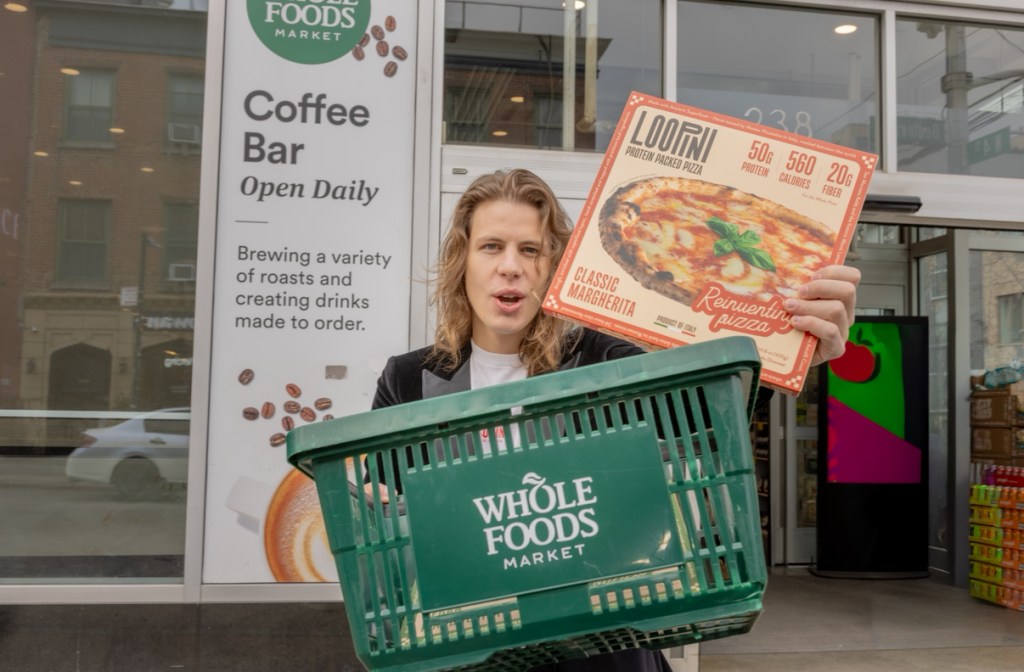
Now, the business is continuing to grow. With these partners and retailers, we’ve been offered national expansions, and so we are considering that, and other big retailers have reached out. So right now it’s a matter of increasing production. But it’s also still about increasing quality. For example, right now our facility is good enough. It’s brand new, but it has less than $3 million worth of equipment. We’re trying to move with a bigger co-packer where we have better machinery, which will enable us to also increase the quality of the product. And we are looking for a bigger capacity so we can expand nationwide. That will be the next growth phase for Loopini.
Eating Loopini for 100 days straight while training for Iron Man
In July 2024, I tried eating the product for 30 days straight, and I felt great. I didn’t gain weight. But once we were selling the product, I decided I wanted to run a longer-term test and gather more data. So I decided to eat the pizza for 100 days while tracking my physicals, blood test and stool test. Before starting the diet, I did a lot of tests to establish a baseline. Also, in the middle of all of this, I was training for an Iron Man because I wanted to add another layer. Like, can Loopini fuel an endurance athlete?
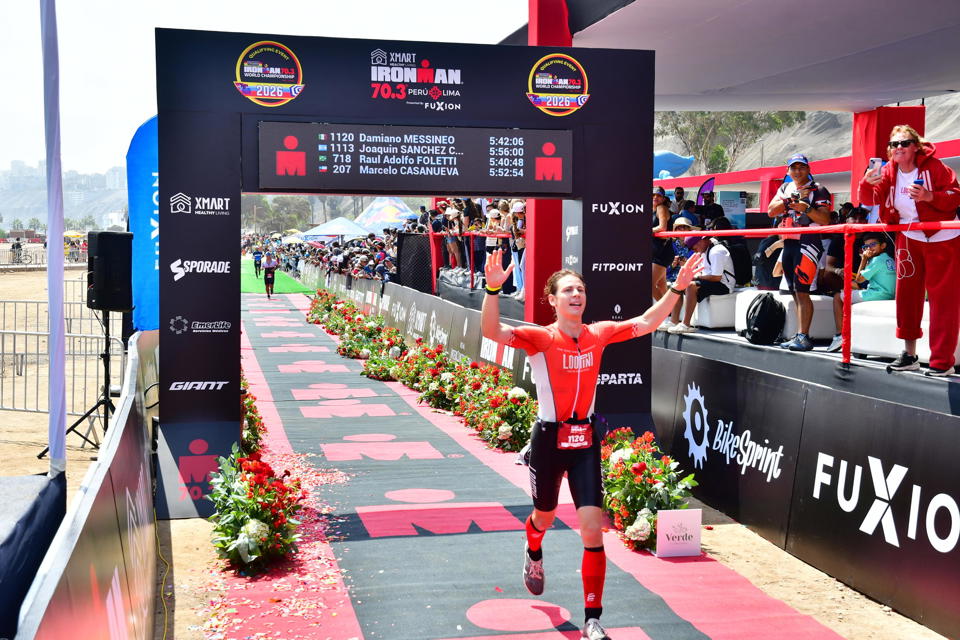
I did the challenge from January 13 to April 26. My results were astonishing. I lost four pounds of fat and gained six pounds of muscle. Additionally, based on 150 biomarkers and the scores — 81 out of 100 at the start of the challenge and 89 at the end — I really improved my health. I ran my first-ever Iron Man in Lima, Peru, and it went great. I finished it in five hours and 42 minutes. And I filmed a documentary about the experience; that will come out in June.
Launching nationwide and looking at data
The next step will be to launch in our first nationwide retail chain. But my co-founder and I like to take things slow to make sure things are perfect. For example, we launched in Target, starting in the Northeast versus nationwide, to use it as a test — seeing how supply chain and marketing work. We look at the data to figure out what’s most effective and has the greatest ROI.
In the early days as a founder, maybe your friends and family believe in you, but nobody else does. That’s the biggest challenge. You’re going to a co-packer or investors when you’re not in the market yet. You need to sell them on your vision. You have to be very resilient because, obviously, you’re going to get rejected a lot. Then, once you do convince someone to take on your product, you need to establish a strong relationship. For example, if an opportunity comes up, like the opportunity to launch in Target, and you need 50,000 pizzas in the next month, you have to have a good enough relationship with your co-packer that they’ll fulfill that.
The more I stay in business, the more I realize that it’s tough, and the chance of making it is very slim. But going back and thinking about when I wanted to start every business, I was so sure that it would work. This is my fourth startup, and it’s finally taking off. The first three did not. Loopini is different from the ones that came before because it’s really my passion — to share Italian food with the world. So I would say anyone who wants to start a business needs to be delusional and think that they can make it 100%. Take what you love, add some delusional thinking that you will be the best, and you’ll make it on your entrepreneurial journey.
Key Takeaways
- Messineo used a spreadsheet to come up with his ideal nutrition label.
- His research unearthed the lupini bean: a complete protein packed with fiber.
- He and his co-founder used pitch competitions and on-the-ground tactics to grow the business.
This as-told-to story is based on a conversation with New York City-based entrepreneur Damiano Messineo. Messineo and Alessandro Pignataro co-founded Loopini, a high-protein pizza brand made with lupini beans that has surpassed $700,000 in revenue this year. The piece has been edited for length and clarity.
I’ve always been interested in being an entrepreneur. The first venture that I tried to start while growing up in Italy failed after five minutes. My mom was not home, so my brother and I, ages 5 and 7, tried to turn the garden into a parking lot because we lived close to the beach. So, my mom went out for literally 20 minutes, and when she came back, she saw my brother on the beach with a cardboard sign saying, “Parking $5.” And so we got shut down after five minutes. That was the first experience.
But after that, as a 17-year-old in Sicily, I was organizing events. I’d moved to the U.S., then back to Italy, where I set up a soccer academy with my roommate. We wanted to recreate the American university where you can play sports and study. But we realized that you can’t build a university experience at 19. Then, I moved to the U.S., and while there, I jumped into another venture, which was renewable energy. We were trying to build a dam — a hydropower project in Nepal.