Inside the New Concierge Class of Luxury
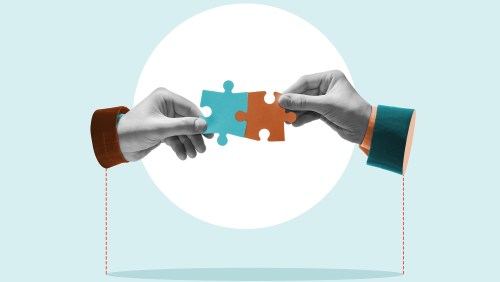
Concierge Class is about emerging companies that understand their customer and build an ecosystem around their needs. The shift from extravagance for extravagance’s sake to luxury with ease. This creates a richer, more intentional relationship.
Opinions expressed by Entrepreneur contributors are their own.
Key Takeaways
- For people who already own most of what they want, the real luxury isn’t another purchase — it’s having someone they trust to protect their time and turn vague desires into meaningful experiences.
- The brands that win at the top end aren’t the ones offering endless options, but the ones quietly narrowing 100 possibilities down to three and making life feel lighter, calmer and more intentional.
Something interesting is happening at the upper end of the luxury market.
The boundaries between industries are beginning to disappear. Private banks are moving beyond managing money into travel, healthcare and lifestyle services. Fashion houses are opening hotels, restaurants and spas. Hospitality companies are building residences and private clubs. Aviation companies are extending well beyond the aircraft.
Everyone, it seems, wants a place in the calendar.
This is more than brand extension. It reflects a larger change in what affluent consumers value.
For people who have accumulated most of the things they want, the scarce commodity is no longer access to more things. It is time, and increasingly, someone they trust to help them spend it well. I’ve spent much of my career in businesses that serve this type of customer, from private aviation and yachting to luxury hospitality, and I’ve watched the same shift play out again and again. The higher you travel up the luxury market, the less appealing endless choice becomes.
What people want instead is good judgment.
They want someone who can edit 100 possibilities down to three, turn a vague idea into something extraordinary, remove the friction and, occasionally, anticipate what they want before they have thought to ask for it.
In other words, they don’t need another vendor. They need a confidant.
From owning more to living better
The pandemic accelerated something that was already underway. When the world stopped, people were given an uncomfortable reminder that time is finite.
For many affluent families, that changed the calculus of wealth. Another house, car or painting may still be nice. But increasingly, the question became less “What else can I own?” and more “How do I actually want to live?”
That distinction matters.
The most interesting luxury businesses today aren’t simply selling nicer products. They are helping customers construct richer lives around them: more time with family, greater access to the world, interesting people to meet, fewer hours lost to logistics and, ideally, fewer things left for “someday.”
That thinking has shaped our own evolution. Exclusive Resorts began in 2002 as a collection of vacation homes for a private group of families. Today, it resembles a modern country club, where the real value extends well beyond the residences. Members can book a vacation themselves. What they value is having someone they trust orchestrate their time, and a community that often turns a great trip into something more enduring.
Our chairman, Steve Case, understood the power of community long before most of us had an email address. In the 1990s, he helped build one of the first great digital communities with AOL. Today, he talks about a growing premium on “real people, real places, and real authentic experiences.” I think he’s right.
That same thinking is informing The Exclusive Collective, which brings together Exclusive Resorts, Inspirato and onefinestay, three distinct approaches to luxury travel designed to serve different needs and moments in people’s lives. The point isn’t to give people more choice. There is already quite enough of that. It is to become more useful to them over time.
That, I think, is the larger opportunity for luxury brands: not to occupy every part of a customer’s life, but to earn a meaningful place in more of it.
The new luxury is stewardship
We are hardly alone. Look across luxury, and the old boundaries between industries are disappearing. Bulgari has extended its name from jewelry into hotels around the world. Louis Vuitton has moved into restaurants and cafés, while Dior has brought its point of view into hospitality through branded spas.
Meanwhile, hospitality companies such as Four Seasons and Rosewood are moving further into residences, and financial institutions are expanding well beyond the balance sheet into the innumerable complications that accompany modern wealth.
A generation ago, a great luxury brand wanted a larger share of your wallet. Today, the smartest ones want a larger role in your life.
Different industries. Same underlying proposition: stewardship.
For decades, luxury was largely about acquisition. The bigger boat. The rarer watch. The harder-to-get table. Those things haven’t disappeared, nor will they. But the more interesting end of the market is increasingly about what cannot be put in a display case: access, judgment, discretion, belonging and time.
And discretion is important here. The best service rarely announces itself.
It isn’t another app demanding attention or a menu containing 600 options. It is knowing which three options are worth considering. It is a dinner appearing at precisely the right moment, a problem being solved before anyone notices it existed, or a journey being designed around an interest someone mentioned in passing six months earlier.
The work is considerable. The experience of it should not be.
What entrepreneurs should pay attention to
There is a lesson here, well beyond luxury travel. For entrepreneurs, the opportunity isn’t simply to sell customers more. It is to become more useful to them.
That requires a different way of thinking about growth. Rather than asking, “What else can we sell this person?” ask, “What else can we take off their plate?”
The distinction sounds small. It isn’t. One produces product extensions. The other produces relationships.
The companies that understand this will increasingly build ecosystems around their customers: networks of services, experiences, expertise and community that remove the administrative clutter of modern life and create room for something better in its place.
The strongest will move from vendor to advisor, from advisor to confidant and, ultimately, from a company someone buys from to a company they organize part of their life around.
I think of these businesses as the emerging “Concierge Class.” Their value lies as much in what customers don’t experience as what they do: the phone calls they never have to make, the options they never have to research, the details they never know went wrong.
The result is not extravagance for extravagance’s sake. It is ease. And, at its best, that ease creates space for a richer, more intentional way of living. For generations, luxury was largely measured by what you could acquire. Increasingly, it will be measured by what someone can give back to you: access, ease, connection and, most valuable of all, time.
The ledger still matters. But the calendar may matter more. Money, after all, can be made again. Tuesday cannot.
Key Takeaways
- For people who already own most of what they want, the real luxury isn’t another purchase — it’s having someone they trust to protect their time and turn vague desires into meaningful experiences.
- The brands that win at the top end aren’t the ones offering endless options, but the ones quietly narrowing 100 possibilities down to three and making life feel lighter, calmer and more intentional.
Something interesting is happening at the upper end of the luxury market.
The boundaries between industries are beginning to disappear. Private banks are moving beyond managing money into travel, healthcare and lifestyle services. Fashion houses are opening hotels, restaurants and spas. Hospitality companies are building residences and private clubs. Aviation companies are extending well beyond the aircraft.
Everyone, it seems, wants a place in the calendar.
This is more than brand extension. It reflects a larger change in what affluent consumers value.
For people who have accumulated most of the things they want, the scarce commodity is no longer access to more things. It is time, and increasingly, someone they trust to help them spend it well. I’ve spent much of my career in businesses that serve this type of customer, from private aviation and yachting to luxury hospitality, and I’ve watched the same shift play out again and again. The higher you travel up the luxury market, the less appealing endless choice becomes.
What people want instead is good judgment.
They want someone who can edit 100 possibilities down to three, turn a vague idea into something extraordinary, remove the friction and, occasionally, anticipate what they want before they have thought to ask for it.
In other words, they don’t need another vendor. They need a confidant.