She Helped Instagram Fight Back Against TikTok With AI. Now She’s Using the Same Playbook on a Problem Every Business Owner Knows.
She built AI for some of the biggest companies in the world. Then she decided restaurants needed it more.
Opinions expressed by Entrepreneur contributors are their own.
Key Takeaways
- Maria Zhang saw firsthand how AI could power recommendations, matching and personalization at companies like Tinder and Meta.
- Restaurants have opportunities hiding in plain sight. They just need to find the right AI tools to help with catering, answering calls and supporting staff in an effective way.
- Zhang sees AI as a way to handle repetitive work without distracting employees from the guests in front of them.
When TikTok exploded, Instagram had a problem. Short-form video was changing how people consumed content, and Instagram needed an answer.
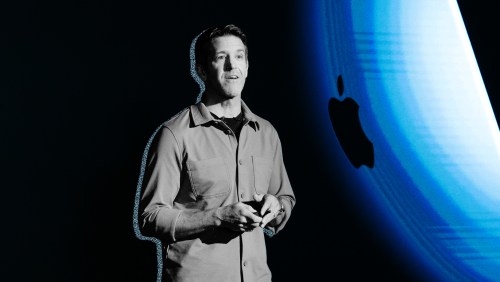
Maria Zhang, now CEO of Palona AI, was part of the team working through that challenge.
“It was quite intense,” Zhang says. “TikTok just went wild.”
Zhang joined Facebook, now Meta, as vice president of engineering at Instagram. During her time there, the platform faced fierce competition from TikTok and launched Reels.
“It wasn’t a straight shot,” Zhang says. “We definitely iterated a ton and made tough decisions along the way.”
At the time, Zhang wrote a white paper outlining what she believed would help Instagram compete.
“To win against TikTok, the secret sauce is AI,” she says.
AI could understand user interests, identify trending content and emerging creators, and recommend the right content at the right moment. It wasn’t Zhang’s first experience seeing AI work at massive scale. Before Meta, she served as vice president of engineering at Yahoo and later CTO of Tinder, where she watched the dating app experience what she describes as “hockey stick” growth.
Her team at Tinder used AI for content moderation, matching, recommendations and ranking, earning an award for AI innovation in 2017. Later, at Google, Zhang worked on technology designed to improve developer productivity.
Each experience gave Zhang another look at what happens when powerful technology is applied to a difficult problem.
Now, she believes the industry is at the beginning of something much bigger.
“As a technologist, I see this wave of transformation as the most impactful,” Zhang says. “Many, many times — bigger than internet and then the iPhone came out, mobile internet.”
That left Zhang with a different question: Where could everything she had learned about AI make the biggest difference?
Building restaurant intelligence
After years of building technology at some of the biggest companies in the world, Zhang started thinking about where AI could make the biggest difference.
Google engineers weren’t at the top of her list.
“We can help Google engineers be more productive, but I think they don’t need a lot of help,” Zhang says.
Zhang and her co-founders wanted to apply what they had learned somewhere else. They chose restaurants.
“You guys are absolutely the hardest working people,” Zhang says. “And there are many, many of you guys.”
What Zhang found was an industry where employees serve the customer in front of them while answering phones, managing takeout orders and handling larger opportunities like catering.
A Father’s Day test at Cali BBQ showed how much activity could be hiding in those interruptions.
The restaurant let Palona AI handle incoming calls rather than sending them to employees. Roughly 350 calls came in that day.
“You’re like, ‘I never knew so many people call me,’ because the lines get busy and you never even picked up,” Zhang says.
Customers wanted to know about tables, hours and whether ribs and brisket were still available. Zhang says takeout orders doubled and Cali BBQ finished the day with 18% year-over-year top-line growth.
But the experiment exposed another problem.
“A lot of the calls were actually for large orders,” Zhang says. “Catering.”
Catering inquiries can involve budgets, guest counts, proposals, changes and follow-ups. Zhang saw another place where AI could take work off a restaurant manager’s plate.
Her team built an AI catering manager to handle those interactions. Zhang says one restaurant chain generated $5,800 through the system in a single day.
For Zhang, that gets back to why she left Big Tech. The opportunity wasn’t simply to build more AI. It was to find places where technology could give people back time to focus on work that still needs a human.
About Restaurant Influencers
Restaurant Influencers is brought to you by Toast, the powerful restaurant point-of-sale and management system that helps restaurants improve operations, increase sales and create a better guest experience. Toast — Powering Successful Restaurants. Learn more about Toast.
Restaurant Influencers is proud to have PepsiCo as a sponsor of this episode. Partnering with PepsiCo Foodservice helps restaurant operators drive sustainable growth through smarter digital experiences, AI-backed menu optimization, and tools designed to create more profitable online orders. Check out PepsiCo Foodservice