He Took a ‘Mythical Unicorn Job’ Working As Amazon’s Chief Meteorologist. Most People Don’t Even Know He Exists.
Most don’t realize Amazon has a Chief Meteorologist — or how central the role is to operations.
Key Takeaways
- Josh Kastman turned a childhood obsession with Midwest snowstorms and Weather Channel broadcasts into a Ph.D in meteorology and a research career at the National Weather Service.
- He describes his move to Amazon as landing a “mythical unicorn job” for a scientist, shifting his focus from public forecasting to protecting millions of employees from extreme weather.
- As chief meteorologist in Amazon’s Global Security Operations Center, he constantly scans for storms, heat, ice and floods that could create safety risks.
Josh Kastman has always been fascinated by weather — from a young age, he knew what he wanted to do.
As an 8-year-old growing up all over the Midwest, he was always watching The Weather Channel, looking for the next big snowstorm. When it arrived, he would be outside measuring the snow every hour, treating each storm like a personal science experiment.
That early fascination quickly turned into a career path. When Kastman got to high school, he did a volunteer internship for the National Weather Service, where he called police departments, fire departments and even local farmers to see if they had any storms to report.
When it came time for college, Kastman chose the University of Missouri, where he got a Bachelor’s, Master’s and then a Ph.D in meteorology.
“It was awesome,” he tells Entrepreneur in a new interview. “I got to do things like launch weather balloons overnight in various farm fields, which was cool.”
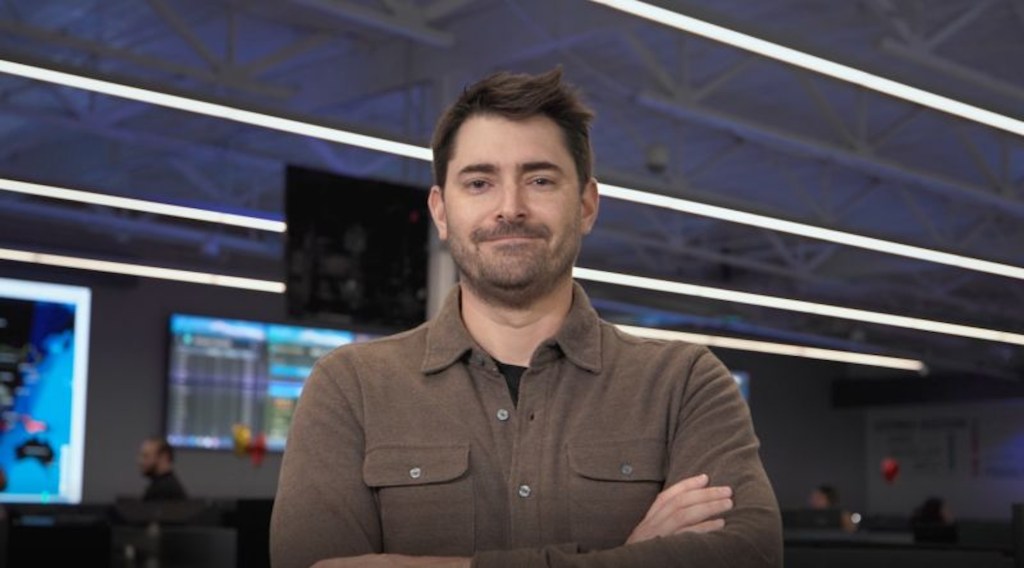
After graduating, he landed a research scientist job at the National Weather Service, where he spent about seven years. There, he led projects like the Winter Storm Severity Index, an effort to contextualize winter weather events and put them into a single index to help people understand the intensity of a storm.
Landing a ‘mythical unicorn’ role at Amazon
The pivot to Big Tech started at home. Kastman’s wife, who works at Amazon, spotted a posting for a meteorologist role and showed it to him. His first reaction was disbelief.
“A scientist working for a Big Tech company is kind of like a mythical unicorn job,” he says. “You know, you hear about them, but is it actually a real thing that they would hire a meteorologist?”
The more he learned, the more it clicked. His primary motivation had never changed: “As a meteorologist, I really care about life and safety,” he says. “That’s my primary concern.”
At the National Weather Service, that meant serving the general public. At Amazon, it meant something more specific, but just as important: serving millions of employees and delivery partners moving through real-world weather every day.
“When I dug into the Amazon job, that’s what this job is really focusing on — how do we keep our employees, our partners safe during extreme weather events? How do we plan for these kinds of things?” he says. It felt, in his words, like a “really natural fit.” He joined Amazon in Phoenix in 2024 as chief meteorologist and has now been in the role for more than two years.
Inside Amazon’s weather center
Most people don’t realize Amazon even has a chief meteorologist, let alone a global weather program embedded in its operations. The team sits inside the company’s Global Security Operations Center (GSOC), which has been around for about 25 years and has always monitored weather and other risks around the clock.
Kastman’s role builds on that legacy. “My role is really enhancement of what the risk management program at Amazon does,” he explains.
On calm days, the team leans into preparedness rather than adrenaline. They host summits with colleagues from across the company to refine risk mitigation strategies, rehearse playbooks and ensure that every site knows what to expect.
Even on quiet days, “there’s always something going on across the globe,” Kastman notes. But the focus shifts from reacting to planning: mapping potential hazards, understanding which regions are most vulnerable to unusual events and making sure emergency response plans are ready to go.
When the map lights up
The job looks very different when the radar turns ugly.
“Our whole job is focused on identifying what weather events are occurring that could cause a safety risk,” Kastman says.
Once a threat emerges, the clock starts: Where will it hit, how bad will it be, when will conditions deteriorate, and how long will it take to recover?
“On a busy weather day for us, it’s divide and conquer amongst our team,” Kastman explains. One person focuses on deep analysis, another leads briefings and another handles rapid-fire questions from leaders across regions via email and other platforms.
The weather team can trigger concrete operational changes at Amazon. Based on their reports, the company can reroute drivers, close sites and scale back activity before conditions become dangerous.
In one recent ice storm, Winter Storm Fern, which occurred in late January, the team warned leaders that freezing rain in Mississippi and Tennessee would make recovery complex and risky.
“This was an unusual situation,” Kastman says. “When we have an ice storm, there’s going to be a complicated recovery process, and that means we need to take care of our employees and partners. We need to make very good, safe decisions around these ice storms because you just cannot drive when there’s any amount of ice on the road.”
The early warning led to proactive shutdowns and gave workers time to be home with their families.
The voice of calm
Kastman’s team is not always in the business of escalation. Sometimes their job is to talk everyone down. He remembers a headline predicting 40 inches of snow for New York City one winter. It made people “overactivate a little bit,” from site leaders to front-line employees, he says.
“Everything at Amazon is two-way communication,” he adds. “We can provide information from the top down, but then we also take feedback from any level of employee all the way up.”
As questions rolled in, the weather team issued a briefing: They did see the signal but believed the forecast had been sensationalized and that the extreme outcome was unlikely. They turned out to be correct.
In that sense, Kastman’s role is as much about emotional regulation as meteorology. “Weather can be very nerve-inducing,” he says. “Part of our subject matter expertise is to help provide that context, to help people understand when things are truly a safety concern and how to mitigate those.”
Advice for future ‘unicorn’ meteorologists
Kastman knows his job sounds niche, but he argues that the skill set behind it is anything but. “If you have a meteorology degree, don’t just think that you’re pigeonholed into one or two different outcomes,” he says.
A meteorology education, he insists, is training in critical thinking and subject matter depth — tools that travel well. “People want to talk to subject matter experts,” he says. “If you have a meteorology degree, you have subject matter expertise, and you can use that in a lot of different ways,” from emergency management to risk management and beyond.
For students who still imagine only a TV green screen or a government office at the end of the path, he offers a broader lens: “Just understand that the skill set that you’ve gained as a scientist can be broadly applied across the private sector,” he says.
Key Takeaways
- Josh Kastman turned a childhood obsession with Midwest snowstorms and Weather Channel broadcasts into a Ph.D in meteorology and a research career at the National Weather Service.
- He describes his move to Amazon as landing a “mythical unicorn job” for a scientist, shifting his focus from public forecasting to protecting millions of employees from extreme weather.
- As chief meteorologist in Amazon’s Global Security Operations Center, he constantly scans for storms, heat, ice and floods that could create safety risks.
Josh Kastman has always been fascinated by weather — from a young age, he knew what he wanted to do.
As an 8-year-old growing up all over the Midwest, he was always watching The Weather Channel, looking for the next big snowstorm. When it arrived, he would be outside measuring the snow every hour, treating each storm like a personal science experiment.
That early fascination quickly turned into a career path. When Kastman got to high school, he did a volunteer internship for the National Weather Service, where he called police departments, fire departments and even local farmers to see if they had any storms to report.