This Couple’s ‘Passion Project’ Side Hustle Made $1M Fast: ‘We Used ChatGPT…the Payoff Is Massive’
Samantha and Kevin Dwoskin’s dietary struggles inspired an innovative business.
Key Takeaways
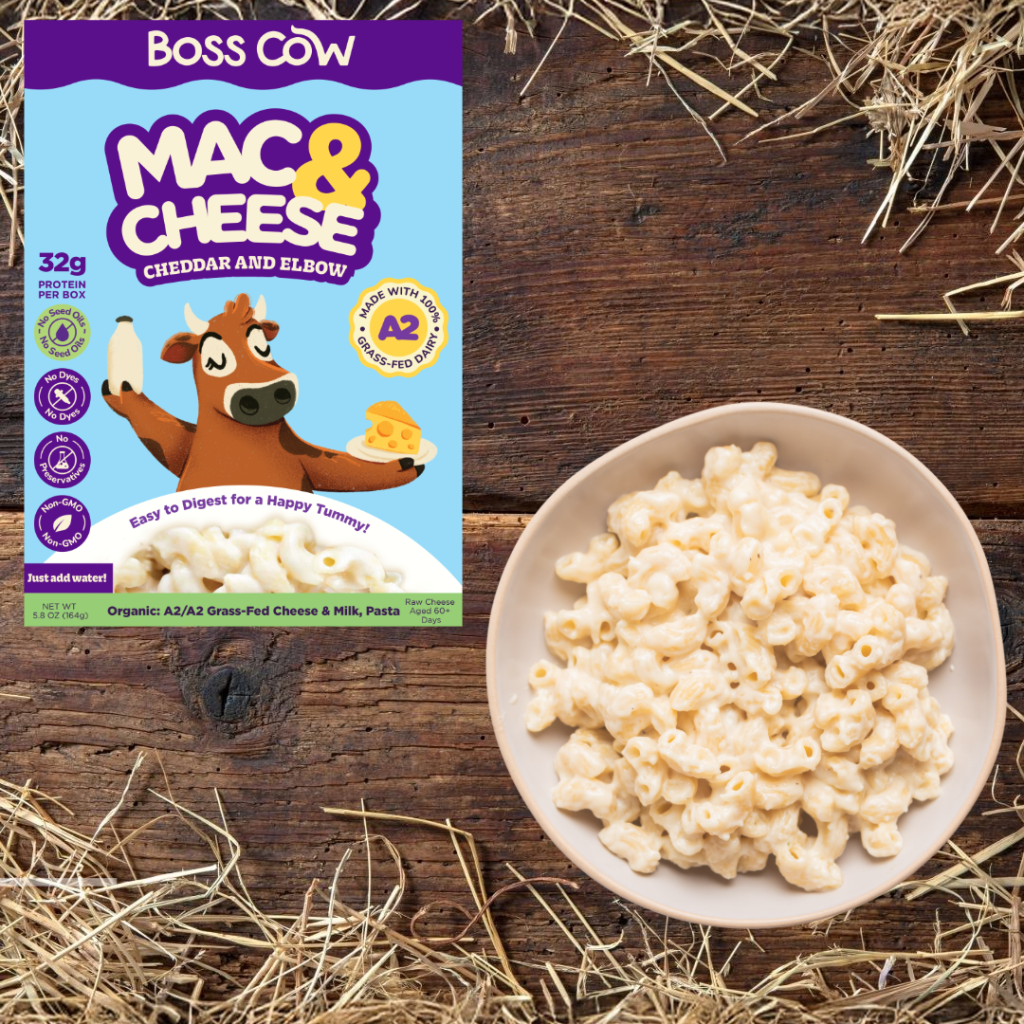
- The Dwoskins made cookies using A2/A2 dairy, which can be more digestible for those with a dairy sensitivity. Then, they started making mac and cheese.
- Here’s how the husband-and-wife team took their still-growing side hustle to $1 million in under two years.
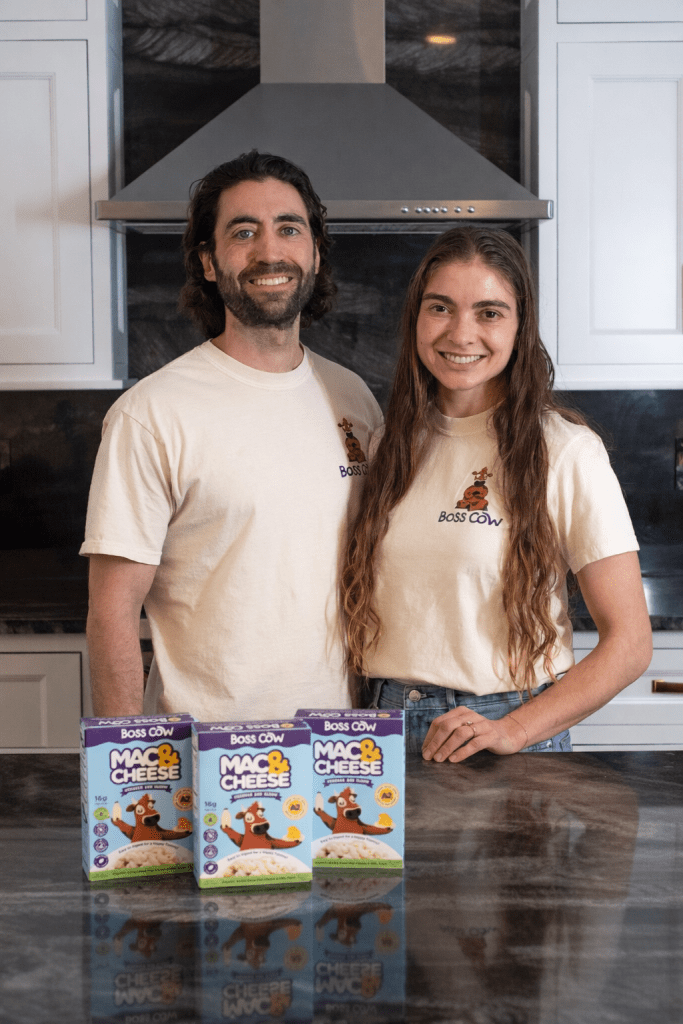
This Side Hustle Spotlight Q&A features Samantha Dwoskin, 32, and Kevin Dwoskin, 37, the Pennsylvania-based married co-founders of Boss Cow. Their business sells cookies and mac and cheese made with A2/A2 dairy, also known as 100% A2 dairy, which contains only the A2 beta-casein protein and is a more digestible alternative to typical A1 dairy. Responses have been edited for length and clarity.
Sign up for the Money Makers newsletter to get weekly, expert-backed tips to help you earn more money — from real people who founded and scaled successful businesses. Get it in your inbox.
What was your day job or primary occupation when you started your side hustle?
Samantha: When we first started Boss Cow, I was a nurse practitioner in the pediatric cardiac ICU caring for babies and children pre-and post-cardiac surgery, including heart transplants. Kevin was a banking regulatory compliance consultant for a Big 4 accounting firm for 11 years.
Finding the inspiration to start a side hustle
When did you start your side hustle, and where did you find the inspiration for it?
Samantha: We started operations in March 2024 but came up with the idea for Boss Cow in 2023 when I was working as a travel nurse practitioner in Southern California and Kevin was working remotely post-Covid.
At that time, Kevin completely changed his diet to a whole food diet to help heal his Crohn’s disease, and in doing so, he found a farm with a blog post that talked all about A2/A2 cow dairy and how many people who can’t tolerate typical dairy can consume it without any issues. As someone who hasn’t had dairy in over a decade due to the typical digestive issues, I was interested in trying it, but didn’t have much hope. When the A2/A2 milk got delivered and I drank a glass, I was completely fine, no stomach issues.
We were in a bit of disbelief, as it tasted like normal cow milk (which it is). So, we began to do more research, and it turns out this is a common outcome for many people with dairy intolerance. A2/A2 dairy contains only the A2 beta-casein protein, which is the protein all mammals naturally produce (including humans). Cows did as well until a genetic mutation thousands of years ago caused some to produce the A1 protein, which can cause gut issues and inflammation for certain people.
Experimenting with A2/A2 dairy products
So, we joined a co-op out in California that had monthly deliveries of A2/A2 dairy, and I started making all the things with dairy that I craved but couldn’t have for the last 10-plus years. I then went to buy some A2/A2 dairy products like mac and cheese, but there wasn’t anything on the market yet — so we figured, Why not create it ourselves?
We wanted people with dairy intolerance to be able to enjoy real dairy again, just like I did. Kevin also wanted people to have access to food with clean ingredients, given that he found cutting out ultra-processed foods with preservatives, dyes, natural flavors and seed oils helped him with his health issues.
Turning a passion project into a side hustle
What were some of the first steps you took to get your side hustle off the ground? How much money/investment did it take to launch?
Samantha: It honestly started as a passion project of making A2/A2 dairy products for ourselves. We didn’t even have a business plan; we just assumed people were looking for the same things. We started out by sending cookies made with A2/A2 dairy to friends and family, and they were a hit. So we figured we’d start selling something to customers. We sold the cookies at farmers market and online, but quickly transitioned into something else that we loved and missed eating that had a longer shelf-life: mac and cheese. Without any money for research and development, which can cost up to $100,000, we did it ourselves.
For many months, we drove arund meeting farmers to learn more about A2/A2 dairy, regenerative agriculture and our supply chain. Honestly, we wouldn’t be where we are today without our incredible farmers. Being on those farms and watching the dedication required to not use chemical pesticides while also rotating pastures to preserve the land inspired us to commit to using the highest quality ingredients with no shortcuts, even if it meant a higher cost to us and our customers.
We are 100% self-funded and have received no outside investment, including from family or friends. As a bootstrapped team of two, just Kevin and me, we used $30,000 from our savings that we originally planned on using to buy a house and put that towards purchasing ingredients, equipment, branding and a website.
Using ChatGPT to help start the side hustle
Are there any free or paid resources that have been especially helpful for you in starting and running this business?
Kevin: Of course we used ChatGPT, which back in 2023 wasn’t nearly as helpful as it is today, but honestly, the most valuable “resources” weren’t programs or platforms. Meeting our farmers, understanding our supply chain firsthand and connecting with a few other CPG founders at in-store demos taught us more than anything else. Being in stores, talking to customers and learning directly from other operators shaped how we built the business.
If you could go back in your business journey and change one process or approach, what would it be, and how do you wish you’d done it differently?
Kevin: It would definitely be spending more time understanding organic social and paid social marketing ourselves versus trying to outsource it to super inexpensive freelancers. Our business began to see success when Samantha and I took over the marketing side. I’m sure there are plenty of marketing firms that would have done a great job, but the ones we could afford at the time didn’t move the needle. We wasted a lot of time, energy and money assuming it would.
Also, a funny but important one, we used to drive all the online and wholesale orders ourselves to the UPS drop-off or directly to the local health food store, sometimes an hour or more away instead of having UPS pick them up from our facility to ship. How long it took to figure out that UPS could pick up directly at our facility is a bit embarrassing. But on the bright side, we were almost filling an entire UPS truck with our orders by the end of our first year.
Navigating the side hustle’s manufacturing challenges
When it comes to this specific business, what is something you’ve found particularly challenging and/or surprising that people who get into this type of work should be prepared for, but likely aren’t?
Samantha: Our biggest challenge that we didn’t anticipate was finding manufacturers willing to work with us given our unique ingredients like the A2/A2 dairy and having zero tolerance for preservatives, additives or anti-caking agents.
We couldn’t just walk into a mac and cheese manufacturer and ask them to make our product because our process is so different. For example, we shred fresh grass-fed A2/A2 cheese from blocks and freeze dry it instead of spray drying it to maintain the nutrient and flavor profile, which allows us to not use natural flavors or preservatives — something no one else is doing, but also something no single manufacturer is doing. It’s a completely different process and uses different equipment.
Since we didn’t fit neatly into their ultra-mass scale manufacturing model, we decided to manufacture ourselves at first at a very small scale, then once we proved the market was there, we talked to some local family-owned manufacturers and convinced them to help us out. We’ve continued to scale through working with manufacturers that have an interest in making high-quality products that require more attention to detail and some customization to their process.
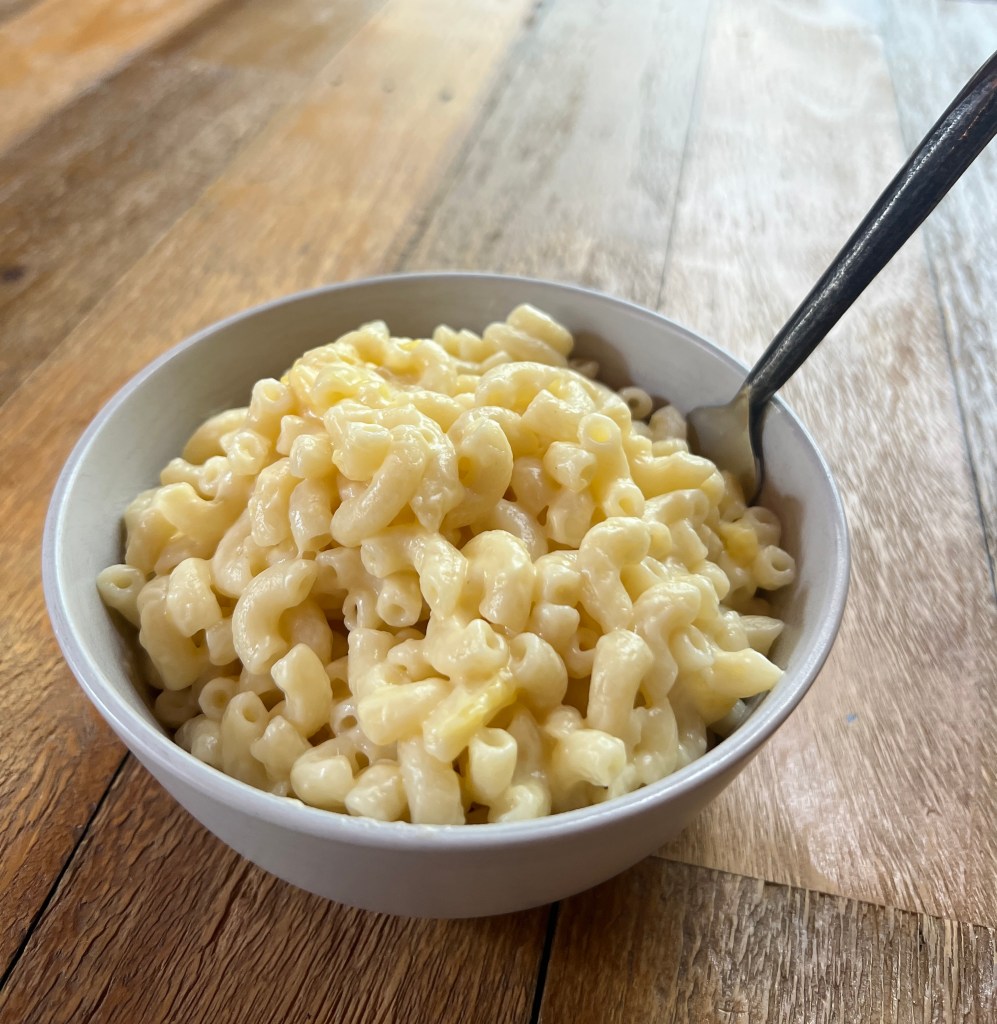
Tracking the $1 million side hustle’s growth and revenue
How much did the side hustle earn? What does growth and revenue look like now?
Kevin: It took about seven months for us to hit our stride and start seeing revenue in the $10,000 range, driven mainly by marketing research and trial and error through data driven optimizations to our website and paid advertising approach.
We crossed the $1 million annual revenue mark in 2025, which is about 20 months after we launched Boss Cow. Growth became explosive when we unlocked additional manufacturing capacity on our mac and cheese and turned on our marketing engine, which was around the same time we became experienced on the marketing side, so the timing was perfect.
Our goal is to reach $3 million in annual revenue for 2026 by continuing to grow brand awareness and delivering the highest-quality, best-tasting mac and cheese on the market. We are also launching a new product line soon that expands our reach into a new customer segment, which we are really excited about.
What do you enjoy most about running this business?
Samantha: We enjoy being our own bosses and being able to work and see each other and our dogs more than when we worked our old jobs. It’s been really cool to see how our completely different backgrounds in nursing and consulting came together synergistically to build Boss Cow. There’s also a sense of pride looking back on what we’ve created from literally nothing and seeing how far we’ve come. It feels really good.
Recommending low-cost resources, like ChatGPT, and other side hustle advice
What is your best piece of specific, actionable business advice?
Kevin: One of my friends said something early on to me that resonated deeply. Research, learn and execute every aspect of your business as much as you possibly can handle before looking to others for help: financial planning analysis, market research, competitor analysis, paid ads, socials, conversion rate optimization, etc.
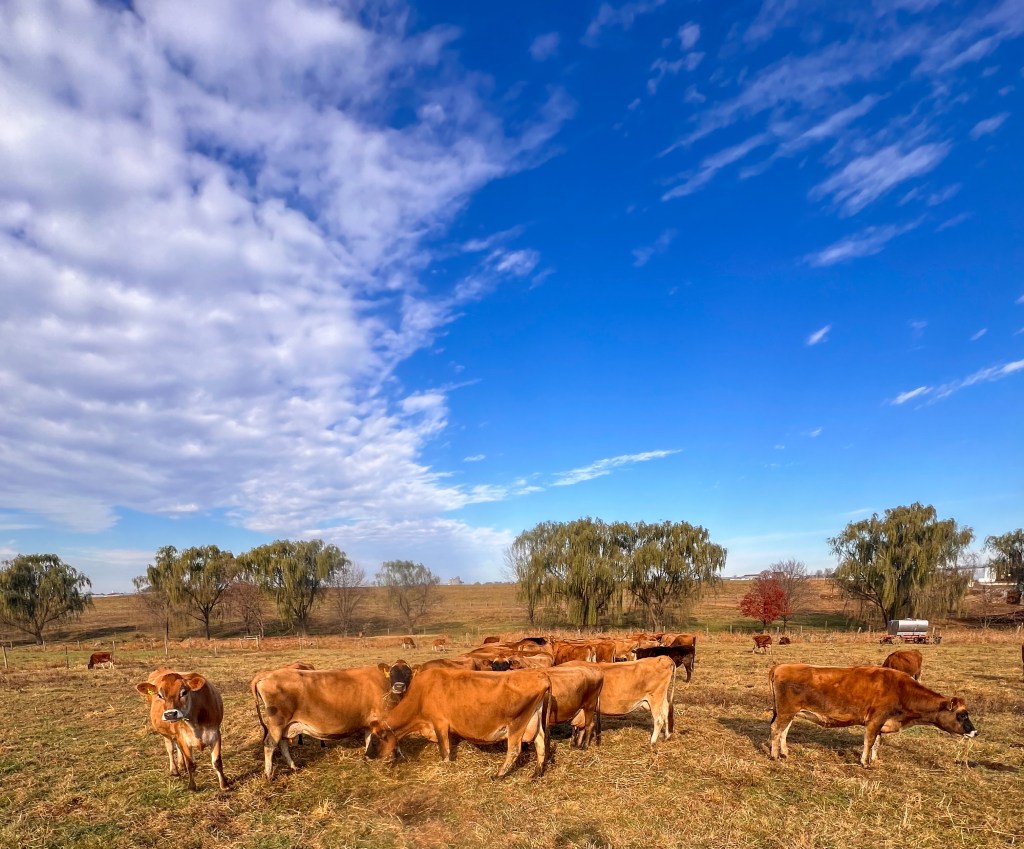
No one cares about your business as much as you do, especially with a bootstrapped budget. There are so many free or low-cost resources out there like ChatGPT, YouTube, Slack channels, etc. that make it easier than ever to quickly learn and begin adding value to your business. It’s scary at first, but the payoff is massive.
Samantha: I think using your company’s mission as a north star to drive most business decisions has been really helpful. Does a decision benefit our customers, our farmers, and finally, the company itself? If not all three, then it won’t work. We want to bring back people’s favorite foods with high-quality, gut-friendly dairy and clean ingredients, while also supporting our local regenerative farmers who are improving our health, the land and our soil.
Key Takeaways
- The Dwoskins made cookies using A2/A2 dairy, which can be more digestible for those with a dairy sensitivity. Then, they started making mac and cheese.
- Here’s how the husband-and-wife team took their still-growing side hustle to $1 million in under two years.
This Side Hustle Spotlight Q&A features Samantha Dwoskin, 32, and Kevin Dwoskin, 37, the Pennsylvania-based married co-founders of Boss Cow. Their business sells cookies and mac and cheese made with A2/A2 dairy, also known as 100% A2 dairy, which contains only the A2 beta-casein protein and is a more digestible alternative to typical A1 dairy. Responses have been edited for length and clarity.
Sign up for the Money Makers newsletter to get weekly, expert-backed tips to help you earn more money — from real people who founded and scaled successful businesses. Get it in your inbox.