His Harvard Dorm Room Side Hustle Started With a ‘Simple Frustration.’ Now It’s Speeding Toward $500,000 in Sales in Its First Year.
28-year-old Brian Youngblood was tired of throwing away half-eaten tubs of hummus.
Key Takeaways
- Youngblood started his shelf-stable hummus brand Prest in November 2024.
- He invested a few thousand in a pressure cooker, dehydrator and other equipment.
- Prest hit $3,600 in week one and is expected to grow sales to $500,000 in year one.
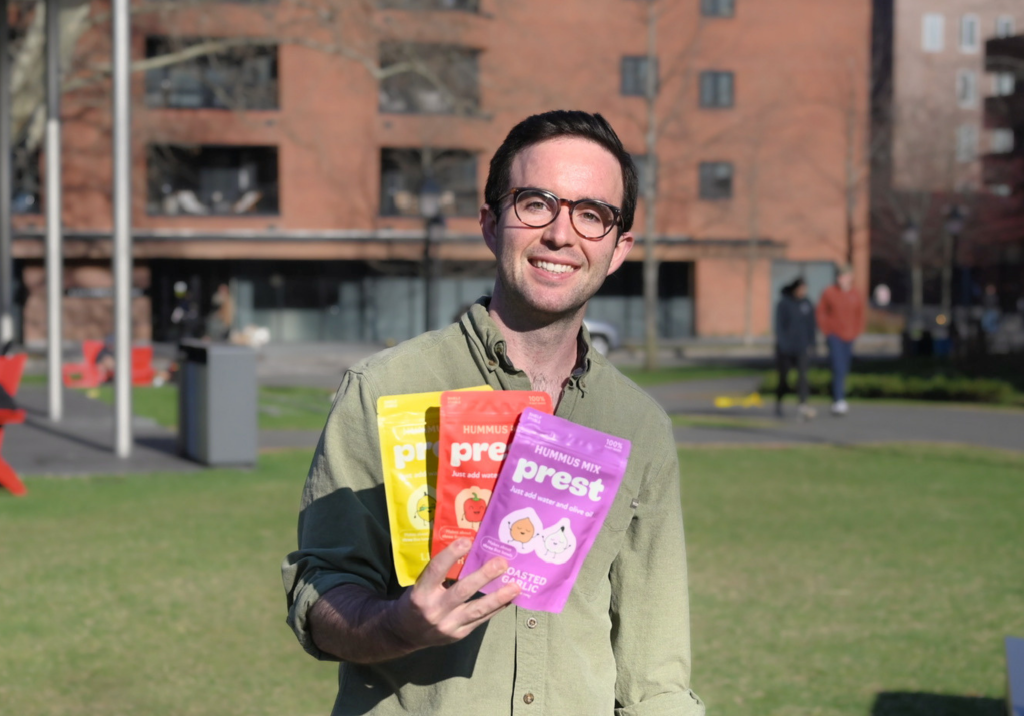
This Side Hustle Spotlight Q&A features Brian Youngblood, 28, of Boston, Massachusetts. Youngblood is the founder of shelf-stable hummus brand Prest, which he runs as a side hustle while attending Harvard Business School’s MBA program. Responses have been edited for length and clarity.
What was your day job or primary occupation when you started your side hustle?
I started my MBA at Harvard Business School in September 2024 and began working on Prest shortly after. Prior to HBS, I worked in manufacturing operations at a food waste startup called Mill. While at Mill, I learned a lot about food waste and was shocked by the stats — over a third of the food that we produce gets wasted, and the majority of that is at the consumer level. That got me thinking that beyond composting, there might be better ways to prevent waste in the first place.
A ‘pretty simple frustration’ inspired his side hustle
When did you start your side hustle, and where did you find the inspiration for it?
I started working on Prest as a side hustle in November 2024 out of a pretty simple frustration: I kept throwing away half-eaten tubs of hummus.
It goes bad quickly after opening, and I would never eat it all. And, honestly, most store-bought hummus doesn’t taste as fresh as homemade — it’s generally made with soybean or canola oil instead of olive oil, and relies heavily on preservatives to extend the shelf-life.
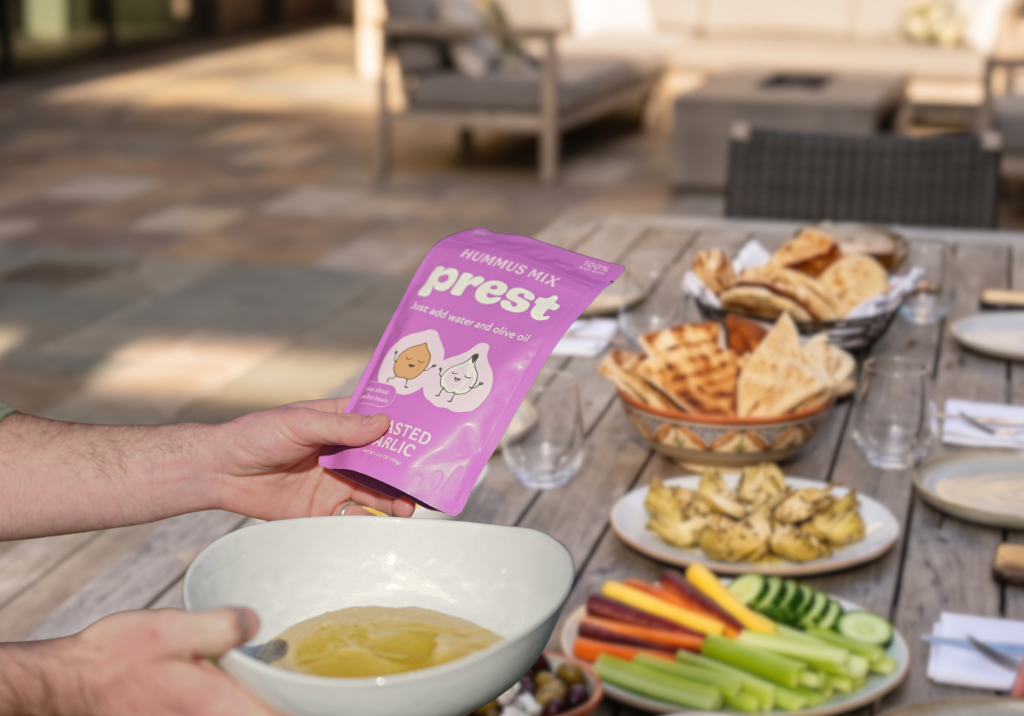
When I started asking around, I realized it wasn’t just me. This is a really common experience. That’s how I came to the idea for Prest: What if hummus could be shelf-stable, made fresh on demand with little effort and actually taste great?
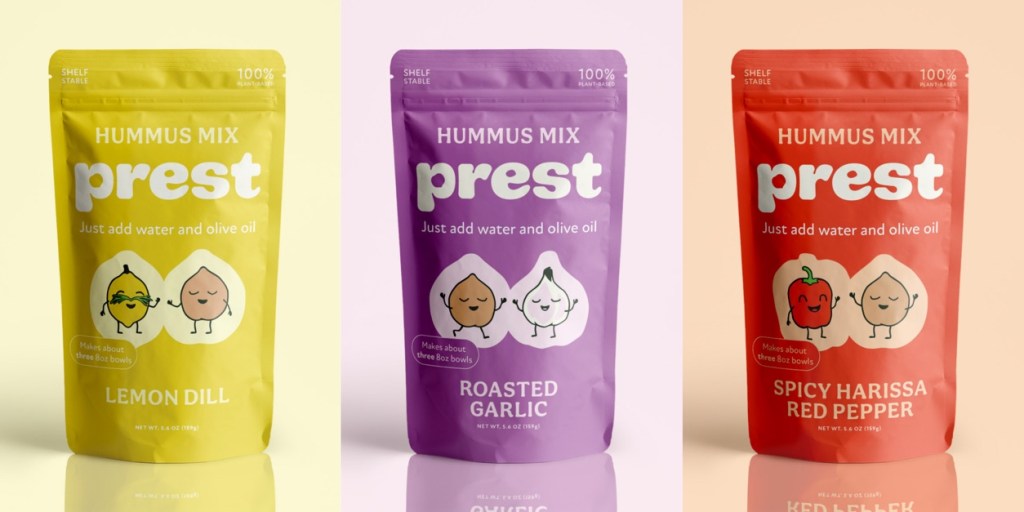
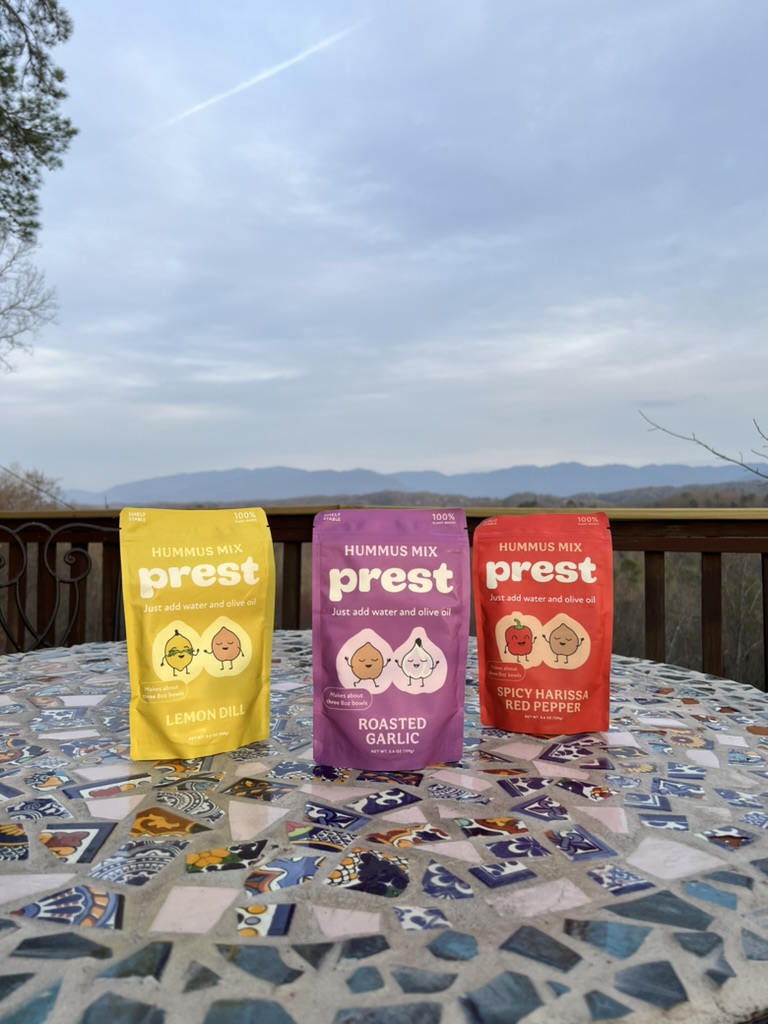
I set out to build a powdered version that lets you make exactly what you want, when you want it. We launched in March of this year with our first three flavors: Lemon Dill, Roasted Garlic and Spicy Harissa Red Pepper.
Cooking chickpeas in the dorm prompted a production move
What were some of the first steps you took to get your side hustle off the ground? How much money/investment did it take to launch?
I started Prest from my shoe-box of a dorm room in business school. I bought a pressure cooker, dehydrator and some other equipment. But I quickly realized I couldn’t make it in my bedroom, which became a sauna any time I cooked chickpeas.
The university was pretty quick to force me to move my production elsewhere (which is super fair), so I found a donut shop in Cambridge that let me use their kitchen after hours. For months, I’d bike 20 minutes with chickpeas in my backpack, make batches and run blind taste tests with friends, classmates and anyone else willing to try it.
I spent a few thousand dollars in the early days to get to a product I loved. Then I invested more of my savings into manufacturing, branding and setting up the business to get to the initial launch.
In-person connections and free resources helped Prest grow
Are there any free or paid resources that have been especially helpful for you in starting and running this business?
I quickly realized that shelf-stable hummus wasn’t your classic business school startup. So I looked for resources outside of the school including alumni, mentors and other groups in the industry. Communities of founders and industry experts like Startup CPG, CPGD and the Naturally Network were critically important in helping me figure out how to start and what tools I should use.
I went to trade shows like FancyFood in NYC and IFT Chicago, which allowed me to meet suppliers, other brands that I could learn from and potentially partner with in the future. Also, they’re just a ton of fun. I still think IRL connections are the most important thing for getting your business going. There is always someone with more experience, and the great thing about consumer packaged goods (CPG) is that they’ll probably be willing to help. But people want to know you and why in the world you chose to do this.
Don’t be afraid to build a side hustle in public
If you could go back in your business journey and change one process or approach, what would it be, and how do you wish you’d done it differently?
I would have started building in public much earlier. Sharing the process, asking for feedback and bringing people along has been one of the fastest ways I’ve learned. I wish I had done that from day one rather than waiting until I felt more confident in my direction. It is really hard to do though when you’re one person; you just can’t capture all of the moments as easily.
But it also would’ve made the journey all the more fun and memorable, and I’m sure I could’ve brought some friends along to help out.
Pitch your side hustle — the stakes are lower than you think
When it comes to this specific business, what is something you’ve found particularly challenging and/or surprising that people who get into this type of work should be prepared for, but likely aren’t?
You have to get really comfortable being uncomfortable. Building a consumer brand means constantly putting yourself out there, often in ways that feel unnatural at first. In the beginning, I was hesitant to post about what I was doing and hesitant to pitch. Exposure therapy has certainly changed this and has made me much more comfortable in these circumstances.
Now I don’t worry nearly as much about posting and just like to produce whatever I find interesting or entertaining. And I’m much more comfortable pitching to just about anyone — even Kevin O’Leary, who I met while trying to do a sampling event on campus (he ignored me and the hummus, but did eat some of my carrots).
You realize pretty quickly that the stakes are much lower than you think, and you miss a lot of opportunities if you don’t put yourself out there.
Can you recall a specific instance when something went very wrong — how did you fix it?
In our first manufacturing run, none of the pouches would open on the machines at our co-packer, but we needed to finish the run quickly because I had to take the product to Expo West the following day. Luckily, my friend came with me to take some photos, so we decided to put on gloves and manually open 5,000 pouches so they could run through the machine. We barely finished in time, but I made the flight with product in hand — and a very clear list of what needed to change for the next run.
The side hustle hit $3,600 in week 1 — but it’s just the start
What does this side hustle’s growth and revenue look like?
We did about $3,600 in revenue in week one and are on track for around $7,000 in the first month. We’re currently selling products online through Prest’s website and on TikTok Shop. Growth has been entirely organic, driven by friends, social and in-person sampling. In the next phase, we’ll be hitting the ground running at farmers markets, trying to get the product into produce boxes and gifting boxes, and pursuing creative points of distribution since Prest is shelf-stable. As we ramp up, we’re projecting that we’ll reach about $500,000 in sales in year one.
What does a typical day or week of work look like for you?
While in school, I tend to spend about 25 hours a week on the business. That will increase once I graduate. It takes a whole lot of context-switching right now because the business school schedule is such a mess. I work at very different times each day, and since I’m currently running social media for the brand, I also spend a decent amount of time just making content…and let me tell you it is not for the faint of heart! Much respect for the creators out there.
A side hustle that boosts creativity and experimentation
What do you enjoy most about running this business?
I love hearing how people enjoy Prest and how they choose to customize it to their liking. At first, I was terrified at the idea of people tweaking it because I’m an engineer. But it’s been really exciting to see the ideas people come up with; it boosts my creativity and makes me want to experiment more. It’s also amazing to see the broad appeal across generations and with so many different groups of people who like the product for a variety of reasons.
What is your best piece of specific, actionable business advice?
Start before you feel ready and talk about what you’re building.
I’ve changed my approach to this business multiple times, and every shift came from conversations, chance meetings or someone offering help after hearing what I was working on. There’s very little upside to keeping your idea secret and a huge benefit to letting people in.
Also, one of the best pieces of advice I received early on was to simplify your life early. Use platforms, partners and systems so you can focus on what actually matters: getting the product into folks’ hands and spending time learning from them.
Key Takeaways
- Youngblood started his shelf-stable hummus brand Prest in November 2024.
- He invested a few thousand in a pressure cooker, dehydrator and other equipment.
- Prest hit $3,600 in week one and is expected to grow sales to $500,000 in year one.
This Side Hustle Spotlight Q&A features Brian Youngblood, 28, of Boston, Massachusetts. Youngblood is the founder of shelf-stable hummus brand Prest, which he runs as a side hustle while attending Harvard Business School’s MBA program. Responses have been edited for length and clarity.
What was your day job or primary occupation when you started your side hustle?
I started my MBA at Harvard Business School in September 2024 and began working on Prest shortly after. Prior to HBS, I worked in manufacturing operations at a food waste startup called Mill. While at Mill, I learned a lot about food waste and was shocked by the stats — over a third of the food that we produce gets wasted, and the majority of that is at the consumer level. That got me thinking that beyond composting, there might be better ways to prevent waste in the first place.
A ‘pretty simple frustration’ inspired his side hustle
When did you start your side hustle, and where did you find the inspiration for it?
I started working on Prest as a side hustle in November 2024 out of a pretty simple frustration: I kept throwing away half-eaten tubs of hummus.