She Grew Up on Food Stamps and Started a Hedge Fund at MIT. Now Her 8-Figure Startup Counts Nvidia and OpenAI as Clients.
Christina Qi recently raised $97 million in Series B financing for her data-driven startup.
Key Takeaways
- Christina Qi started a hedge fund as an undergraduate at MIT, building it to trade $7 billion per day.
- A “really bad year in 2020” caused the hedge fund to shut down.
- Qi then started her current venture, a market data provider called Databento.
Christina Qi boasts an impressive resume. As a 21-year-old undergraduate at MIT, she quietly did something most finance veterans spend decades attempting: She started her own hedge fund. At its height, the fund, Domeyard, traded $7 billion in volume per day.
In 2020, after eight years of running Domeyard, Qi and her fellow founding partners realized that the fund was not scalable, and performance was suffering. “We had a really bad year in 2020; performance was down 12%, and so we told our investors that we were shutting down,” Qi tells Entrepreneur in a new interview.
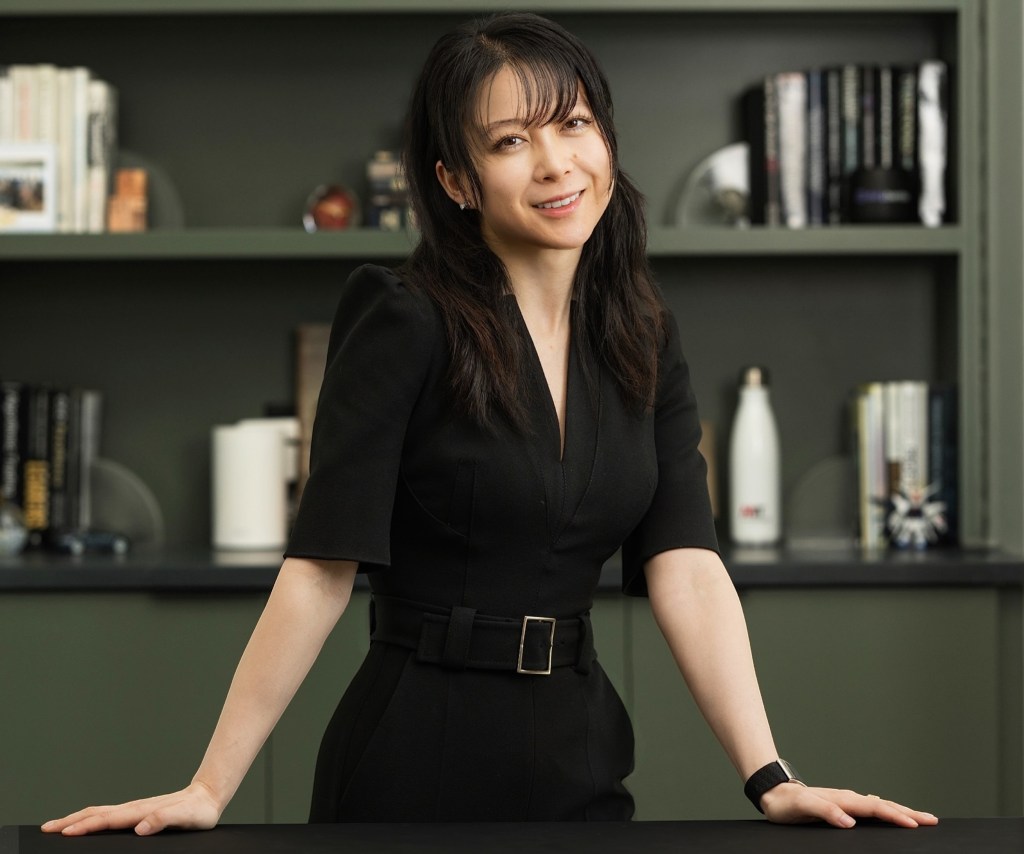
She started fresh that year with a different idea, co-founding and serving as CEO of a new startup called Databento. The company strives to become “the single source of truth for financial information,” Qi explains. It provides market data for researchers at hedge funds and AI labs and now has 70,000 customers, including Nvidia and OpenAI.
Databento raised $97 million in a Series B funding round in July, bringing the startup’s total disclosed funding to about $127 million. Qi has not made the startup’s valuation public. Earlier this year, Databento’s head of quantitative analytics, Lou Lindley, disclosed that the startup had 8-figure annual recurring revenue.
“We grew our revenue almost tenfold from a base well above single-digit millions,” Qi says. “We have a lot of competitors in this industry, which is probably why we don’t share exact figures.”
Despite having customers concentrated in Wall Street and Silicon Valley, Qi chooses to reside in her home state of Utah. She runs the business, which employs 38 people, remotely. Instead of seeing coworkers when she steps outside, she looks out at her 10 chickens, two turtles and 15-year-old dog.
An unconventional founder
Qi explains her entrepreneurial journey “does feel like the American dream to an extent.” She grew up on food stamps and welfare in a low-income household in Utah before attending MIT.
“Was it harder? Maybe. Look, the starting line might have been a few steps back,” Qi says. “It might have been a little bit more difficult as a result because of where I’m from.”
She adds that people don’t consider her “CEO material” in social settings.
“When I go to a networking event, people sometimes ask if I can speak English,” Qi says. “Or people think I’m a waitress. I got mistaken for a waitress eight or nine times now in my career. Even two weeks ago, I got mistaken as a waitress at a cafeteria.”
People ask Qi where she is “really from” all the time and aren’t satisfied when she tells them she’s from Utah. “People also say my English is great all the time, but it’s my native language,” she says.
Qi notes that these experiences were frustrating and demonstrated that she had a “disadvantage” compared to her peers.
“I still managed to raise a lot of funding, hire a fantastic team and run a tech business selling to quants, who are mostly men in finance,” she says. “I’m in a very male-dominated industry, and I’ve managed to still be fine.”
Qi points out that her story proves it is possible to achieve startup success even when you start at a disadvantage. She hopes to inspire more people to pursue their dreams and be unafraid of starting their own ventures.
In 2019, Qi was elected co-chair of the board of Invest in Girls, a nonprofit organization focused on financial literacy for high school girls. She has also held board and committee roles with the MIT Sloan Boston Alumni Association and 100 Women in Finance, a nonprofit that helps women advance their finance careers.
A shift in mindset
Qi says in the Asian American culture she grew up in, admitting to failure is something to avoid at all costs.
She experienced this firsthand at MIT. As a freshman, she applied to her first internship and received a rejection within 24 hours. “I cried,” Qi says. “I just remember that core memory.”
She applied to 100 internships after that, and then it just became like clockwork. “You realize, Oh, rejection is just normal,” Qi says. “The first time, it hurts the most.”
Now, Qi considers failure a part of her daily life. Investors and customers reject her every day, and she considers it a part of her job. If she is not facing failure, then she is not doing enough or putting herself out there enough, she says.
“Part of your job description as a founder, as a CEO, is to put yourself out there, embarrass yourself on stage and get rejected,” Qi says.
That mindset applied when Qi closed down Domeyard. She wrote in a July 2023 LinkedIn announcement that shutting down the hedge fund “felt like losing a part of my identity.”
“Domeyard will always be my first venture — letting go was one of the most difficult decisions we’ve ever made,” she wrote.
Qi said earlier, in a 2020 MIT Sloan interview, that her friends “inspired” her to step away from Domeyard after a “particularly rough year” in 2020. They urged her to take a break and evaluate her career trajectory.
Databento arose out of that self-reflection. Qi worked up the courage to start the venture despite Domeyard shutting down. She was able to learn from that setback.
The founder archetype
Qi also asserts that it is okay to be vulnerable as a founder. She says there’s a certain archetype of founder who is very cutthroat and steps over other founders to obtain funding and attention. Qi encourages founders to follow a different path and be the kind of leader who supports other founders.
“You can succeed and raise each other up and support each other, even as competitors in this industry,” she says. “That is absolutely possible. That’s what I have done and strive to do with a lot of our competitors in this space, with other founders.”
Key Takeaways
- Christina Qi started a hedge fund as an undergraduate at MIT, building it to trade $7 billion per day.
- A “really bad year in 2020” caused the hedge fund to shut down.
- Qi then started her current venture, a market data provider called Databento.
Christina Qi boasts an impressive resume. As a 21-year-old undergraduate at MIT, she quietly did something most finance veterans spend decades attempting: She started her own hedge fund. At its height, the fund, Domeyard, traded $7 billion in volume per day.
In 2020, after eight years of running Domeyard, Qi and her fellow founding partners realized that the fund was not scalable, and performance was suffering. “We had a really bad year in 2020; performance was down 12%, and so we told our investors that we were shutting down,” Qi tells Entrepreneur in a new interview.
She started fresh that year with a different idea, co-founding and serving as CEO of a new startup called Databento. The company strives to become “the single source of truth for financial information,” Qi explains. It provides market data for researchers at hedge funds and AI labs and now has 70,000 customers, including Nvidia and OpenAI.