This Couple Balances Full-Time Corporate Jobs With a Side Hustle That’s Making About $10,000 a Month This Holiday Season: ‘100% Ours’
Married side hustlers Kira Iwai and Brandon Hill started a business inspired by their childhoods.
Key Takeaways
- Iwai and Hill officially started their East Asian-inspired snack company Gochiso in 2024.
- The couple invested $10,000 of their savings to test the product and build traction.
- Gochiso saw about $2,500 in revenue a month in the early days — then moved into a commercial kitchen to grow.
This Side Hustle Spotlight Q&A features Kira Iwai, 28, and Brandon Hill, 31, of Seattle, Washington. The married couple launched their East Asian-inspired snack company Gochiso in 2024 and continues to run it as a side hustle today. Responses have been edited for length and clarity.

Want to read more stories like this? Subscribe to Money Makers, our free newsletter packed with creative side hustle ideas and successful strategies. Sign up here.
What was your day job or primary occupation when you started your side hustle?
Iwai: We both have full-time jobs today. I’m an HR manager at Accenture, and Brandon is a software engineer at Microsoft.
When did you start your side hustle, and where did you find the inspiration for it?
Hill: Gochiso officially had its first sale in July 2024. For both Kira and me, the inspiration really goes back to our families. We grew up watching our parents build small, scrappy businesses, and food was a constant backdrop in our households.
My mom immigrated from Korea and ran a restaurant for about 10 years, and my dad built his own painting business. Seeing their work ethic and how food and community were always intertwined in my mom’s kitchen planted a lot of the early seeds for what eventually became Gochiso.
Iwai: Entrepreneurship showed up early in my life — just in a different way. My dad ran his own optometry practice and made a point to teach us the business side of things. My mom, a high school counselor, is a big-time snacker and had a tradition of making furikake snack mixes during the holidays that she would hand out to neighbors, friends and family. They were similar to classic American cereal-and-pretzel mixes, but with the furikake rice seasoning we grew up loving. Her original mix inspired us to start experimenting with our own flavors and recipes.
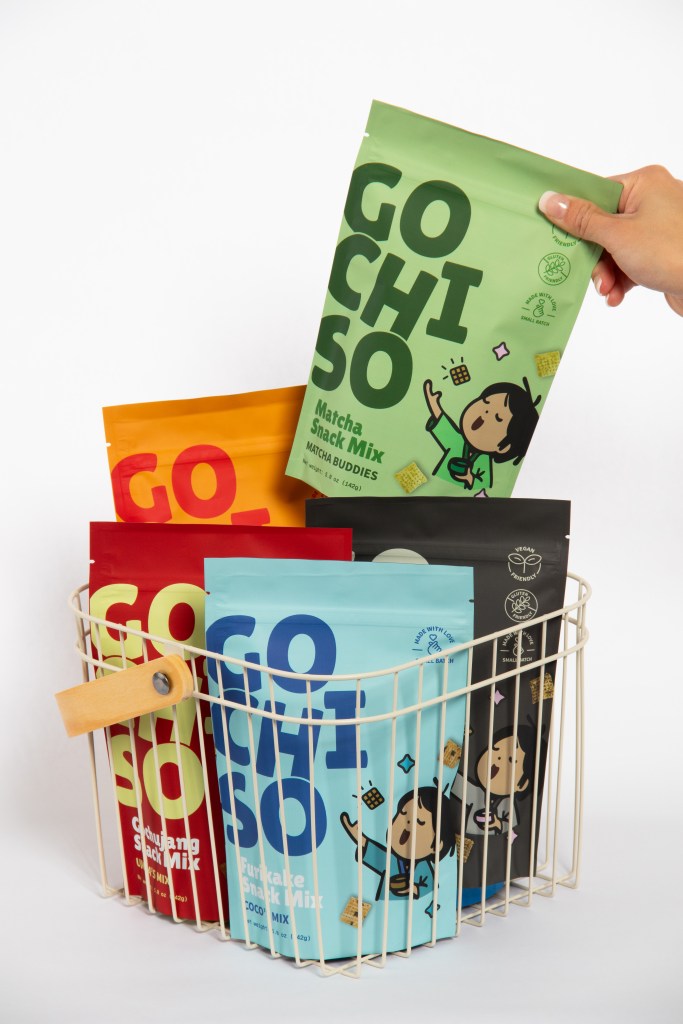
That history of sharing food with others is also why our name resonates. Gochiso comes from the Japanese phrase “Gochiso-sama,” said after a meal to express gratitude. For us, it’s a reminder that food can connect people and is something to be appreciated.
What were some of the first steps you took to get your side hustle off the ground? How much money/investment did it take to launch?
Hill: We invested about $10,000 of our own savings — roughly $5,000 upfront to test the product and build the basics, and another $5,000 once we saw traction. From the start, we wanted to build a product that tasted great, had a clear place in the market and could maintain healthy margins — we’ve been intentional about staying above 70%. That meant being disciplined in how we operated early on. We’ve kept everything in-house: production, inventory management, marketing, fulfillment and leaned on a small circle of talented friends who generously helped us with branding.
Related: 8 Creative Side Hustles We Discovered in 2025 — Which One Can Make You Money in 2026?
Iwai: Developing the actual product flavors took just as much discipline and experimentation. We come from mixed Asian American backgrounds — I’m half Japanese and half Chinese American, and Brandon is half Korean and half Irish American — so we wanted flavors that reflected both of our backgrounds.
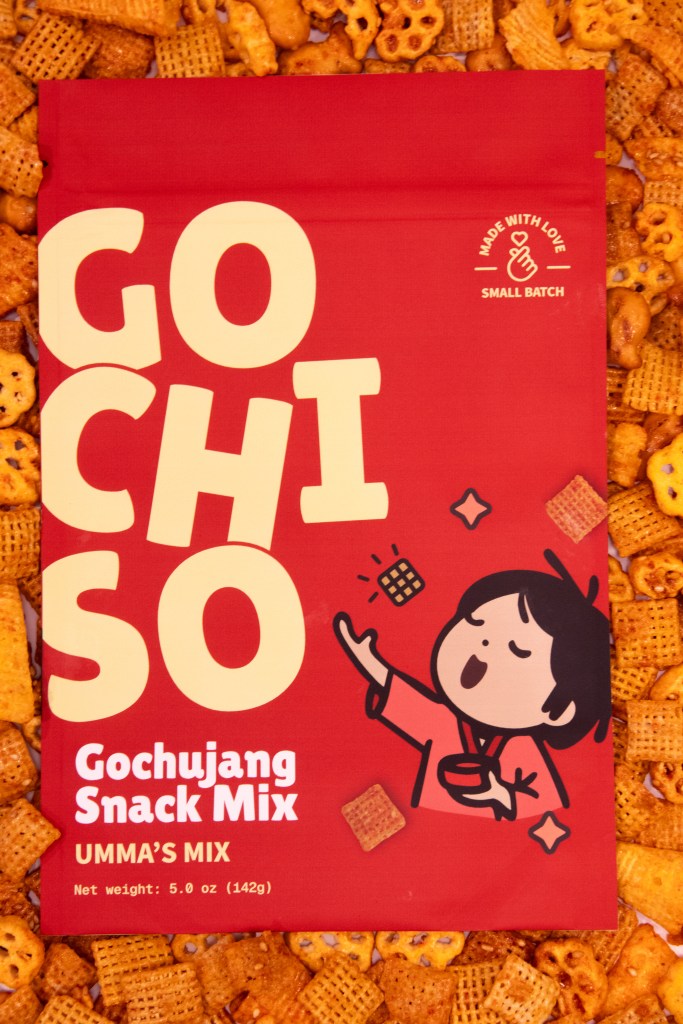
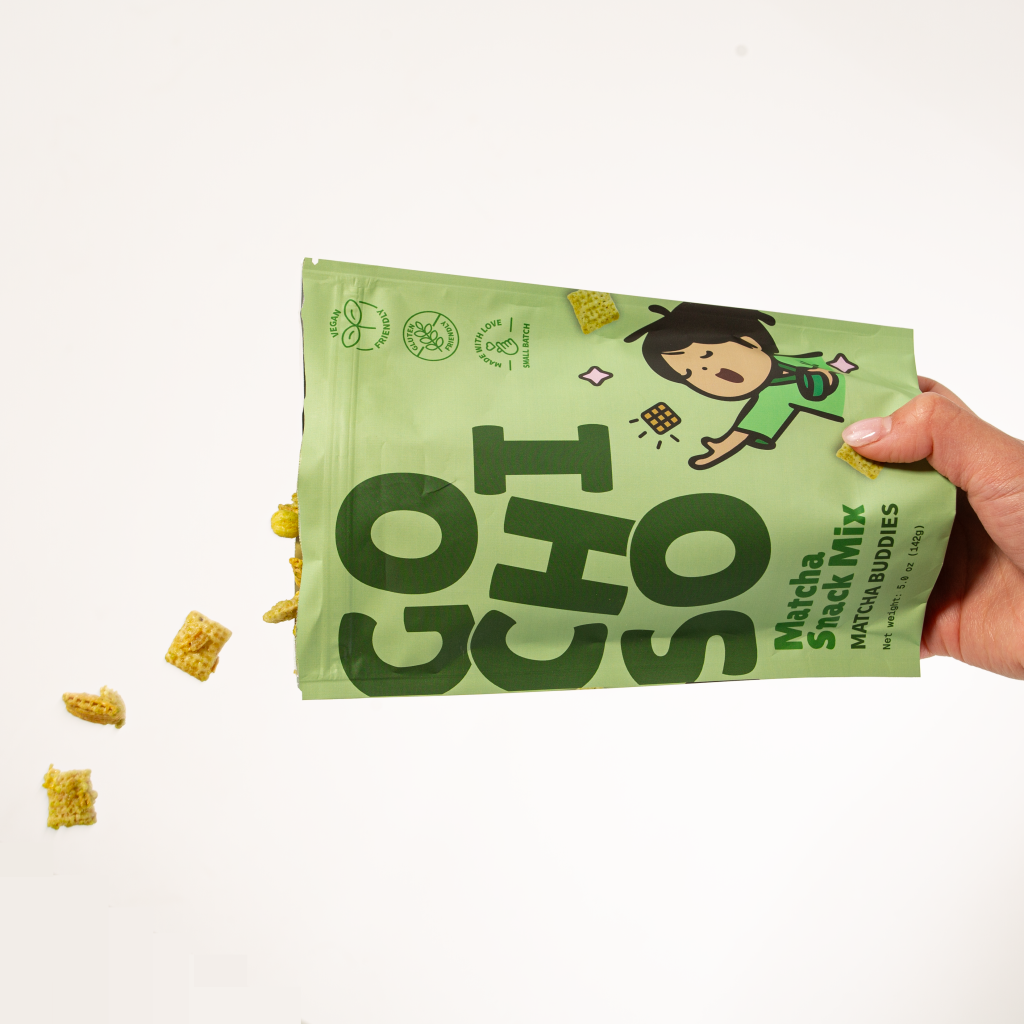
We brought batches to friend hangouts, family dinners, anyone willing to give honest feedback. We narrowed it down to the five flavors we sell today: Coco’s Mix — furikake-flavored (named after my mom), Umma’s Mix — gochujang-flavored (“Umma” means mom in Korean), Baaba’s Mix — black sesame-flavored (“Baaba” means grandma in Japanese), Gong Gong’s Mix – Sichuan peppercorn-flavored (“Gong Gong” means grandpa in Chinese) and Matcha Buddies (our take on classic puppy chow, with a matcha twist).
Are there any free or paid resources that have been especially helpful for you in starting and running this business?
Hill: We’ve gotten a lot of value from listening to Startup CPG and How I Built This. Whenever we’re in the commercial kitchen cooking — because yes, we’re still at the stage where it’s just the two of us making every batch — those podcasts are playing in the background.
Iwai: Honestly, the small business community has been our biggest resource. Seattle has an incredible network of small and AAPI-owned businesses, which support and root for each other’s growth. People have been so open in sharing their own stories and connecting us to opportunities we wouldn’t have found otherwise.
We try to pay that forward, too. Our door is always open to other early-stage founders. We love introducing small business friends to each other and helping build the kind of community that helped us get started.
If you could go back in your business journey and change one process or approach, what would it be, and how do you wish you’d done it differently?
Iwai: We should’ve hired an ongoing CPA at the start. There are many tax advantages and allowable business expenses that we didn’t know how to navigate ourselves. At the time, paying a monthly fee felt intimidating, so we figured we’d just pull someone in at tax season. Instead, we spent a lot of time researching things on our own and second-guessing whether we were doing our bookkeeping correctly.
Since working with our current CPA, we realized we had been missing out on write-offs and tax strategies that easily covered their monthly cost. Beyond the savings, the biggest benefit has been peace of mind. It’s allowed us to focus on running and growing the business instead of worrying about whether our books or tax returns are correct.
When it comes to this specific business, what is something you’ve found particularly challenging and/or surprising that people who get into this type of work should be prepared for?
Hill: Starting a business means facing rejection and making mistakes, and that can feel uncomfortable at first. But those moments teach you the most. When you’re growing a brand, you have to be willing to put yourself out there, even when it feels vulnerable. Not everyone connects with what you’re offering, and that’s okay. What matters is continuing to trust your work and your direction. Over time, that persistence creates real traction.

Can you recall a specific instance when something went very wrong — how did you fix it?
Hill: Early on, I got so excited about building Gochiso that I jumped ahead into merch, custom boxes and business cards before we had finalized our brand. We ended up with inventory that didn’t match where we landed visually a few months later. It was frustrating, but it taught me something my dad always said: Measure twice, cut once.
So we slowed down, clarified our target audience and went through about 10 iterations with our designer friend before landing on something that felt right. This mistake has helped us invest thoughtfully instead of impulsively.
How long did it take you to see consistent monthly revenue? How much did the side hustle earn?
Iwai: Up until May 2025, we were operating under a Cottage Food Permit, which in Washington only allows you to process low-risk foods at home and sell directly to consumers. That meant no retail stores, no wholesale — just pop-ups, markets and local deliveries (with us as the delivery drivers).
Because of that, our revenue was directly tied to how many in-person events we could secure and was limited to customers within the greater Seattle area. We consistently booked at least two weekend events per month, and at that stage, we were bringing in around $2,500 per month.
What does growth and revenue look like now?
Hill: After moving into a commercial kitchen, we began selling online and building wholesale relationships with specialty markets and stores. That expansion increased our average monthly revenue to about $5,500, and during this holiday season, we’ve seen closer to $10,000 per month. A growing share of those orders are repeat customers, which gives us confidence that we’re building something with staying power, not just novelty purchases.
As sales continue to increase, we’re getting close to the point where our production capacity will become the limiting factor. We’re exploring our next operational step to increase supply, whether that means scaling production runs or partnering with a co-packer, while continuing to maintain the quality and consistency our customers expect.
How much time do you spend working on your business on a daily, weekly or monthly basis?
Iwai: Each of us puts in about 30 hours a week, on top of our full-time corporate jobs. At this point, we’ve built a routine that works for us. We make and pack snacks about four nights a week after work. On the nights we’re not in the kitchen, we’re handling everything else — fulfilling orders, planning content, keeping up with inventory, talking with partners and reaching out to new opportunities.
My day job as an HR manager has also helped shape how I approach the business. Employee experience is central in my field, and that mindset naturally carries over into how I think about the customer experience at Gochiso: how people discover us, how we communicate and how we make them feel seen and valued. What I learn from both roles informs the other.
Hill: The days are definitely long, but they’re rewarding. Building something from scratch and seeing people enjoy it keeps us motivated. My background as a software engineer has also been useful, whether it’s improving our website, creating tools to streamline our backend processes or finding ways to make Shopify do what we need (and coding around it when it can’t). Running Gochiso gives me hands-on experience solving real operational problems, and that mindset feeds back into my day job too.
Related: This Couple’s Spicy Side Hustle Is About to Hit $15,000 a Month: ‘Small Things Feel Huge’
What do you enjoy most about running this business?
Hill: For the first time in my professional career, I’m calling the shots…unless Kira vetoes me! I’m really enjoying the process of building something that is 100% ours. There is no roadmap telling us how to be successful; it’s Kira and me going with what we think is the right move and learning every step of the way through the failures and successes. At the end of the day, we are proud of what we are building, and it’s something we will look back on one day and say, “Wow, we really did that!”
What is your best piece of specific, actionable business advice?
Iwai: Be comfortable with your own pace. There will always be people asking, “What’s next?” “When are you expanding?” And it’s well-intended, but you have to make decisions that are right for your life, your goals and your capacity.
Brandon and I actually just got married this past August, too! So while we’ve been excited about growing Gochiso, scaling aggressively during that same time as planning a wedding wouldn’t have been realistic for us — or healthy. We want to bring our best selves to the business, not burn ourselves out. So the actionable piece is: Define what sustainable growth looks like for you, not what others expect. That mindset has helped keep us focused, grounded and still excited about what we’re building.
Key Takeaways
- Iwai and Hill officially started their East Asian-inspired snack company Gochiso in 2024.
- The couple invested $10,000 of their savings to test the product and build traction.
- Gochiso saw about $2,500 in revenue a month in the early days — then moved into a commercial kitchen to grow.
This Side Hustle Spotlight Q&A features Kira Iwai, 28, and Brandon Hill, 31, of Seattle, Washington. The married couple launched their East Asian-inspired snack company Gochiso in 2024 and continues to run it as a side hustle today. Responses have been edited for length and clarity.
Want to read more stories like this? Subscribe to Money Makers, our free newsletter packed with creative side hustle ideas and successful strategies. Sign up here.
What was your day job or primary occupation when you started your side hustle?
Iwai: We both have full-time jobs today. I’m an HR manager at Accenture, and Brandon is a software engineer at Microsoft.