This NASA Competition Winner Slept in Auto Repair Shops to Find His Startup Idea. Here’s How His Company Achieved $1 Million in Revenue in 6 Months.
Adi Bathla’s startup, Revv, has scaled to eight-figure revenue since its initial launch.
Key Takeaways
- Revv founder and CEO Adi Bathla discovered Revv’s core problem by sleeping in auto repair shops and listening to shop owners’ pain points.
- Revv compresses weeks of research into seconds, giving shop owners instructions on how to repair increasingly complex vehicles.
- The startup hit $1 million in revenue within six months of launch and has since scaled to eight figures and over 5,000 customers.
At ages 16, 17, and 18, Adi Bathla was already imagining life in space. He won NASA’s International Space Settlement Design Competition three years in a row. The task was to design detailed concepts for large space habitats, showcasing a vision of the future 50 to 100 years from now, and Bathla produced as many as 100 pages of technical documentation each time.
“It was essentially a whole thesis,” Bathla tells Entrepreneur in a new interview.
Those early projects taught him how to think in systems: gravity, life support, economics, demographics, even recreation and hospital systems woven into a single, coherent vision of the future. That ability to synthesize complex, technical information would eventually become the foundation of Revv, the company he later founded that hit $1 million in revenue within six months of launch.
Getting to the light bulb moment
Following his success in high school, Bathla received a full scholarship to attend Brown University for undergraduate study. “I was still in the builder’s mindset,” Bathla says of his college years. “I was very mesmerized by aerospace,” he explains. “I wanted to be an engineer, but quickly figured out that I’d be 40 by the time I got my hands on building a rocket.”
Instead, he pivoted into computer science, building virtual reality tools for athletes and marketplaces for under-resourced students before joining high-growth startups like e-commerce site Jet.com and grocery delivery service Misfits Market after graduating. At Jet, he worked on a team tasked with finding product opportunities in e-commerce. “I learned firsthand how to build zero-to-one aha products and build a really strong culture,” Bathla recalls.
At Misfits Market, he soaked up lessons in mission-driven execution from founder and CEO Abhi Ramesh.
By 2022, Bathla hit what he calls a breaking point. He had wanted to start his own venture since he was 16, and he felt he had run out of excuses not to. He walked away from a secure role at Misfits Market, along with a promised bonus of around $20,000 to $30,000, and accepted that he would be living off savings for months while taking on serious risk. “You can’t have one foot in a job and the other foot in the venture,” Bathla says.
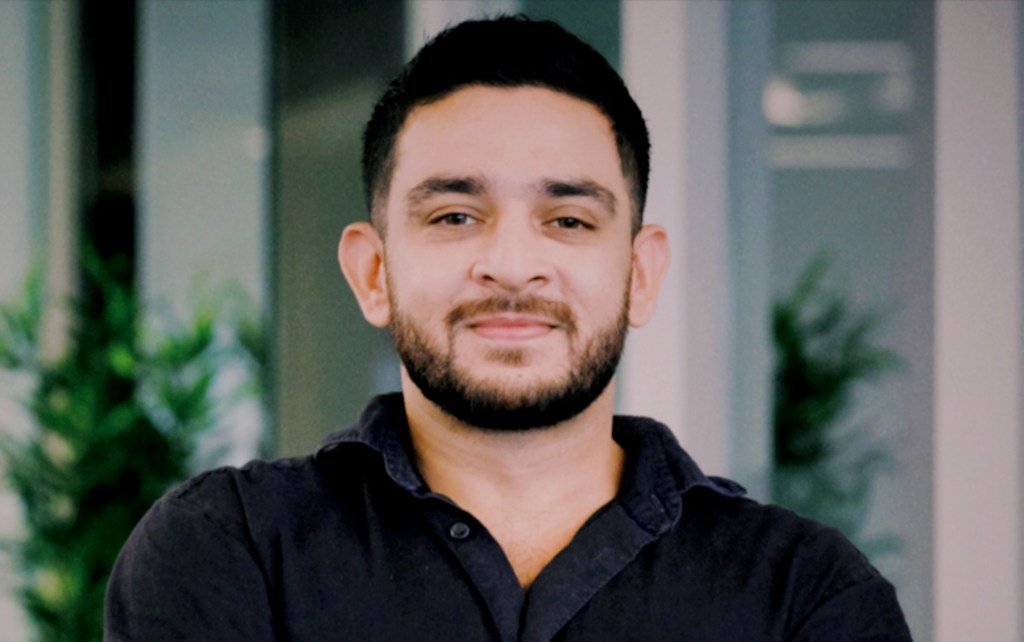
His way of de-risking the leap was unusual — he moved into the auto repair world, literally. He came from an extended family that ran a national auto parts distribution business, so he chose the industry first and the specific idea second.
“I didn’t choose to start this venture with an idea first,” he explains. “I chose the auto industry because of the family ties and quite literally started sleeping in their shops.”
He would hand out his card to used-car dealers, mechanical shops, calibration specialists, and collision centers with a simple offer: “If you have a problem, reach out to me and I’ll build a solution for you.”
One phone call changed everything. A shop owner’s friend called in a panic: After a repair, a car’s lane-change system malfunctioned, the driver got into an accident and the shop feared a lawsuit.
“That was the light bulb moment,” Bathla says. “I started asking more body collision shops around, ‘How do you deal with cars becoming more and more complicated every day?’”
He kept hearing the same story. Cars had become “computers on wheels,” filled with sensors, cameras and software-defined safety systems like automatic emergency braking, lane-keep assist and adaptive cruise control — yet most shops had no idea how to repair them correctly.
Shop owners told Bathla that they were able to repair a bumper, but there was all sorts of technology behind the car that they had no idea how to fix. Researching how to do it right meant digging through scattered manufacturer documentation and juggling multiple systems.
Bathla created Revv as the connective tissue for that chaos. In its simplest form, when a 2021 Audi A6 rolls into a shop, Revv runs in the background and, within seconds, tells the technician which systems are in the car, which components were impacted, why and how to repair them, with step-by-step instructions and manufacturer documentation for insurers.
“Revv in a nutshell compresses the research time into seconds and gives technicians, estimators and every user in the auto repair shop actionable insights on how to fix these safety components,” Bathla says. He describes it as a “central intelligence layer” that integrates with the hardware, tools and legacy software shops already use.
The path to commercial traction was not smooth. Bathla poured tens of thousands of dollars of his own capital into the business while living on savings and missing out on that big corporate bonus. The pressure was so intense that he ended up in the emergency room. “Taking the product to market, I was in the emergency room a couple of times,” he says. “My arm would stop working, and turns out it was all because of stress.”
Going from launch to 8-figure revenue
By the time Bathla launched Revv in June 2023, his year of immersion in the field had laid the groundwork for speed. The company went from launch to $1 million in revenue in just six months and has since grown to eight-figure revenue, with more than 5,000 customers and a presence in thousands of locations across two countries.
Scaling from those first few customers to thousands required a shift from founder-led selling to employee-led growth. Early on, word-of-mouth testimonials from enthusiastic customers powered growth. Later, Revv added business development representatives, a marketing team, dedicated account executives and an onboarding function tuned to get customers live within a day. “Scaling has been as hard and as big a challenge as starting the business,” Bathla says.
Bathla says he aggressively did everything himself in the initial journey, then quickly unlearned that behavior to make room for experts in revenue, engineering and product. Revv now employs 60 people.
“It’s basically like your baby that you’re giving to the nanny for the first time,” Bathla says. “But it’s very important to hire people who are better than you. It’s absolutely critical for the success of the business.”
For early-stage founders, his advice is blunt and rooted in his own leap from NASA kid to CEO. First, do not wait for the perfect idea or perfect product. “Absolutely do not let perfect be the enemy of good,” he says. “Your goal to see success is to find a hair-on-fire problem, but the bigger step that you have to take is actually taking the leap of faith and taking that journey, and giving it 100%.”
Second, surround yourself with people smarter than you and keep your ego low, because the journey is lonely and the stakes are high. “You’re the average of five people that you surround yourself with,” he says. “What I believe is that the best founders are really fast learners. They are low ego, but invite advice.”
Sign up for How Success Happens and learn from well-known business leaders and celebrities, uncovering the shifts, strategies and lessons that powered their rise. Get it in your inbox.
Key Takeaways
- Revv founder and CEO Adi Bathla discovered Revv’s core problem by sleeping in auto repair shops and listening to shop owners’ pain points.
- Revv compresses weeks of research into seconds, giving shop owners instructions on how to repair increasingly complex vehicles.
- The startup hit $1 million in revenue within six months of launch and has since scaled to eight figures and over 5,000 customers.
At ages 16, 17, and 18, Adi Bathla was already imagining life in space. He won NASA’s International Space Settlement Design Competition three years in a row. The task was to design detailed concepts for large space habitats, showcasing a vision of the future 50 to 100 years from now, and Bathla produced as many as 100 pages of technical documentation each time.
“It was essentially a whole thesis,” Bathla tells Entrepreneur in a new interview.
Those early projects taught him how to think in systems: gravity, life support, economics, demographics, even recreation and hospital systems woven into a single, coherent vision of the future. That ability to synthesize complex, technical information would eventually become the foundation of Revv, the company he later founded that hit $1 million in revenue within six months of launch.