She Sold Poppi for $1.95 Billion by Getting Embarrassed — “Get Over It”
Allison Ellsworth built Poppi into one of the fastest-growing beverage brands of all time, then sold it to PepsiCo. Here’s what she learned.
This story appears in the September 2026 issue of Entrepreneur. Subscribe »
Poppi is one of the fastest-growing brands in the history of beverages. In its first year in business, it did about $3.5 million in sales. Then $22 million the next year, $52 million after that, then $200 million and $515 million before the company sold to PepsiCo in 2025 for $1.95 billion.
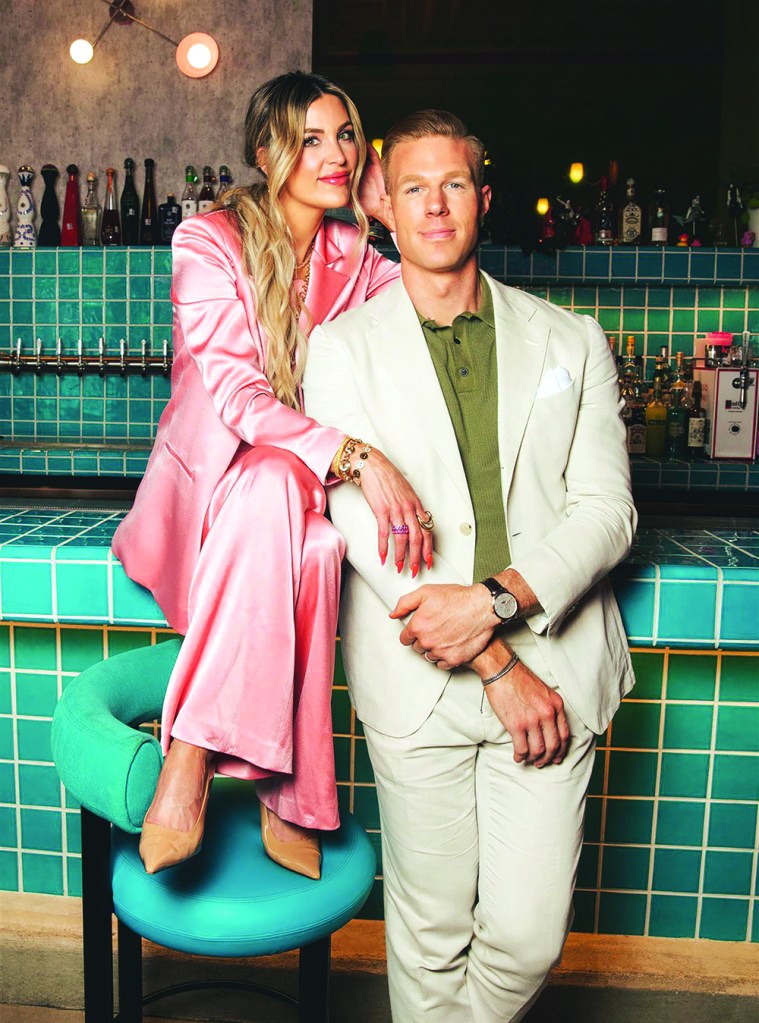
How does a founder achieve that level of success? “I always say embarrassed is the most underexplored emotion when it comes to success,” says Poppi cofounder Allison Ellsworth, who served as chief brand officer and grew the business alongside her husband until its sale in 2025. “You have to be willing to put yourself out there and almost make a fool of yourself to be successful.”
Ellsworth has put herself out there in many ways. She appeared on Shark Tank while nine months pregnant, where she got a deal from Rohan Oza. (This was when the brand was called Mother Beverage, before its Poppi rebrand.) She threw herself into the brand’s social media, becoming one of the most visible founders on TikTok. And she’s leaned heavily into her skills as a creative director, designing all the cans herself.
Now she’s preparing to launch a new brand, which will be announced later this fall. Here, Ellsworth reflects on lessons learned from growing Poppi, and how founders can break out.
What do founders often miss when scaling a brand?
We scaled fast: In four and a half years, we went from zero to $500 million in revenue. And we quickly learned that we had to professionalize the business. I think that’s hard for entrepreneurs to hear. They think they can do everything themselves. They don’t want to let go, because — let’s be frank — their ego gets in the way, and they don’t ask for help.
I think you need to put processes into the business early on, and hire maybe 18 months ahead versus six months ahead.
You mean that founders wait too long to professionalize functions in their business, whether it’s finance or HR?
Yeah, and they hire their friends. That’s okay for a little bit, but let me tell you — as someone who personally had to fire one of her bridesmaids because she didn’t cut it — it sucks. So don’t do that either.
Sometimes you have to hire for the stage that you’re at, knowing that someone is going to be really great at maybe $50 million, but they’re not going to be great at $500 million, and that’s OK as well. Firing doesn’t always have to be a bad thing. And at Poppi, we gave equity to nearly 100% of our employees. We made 44 people millionaires at exit. People bought cars. They paid off their mom’s house. So make your employees part of the business as well.
Although you scaled fast, were there moments where you worried the company would fail?
I remember one time we were doing $20 million in revenue and only had $75,000 in the bank, and we were like, “We actually don’t know if we can make payroll.” So we had to go out and raise.
How did you evolve as a leader as the company grew?
Well, I like to win. I’m a self-aware, confident woman, and I like to surround myself with winners. It goes back to the ego within entrepreneurs. There was a point when we were growing so fast, and I was running our marketing department and my husband was the CEO, and we had to look at each other and say, “Maybe we’re not the right people for these jobs anymore.”
That’s hard to do as an entrepreneur, to not have the mindset of, This is mine, this is my equity, this is my company. One of the hardest decisions we made was to step aside [as leaders]. But I ended up running our brand, and I ran all our creative. I’ve designed every single one of these cans. And it freed me up to be the face of the brand. You know, fun fact: I have over 3 billion views on TikTok of my face. One-third of the platform has seen me over seven times.
Did social media come naturally to you?
A lot of people say, “Allison, you’re so confident online.” Let me just tell you: Nobody is born confident. You just have to start. Start messy, start awkward. Then you become confident over time, after failing a lot.
As TikTok became popular, I said, “You know what? I will take zero resources from the company. I will get on and I will learn this platform.” So for three to four months, I made taco recipe videos. I danced. I did transitions. I did all the stupid stuff that you can think of, until one day I sat down and just was myself. I told the story. I talked about how I was nine months pregnant on Shark Tank. That video went viral, and we did $100,000 on Amazon overnight.
You did $100,000 just on a video that you recorded?
Just on a video. A lot of founders are like, “I don’t want to do social media. I don’t want to take the time. I’m embarrassed.” But you know what? Get over it, because it is kind of the modern way to market.
You also pursued traditional marketing, including a Super Bowl ad. What did you learn about marketing today?
What we did at Poppi was very simple. Our first year, I think our marketing budget was $350,000, and 100% of it went to influencers and sampling. All the social media was organic. We didn’t even have money to do paid ads at the time, so it was just me creating content and going viral where I could.
Back then, it was the Wild Wild West, and it was really easy to go viral. Now it’s extremely hard. It has to be a paid and organic play. So you have to do both. You have to put money aside to put paid behind TikTok — and our budget for digital platforms was about 80% TikTok and about 20% on Meta. And then on top of it, we decided to be 100% Amazon from day one. We are not a direct-to-consumer company. We met the consumer where they were.
Then when we reached scale, and Poppi was in every grocery store in the nation, that’s when we started thinking about linear TV and Super Bowls and more media. You shouldn’t do it before. And as you grow, continue the small stuff. We still have an unlimited sampling budget. We still work with over 5,000 to 10,000 creators a year. We’re still doing those partnerships. So you just build as you scale.
What was it like to sell Poppi and say goodbye?
You don’t sell your company for $2 billion and then get a Pepsi badge. You’re instead like, Oh, wait, what? Literally, we [closed the deal] on Friday. On Monday, I cleared out my desk. It was very emotional. And it wasn’t because they wanted me gone. They kept me on for three years as an advisor, but I was no longer an employee of the company. I can’t be in the system; I can’t have logins.
So then I had the post-exit blues, and I had to find my purpose again. Money gives you the freedom to do what you want, when you want, and with whoever you want — but it doesn’t give you purpose. And I’m here to tell you that purpose is so much more important than money. If you find your purpose, money will come.
How are you finding that purpose? You’re obviously too young to retire.
I tried to play golf for, like, six months. I got really good. I beat my husband a few times. But honestly, I can’t retire at 39. I missed building. I miss the people, and the leadership, and being around a team. So we are launching a new company in the fall, which I’m really excited about.
How has your life changed since the sale?
I used to tell my husband, “We’re like the ‘richest poorest’ people I know,” because we suddenly had all this money, but can’t just change our behavior overnight. We decided to just continue to live our lives how we did for a year, and slowly learn how to spend money — which sounds crazy. But I was raised by a single mother. Like, you just can’t change overnight.
Is there anything about the Pepsi deal that you wish you had done differently?
I mean, no. $2 billion is amazing.
Poppi is one of the fastest-growing brands in the history of beverages. In its first year in business, it did about $3.5 million in sales. Then $22 million the next year, $52 million after that, then $200 million and $515 million before the company sold to PepsiCo in 2025 for $1.95 billion.
How does a founder achieve that level of success? “I always say embarrassed is the most underexplored emotion when it comes to success,” says Poppi cofounder Allison Ellsworth, who served as chief brand officer and grew the business alongside her husband until its sale in 2025. “You have to be willing to put yourself out there and almost make a fool of yourself to be successful.”
Ellsworth has put herself out there in many ways. She appeared on Shark Tank while nine months pregnant, where she got a deal from Rohan Oza. (This was when the brand was called Mother Beverage, before its Poppi rebrand.) She threw herself into the brand’s social media, becoming one of the most visible founders on TikTok. And she’s leaned heavily into her skills as a creative director, designing all the cans herself.