Inside The $2 Billion Company Betting on Sound to Transform Live Sports
The future of live sports isn’t closer seats — it’s deeper sensory immersion, wherever you sit.
Opinions expressed by Entrepreneur contributors are their own.
Key Takeaways
- Sweetwater is betting that future fan experiences will rely on sound, feeling and emotion, not just views.
- Premiumization succeeds when technology disappears, and fans simply feel part of the game.
Sports are one of the few unifiers left in today’s heated, divided world. It doesn’t matter what race, religion or political affiliation you come into the arena with. It doesn’t even matter if you know anything about the game. The beauty of sports is that an avid fan and a first-time viewer can both walk out feeling they have experienced something uniquely special.
That magic goes beyond the action on the field. It lives in the details. The crack of the bat on a home run, the buzzer following a game-winning shot, the roar of the crowd after a touchdown. These moments are about more than athleticism. They’re about atmosphere. And behind much of that atmosphere is Sweetwater, a quiet but powerful force shaping how fans experience live sports.
Setting the tempo
Sweetwater is the leading U.S. retailer of musical instruments and professional audio equipment. A significant focus of the company is live experiences — everything from cruise ships and theaters to sporting venues.
The company has been around for nearly 50 years, serves roughly 13 million customers, and is valued at about $2 billion.
“We’ve watched these trends evolve for years, especially how audio and video shape sports,” CEO Mike Clem tells Entrepreneur. “Right now, we’re at a unique intersection of two major forces: the premiumization of sports and the increasing integration of technology into live events.”
Clem believes one of the most compelling developments within that intersection is immersive sound.
Immersive sound is an umbrella term for the aforementioned elements that elevate a live game beyond the action itself — like the roar of a crowd or the squeak of sneakers on hardwood.
“Most people don’t get to sit courtside,” says Valtteri (Val) Salomaki, CEO of EDGE Sound Research and inventor of immersive sound-and-feel technology that the NBA recently invested in.
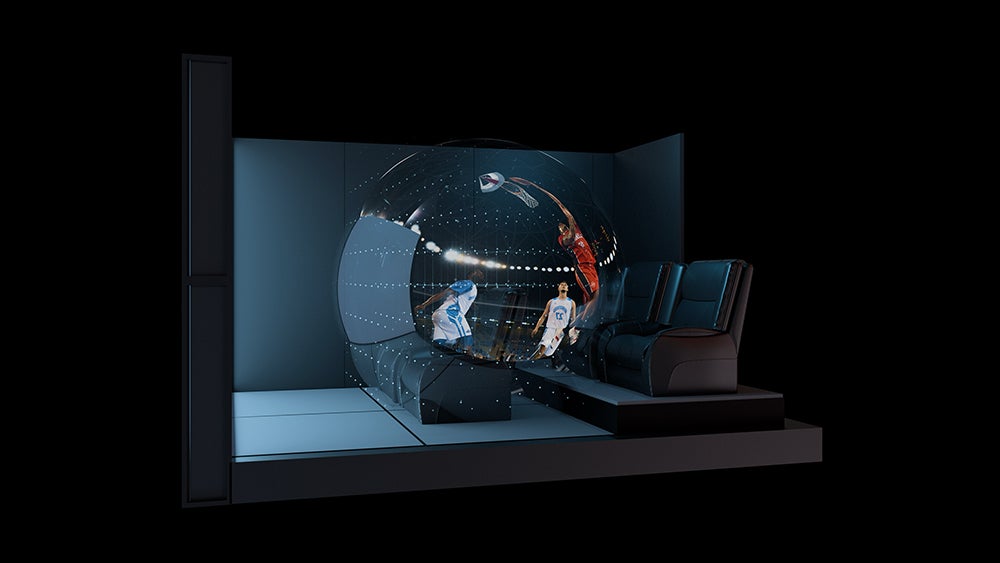
“Our technology lets fans hear and feel the sound elements that make an experience feel real by tapping into the existing microphone feeds inside a venue,” Salomaki explains. “In a basketball arena, for example, mics already line the court. We can take those feeds and deliver them anywhere so fans feel like they’re on the floor.”
The tricky part is integrating the technology seamlessly. Or, it would be the tricky part if Sweetwater hadn’t figured out a way to make their hardware practically invisible.
“You don’t see any devices anywhere,” Salomaki says. “You let the fans just be in awe of the moment.”
Turning up the volume
When your goal is to elevate the fan experience, success can’t be measured by ticket sales or Instagram likes alone. Sweetwater focuses on more nuanced questions: Which spaces in an arena deliver the most value? And what makes fans feel like the experience is worth paying extra for?
In the NBA, fans want to be as close to the court as possible, but those seats are limited. That reality has turned suites and upper-level sections into a significant area of innovation for Sweetwater.
“Suites make a ton of sense because they’re premium spaces,” Salomaki explains. “They should feel more like a penthouse than a basic room where you grab food and a drink. You’re paying a pretty penny for it, but you’re not really getting much out of it.”
At the same time, the company is thinking about the die-hard fans in the building.
“Nosebleed seats are usually where the hardcore fans are,” he says. “But when you’re that far away, you lose the essence of being near the court.”
That leads to the central challenge Sweetwater is trying to solve: how to elevate both ends of the arena.
“From the league’s perspective, it’s about connecting the everyday fan who really loves the sport,” he says. “And for the fans paying premium dollars, how do you maximize and customize the experience for them, especially if they’re paying for renewals year after year?”
Clem notes that, despite being among the most premium seating options available, suites are ironically the least connected to the game.
“I’m behind glass. I can’t hear the roar of the engine, the crack of the bat, and so the venues are saying, Hey, to premiumize or charge more for these tickets, we have to figure out how to make it immersive,” he says.
For nosebleed sections, the technology provides clear audio and introduces physical sensations such as seat vibrations, similar to a 4D movie.
“When we say immersive, it is both feeling and hearing the sound all the way up in the rafters. Nobody’s ever done this.”
The idea behind Sweetwater’s tech didn’t start in a boardroom or as a way to squeeze more revenue out of fans. It came from Salomaki’s cofounder, who was born hard of hearing, yet still became a professional musician.
“He would touch instruments, touch speakers, and realize that the information he wasn’t getting from his ears, he was getting through the skin,” Salomaki says.
That insight led to a bigger realization: for more than a century, speakers were designed without considering how the entire body experiences sound.
“Our goal is to make fans feel like the athlete on the court,” he explains. “Real energy and audio is happening in the game, and we want everyone to experience it.”
To Sweetwater, that comes down to syncing sound with the action in real time.
“If we can match the exact sound of the moment with what you’re seeing and feeling, that’s where true immersion happens,” he says. “It’s not a gimmick. It’s about transferring real information so you actually believe you’re in that moment, like you’re that player.”
The action on the field will always be the heart of live sports, but it’s no longer the only reason to show up. As leagues invest in more immersive environments, companies like Sweetwater are shaping what it means to be a fan, no matter where you sit.
Key Takeaways
- Sweetwater is betting that future fan experiences will rely on sound, feeling and emotion, not just views.
- Premiumization succeeds when technology disappears, and fans simply feel part of the game.
Sports are one of the few unifiers left in today’s heated, divided world. It doesn’t matter what race, religion or political affiliation you come into the arena with. It doesn’t even matter if you know anything about the game. The beauty of sports is that an avid fan and a first-time viewer can both walk out feeling they have experienced something uniquely special.
That magic goes beyond the action on the field. It lives in the details. The crack of the bat on a home run, the buzzer following a game-winning shot, the roar of the crowd after a touchdown. These moments are about more than athleticism. They’re about atmosphere. And behind much of that atmosphere is Sweetwater, a quiet but powerful force shaping how fans experience live sports.
Setting the tempo
Sweetwater is the leading U.S. retailer of musical instruments and professional audio equipment. A significant focus of the company is live experiences — everything from cruise ships and theaters to sporting venues.