Solo Bitcoin Mining: Your Next Passive Income Play
These compact devices let you participate in Bitcoin’s network without warehouse-level costs.
Disclosure: Our goal is to feature products and services that we think you'll find interesting and useful. If you purchase them, Entrepreneur may get a small share of the revenue from the sale from our commerce partners.
For entrepreneurs who are exploring alternative revenue streams in 2026, Bitcoin mining has traditionally required warehouse-scale investments, industrial power contracts, and a tolerance for noise and heat. That barrier has kept most small operators out. BlockChance is targeting that gap with two compact solo-mining devices — the BlockChance™ Bitcoin Ticket Miner and the BlockChance™ Bitaxe Bitcoin Miner — with entry points at $59.99 and $199.99, respectively.
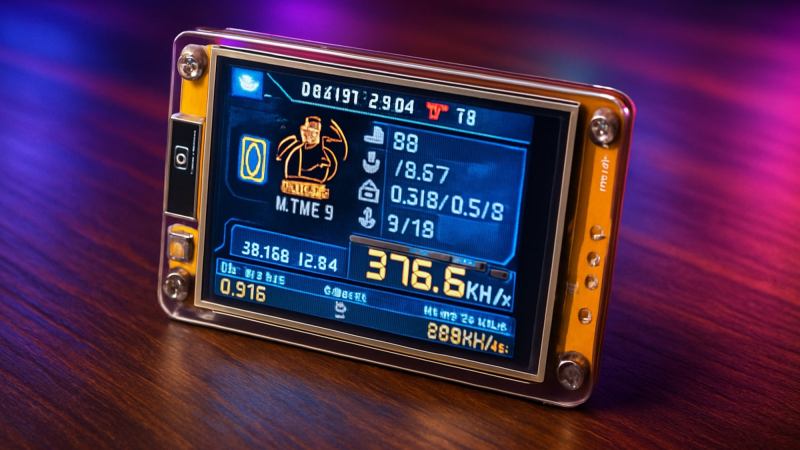
The BlockChance™ Bitcoin Ticket Miner reframes mining as a low-cost probability experiment. Instead of running continuous hash power, it submits lottery-style tickets, each representing an attempt to solve a full Bitcoin block. With 1,000 KH/s of hashing power — roughly 18 times higher than many ticket-based alternatives — it submits more attempts per day while consuming under 18 watts, the company says. The device runs silently, operates independently over Wi-Fi using NMMiner firmware, and requires no licensing or activation fees. For founders who are already paying for 24/7 office power, the marginal cost is effectively negligible.
The BlockChance™ Bitaxe Bitcoin Miner is aimed at those who want materially better odds without crossing into industrial territory. It uses the same BM1370 ASIC chip found in modern professional rigs, delivering around 1.2 TH/s while drawing roughly 18 watts. The miner runs quietly on a desk, connects over Wi-Fi, and takes continuous solo mining attempts at full block rewards. While outcomes remain probability-based and highly dependent on network conditions, the hashrate represents a meaningful step up from ticket mining, the company says.
Together, these devices map to two different mindsets. The Ticket Miner suits experimentation, education, and asymmetric upside with minimal capital risk. The Bitaxe targets founders who are willing to allocate more capital for higher statistical exposure while keeping overhead extremely low. Neither guarantees revenue, but both convert mining from a capital-intensive operation into a manageable, ongoing business experiment.
For a limited time, take advantage of these deals:
- BlockChance™ Bitcoin Ticket Miner, available for $59.99 (MSRP $149.99)
- BlockChance™ Bitaxe Bitcoin Miner, available for $199.99 (MSRP $299.99)
StackSocial prices subject to change.
For entrepreneurs who are exploring alternative revenue streams in 2026, Bitcoin mining has traditionally required warehouse-scale investments, industrial power contracts, and a tolerance for noise and heat. That barrier has kept most small operators out. BlockChance is targeting that gap with two compact solo-mining devices — the BlockChance™ Bitcoin Ticket Miner and the BlockChance™ Bitaxe Bitcoin Miner — with entry points at $59.99 and $199.99, respectively.
The BlockChance™ Bitcoin Ticket Miner reframes mining as a low-cost probability experiment. Instead of running continuous hash power, it submits lottery-style tickets, each representing an attempt to solve a full Bitcoin block. With 1,000 KH/s of hashing power — roughly 18 times higher than many ticket-based alternatives — it submits more attempts per day while consuming under 18 watts, the company says. The device runs silently, operates independently over Wi-Fi using NMMiner firmware, and requires no licensing or activation fees. For founders who are already paying for 24/7 office power, the marginal cost is effectively negligible.
The BlockChance™ Bitaxe Bitcoin Miner is aimed at those who want materially better odds without crossing into industrial territory. It uses the same BM1370 ASIC chip found in modern professional rigs, delivering around 1.2 TH/s while drawing roughly 18 watts. The miner runs quietly on a desk, connects over Wi-Fi, and takes continuous solo mining attempts at full block rewards. While outcomes remain probability-based and highly dependent on network conditions, the hashrate represents a meaningful step up from ticket mining, the company says.