How This Founder Built a $10M Renewable-Energy Company by Solving the Problem No One Else Would Touch
John Witchel turned a simple question into a fast-growing national solar business. That’s something every entrepreneur can learn from.
Key Takeaways
- A view from an airplane triggered a business ideas
- King Energy has generated over $10 million this year with solar power
- The company’s biggest challenge is fighting utility companies.
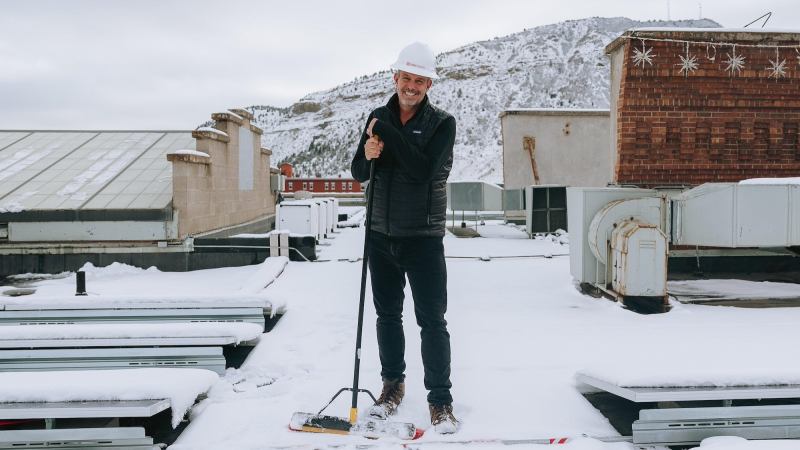
When John Witchel looked out the window of a plane descending into LAX and saw miles of massive white commercial rooftops with zero solar panels, he recognized a market failure. That moment led him to launch King Energy, a company that has generated over $10 million in revenue in the past 12 months, is profitable, and has doubled annually since its founding in 2020.
The secret, he insists, isn’t genius or luck. It’s understanding incentives, designing around entrenched systems, and being relentlessly patient. Here’s what other entrepreneurs can learn from his journey.
Releated: How Entrepreneurs Can Spot Opportunities in Unlikely Places
Spot the inefficiency others overlook — and take it seriously
Witchel began with a nagging question: Why were these rooftops empty when they were perfect for solar? “Energy is expensive, sunshine is abundant, and LA is progressive,” he says. “Something didn’t make sense.”
Digging deeper revealed the real cause: the split-incentive problem. Landlords don’t pay tenants’ energy bills, so they don’t care about lowering them. Tenants don’t own the building, so they won’t invest in improvements. The result is decades of stagnation.
The Witchel Lesson: When something obviously should exist but doesn’t, there’s usually an invisible barrier. If you can identify it, you’ve found the opportunity.
Don’t fight behavior — design around it
Once he understood the barrier, Witchel didn’t try to convince landlords or tenants to act differently. He built a model that worked with existing behavior.
King Energy rents the roof outright. Landlords receive rent, and the tenants buy solar power at 10% below retail. The company then handles everything for 25 years.
The Witchel Lesson: Don’t ask anyone to change; understand that you’re not building for the world you want, but the one that exists.
Related: These Are the Top Innovations Paving the Way for Clean Energy By 2030
Expect resistance from incumbents — and don’t mistake it for failure
Witchel’s biggest challenge isn’t customers — it’s utilities.
“Utilities are monopolies,” he says. “Every kilowatt hour we sell is one they don’t. They fight us constantly.” He describes utilities charging $150,000 for three-year engineering studies only to reject projects anyway.
“It’s maddening,” he says. “But disruption rarely comes with applause.”
The Witchel Lesson: Resistance from entrenched players often means you’re doing something right.
Grow like a tortoise, not a hare
King Energy now has over 100 buildings operating, hundreds more in construction, and nationwide expansion underway. But none of it came from a single breakthrough.
“Solar isn’t a home-run business,” he explains. “It’s a game of inches — two yards at a time.”
The Witchel Lesson: Durability beats velocity. Most “overnight successes” are built on years of compounding progress.
Anchor your mission in something personal
For Witchel, the urgency of renewable energy hits close to home. Living in Colorado, he watched ski seasons start later and end sooner every year.
“You can literally see climate change,” he says. “If I’m going to devote another decade to a company, I want it to matter.”
Purpose didn’t replace the need for a strong business model — but it gave him the resilience required for a slow, uphill climb.
The Witchel Lesson: Make sure your work connects to something you personally want to protect or change — that’s the fuel when everything takes longer than you hoped.
Ride macroeconomic waves instead of fighting them
One reason King Energy has become even more valuable is a macro shift outside the company’s control: soaring utility rates in 2025.
“Rates historically rose 2% a year,” Witchel says. “Now utilities are raising them 10–17% at a time. Our solar instantly became more valuable.”
Because King Energy’s pricing is always 10% below the utility rate, rising prices boost the company’s competitiveness automatically.
The Witchel Lesson: Build a business model that benefits when the world changes — not just when it stays the same.
Think in decades, not exits
Software celebrates five-year contracts. King Energy signs 25-year agreements.
“Our energy will be used by people who aren’t even born yet,” Witchel says. “That’s the kind of impact entrepreneurs should aim for.”
Long-term thinking, he says, creates stability — and separates the enduring companies from the ones that flame out.
The Witchel Lesson: Pick a mission you care about deeply, because the only thing that carries you through is purpose.
Witchel didn’t reinvent solar. He reinvented the business model that makes solar possible in places it had never worked. His entrepreneurial advice is simple but deeply earned “It’s not glamorous,” he says. “It’s one rooftop at a time. But if you get the system right, progress becomes inevitable.”
Key Takeaways
- A view from an airplane triggered a business ideas
- King Energy has generated over $10 million this year with solar power
- The company’s biggest challenge is fighting utility companies.
When John Witchel looked out the window of a plane descending into LAX and saw miles of massive white commercial rooftops with zero solar panels, he recognized a market failure. That moment led him to launch King Energy, a company that has generated over $10 million in revenue in the past 12 months, is profitable, and has doubled annually since its founding in 2020.
The secret, he insists, isn’t genius or luck. It’s understanding incentives, designing around entrenched systems, and being relentlessly patient. Here’s what other entrepreneurs can learn from his journey.
Releated: How Entrepreneurs Can Spot Opportunities in Unlikely Places