This One Store Is Booming — and the U.S. Economy Has Everything to Do With It
The chain saw record-high revenue last year, reflecting a shift in how Americans navigate economic pressure.
Key Takeaways
- Goodwill generated record-high revenue last year, achieving over $7 billion in revenue.
- The secondhand chain functions as a barometer of financial strain — when budgets tighten, sales in its stores tend to rise, said Steven C. Preston, Goodwill’s chief executive.
- Goodwill leadership wants to make 2026 its “biggest year yet.”
Goodwill, the world’s biggest thrift store chain, is more popular than ever as Americans seek out the best deals.
Goodwill Industries said its 3,400 stores in North America generated over $7 billion in revenue in 2025, up 7% from the previous year and a record high, according to The New York Times. This surge is an indicator that shoppers are trying to pinch pennies in an uncertain economy marked by inflation, slowing job growth and high costs for necessities like rent and groceries.
Shoppers have not stopped buying goods, but many are trading down by opting for thrift stores instead of full-price retail and often using “buy now, pay later” services when they do purchase new. In this context, Goodwill functions as a barometer of financial strain — when budgets tighten, sales in its stores tend to rise.
“We are pretty steady in almost any economic situation,” Steven C. Preston, Goodwill’s chief executive, said in an interview with The New York Times. “But when things are tight, we’re probably more likely to get that foot traffic.”
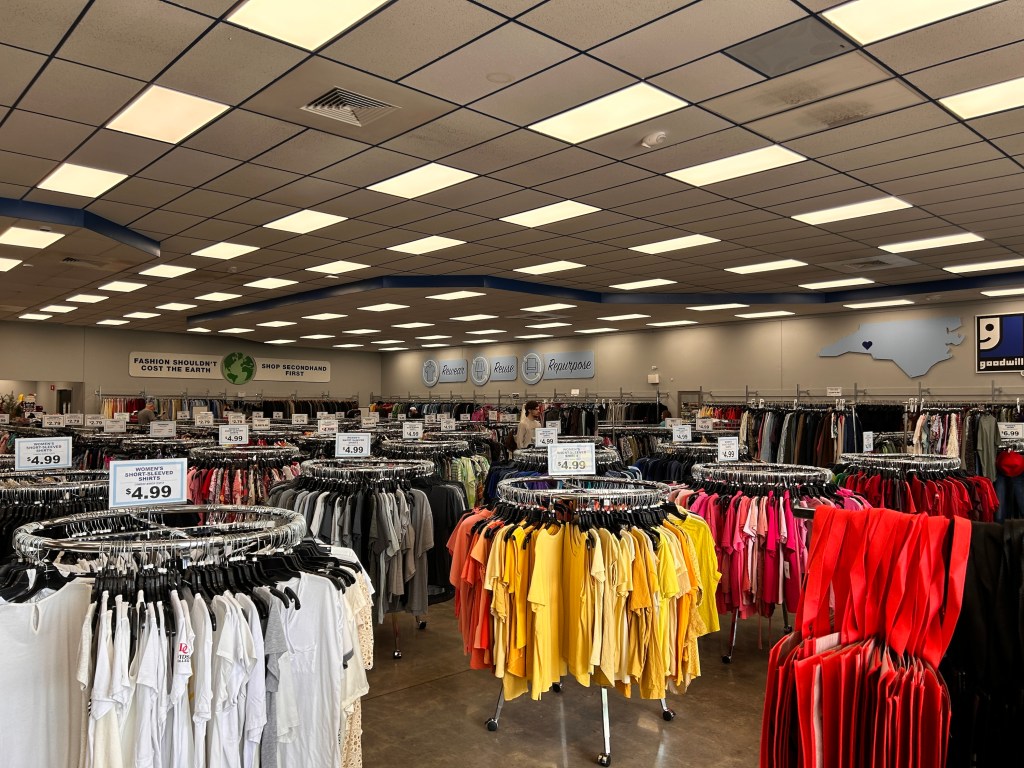
Several groups of consumers are coming through Goodwill’s doors at once. There are budget-conscious households that are hunting for basics like sweatshirts, jeans and work clothes at prices that big-box chains cannot match, like $5 T-shirts and $15 jeans. Then there are younger consumers who see secondhand clothing as stylish, more durable than fast fashion and better aligned with their environmental concerns.
Still, other shoppers flock to Goodwill for the “treasure hunt” experience, or the chance to score a unique jacket or designer piece for a few dollars. Goodwill’s stores can feel overwhelming, with racks and bins of constantly changing merchandise, but that chaos is part of the draw for people who enjoy sifting for hidden finds. The experience adds excitement that conventional retail often lacks.
Goodwill’s momentum is tied to a broader shift in how Americans navigate persistent economic pressure. Inflation has made new apparel, home goods and branded items more expensive, pushing shoppers toward secondhand options.
At the same time, thrift and resale are gaining traction as a category. Online consignment store ThredUp said its revenue increased by 34% last quarter, while secondhand shop Savers Value Village said net sales rose nearly 16% in its most recent quarter, per The New York Times.
Goodwill’s leadership views the current secondhand boom as a way to expand its impact. The organization plans to open roughly 50 to 100 additional stores across North America this year.
“I’m hopeful we will accelerate growth,” David Eagles, Goodwill’s chief operating officer, told The New York Times, adding that 2026 “will probably be our biggest year yet — that’s our goal.”
Goodwill’s annual sales are up nearly 50% from 2019.
Sign up for the Entrepreneur Daily newsletter to get the news and resources you need to know today to help you run your business better. Get it in your inbox.
Key Takeaways
- Goodwill generated record-high revenue last year, achieving over $7 billion in revenue.
- The secondhand chain functions as a barometer of financial strain — when budgets tighten, sales in its stores tend to rise, said Steven C. Preston, Goodwill’s chief executive.
- Goodwill leadership wants to make 2026 its “biggest year yet.”
Goodwill, the world’s biggest thrift store chain, is more popular than ever as Americans seek out the best deals.
Goodwill Industries said its 3,400 stores in North America generated over $7 billion in revenue in 2025, up 7% from the previous year and a record high, according to The New York Times. This surge is an indicator that shoppers are trying to pinch pennies in an uncertain economy marked by inflation, slowing job growth and high costs for necessities like rent and groceries.
Shoppers have not stopped buying goods, but many are trading down by opting for thrift stores instead of full-price retail and often using “buy now, pay later” services when they do purchase new. In this context, Goodwill functions as a barometer of financial strain — when budgets tighten, sales in its stores tend to rise.