How This Former CIA Officer Turned Her Spycraft Skills Into a Female Rucking Movement
Emily McCarthy recruited intelligence assets for the CIA. Those same tactics helped her build a fitness company.
Opinions expressed by Entrepreneur contributors are their own.
Key Takeaways
- Former CIA officer Emily McCarthy helped develop the GORUCK rucksack after her Special Forces husband showed her his military-issued version.
- She obsessed over quality by testing gear in extreme conditions for years, refusing to rush cheaper products to market like competitors.
- McCarthy recruited intelligence assets by understanding what motivated people, and she uses that same approach to earn trust with customers, partners, and her team.
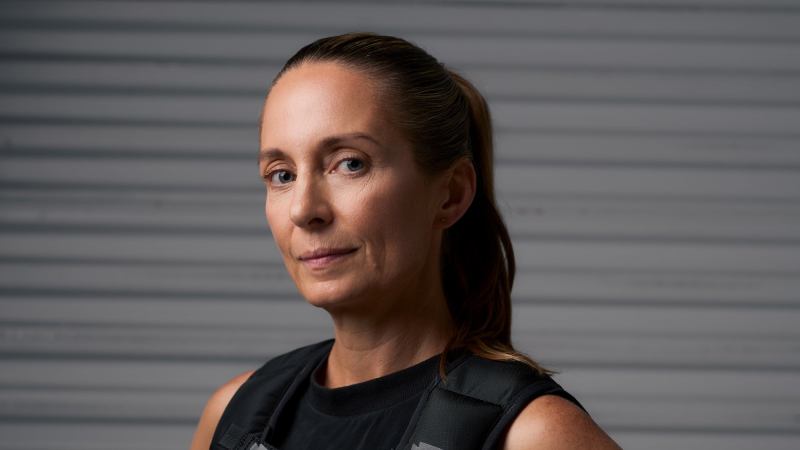
Emily McCarthy spent years working overseas as a CIA case officer. While she was stationed in West Africa, her husband, Jason McCarthy, a former U.S. Army Special Forces soldier, came to visit. He’d done tours carrying heavy rucksacks through hostile terrain, so the environment immediately caught his attention.
He told her she needed a rucksack and pulled out one of his military-issued packs. Built for extreme conditions, it had thoughtful compartments and a clamshell design originally meant for medical use. “It was the best bag I’d ever seen,” she recalls thinking.
That moment became the foundation of GORUCK. The idea wasn’t to reinvent military gear, but to keep what worked in the most demanding environments and strip it down so it could function just as well in everyday life.
At its core, GORUCK reflects how McCarthy learned to think as a CIA officer recruiting assets. You almost never have perfect information and progress comes slow, sticking with the grind long after the novelty wears off.
“If you think you’re going to be James Bond every second, you’re going to be disappointed,” she says.
Here’s how she applied what she learned at the agency to building her company.
Related: He Built a $160,000 Recovery Chamber Before People Even Knew They Needed One
Make the most with what you got
In intelligence work, waiting for complete information isn’t an option, and McCarthy carried that mindset into building GORUCK. Early on, there was no proof that civilians would want military-grade gear or a fitness practice lugging 45 pounds or more on your back. But rather than overanalyze the market, she paid attention to what she could observe directly. If the gear held up and people kept showing up, that was enough to keep building.
Learn to handle pressure
McCarthy says the pressure of entrepreneurship isn’t the same as intelligence work, but it still carries weight. “Life and death isn’t always on the line when you’re an entrepreneur,” she says. “But you’re dealing with lives in a different way. It’s someone’s livelihood.”
What changed most for McCarthy after leaving government work was adjusting to the freedom. “I used to say, I hate having to ask permission to go pee,” she says. “Anytime you have to travel anywhere, you have to write a cable and say, ‘I’m going here’.”
Entrepreneurship removed that bureaucracy, but replaced it with a different kind of pressure. “When you’re an entrepreneur, you’re on all the time,” she says.
Related: The Future of Wellness Is Happening IRL — Not on Your Feed
Obsess over quality
McCarthy says her obsession with quality comes from her intelligence background. “Money is not an object. It’s like, is this going to work in the most austere environments? Is it going to protect lives?”
McCarthy describes years of cutting fabrics, soaking them, sweating through them, and testing them in heat. When competitors rushed cheaper gear to market, she wasn’t tempted to follow. “We looked at a lot of those, and some of them smelled terrible,” she says. “I didn’t want to wear those.”
That level of testing eventually led to Spy Ruck, GORUCK’s weighted vest designed specifically for women. The goal was to figure out how to carry the weight in a way that still delivered the benefits, while actually fitting women’s bodies and feeling wearable, with materials that were built for product longevity.
McCarthy is quick to say the work isn’t finished. Even after years of iteration, Spy Ruck is still evolving based on how people actually use it. Some women wanted heavier weight options. Others wanted tweaks to fit or feel. Rather than treat the product as done, the team went back to the drawing board. “We’re still innovating,” she says.
‘Brilliance in the basics’
Long before she was a CIA officer, McCarthy was a volunteer working in Ecuador, where she learned that progress often came from slowing down, sitting with people, and paying attention. “There’s brilliance in the basics,” she says, echoing a phrase often heard in the military.
Real impact comes from showing up and doing the unglamorous work consistently. That belief carried into business, where she’s found that taking the slower, more human path often leads to better results.
Learn to compartmentalize
In the CIA, compartmentalization wasn’t optional. Information moved only on a need-to-know basis, and mistakes had consequences. “You might be sending out an Intel report that you’ve gathered and you have to be really careful about what you’re saying to whom,” she says.
Over time, McCarthy learned to apply the same discipline internally. When something went wrong, you dealt with the problem in front of you and didn’t let it derail everything else. Learning how to mentally reset, instead of stewing or spiraling, became one of her most useful tools.
Wait for the right moment, not permission
In the CIA, McCarthy learned that influence rarely came from pressure. It came from patience, curiosity, and timing. When an approach met resistance, she didn’t force it. She waited for the right moment or the right person and let outcomes unfold.
That same mindset carried into building GORUCK. Rather than pushing customers, partners, or even her own team toward a fixed result, she focused on understanding what motivated them and earning trust over time. “What I was really trying to do was find what motivated someone,” she says. “What do they care about? And that’s what I want to care about.”
Key Takeaways
- Former CIA officer Emily McCarthy helped develop the GORUCK rucksack after her Special Forces husband showed her his military-issued version.
- She obsessed over quality by testing gear in extreme conditions for years, refusing to rush cheaper products to market like competitors.
- McCarthy recruited intelligence assets by understanding what motivated people, and she uses that same approach to earn trust with customers, partners, and her team.
Emily McCarthy spent years working overseas as a CIA case officer. While she was stationed in West Africa, her husband, Jason McCarthy, a former U.S. Army Special Forces soldier, came to visit. He’d done tours carrying heavy rucksacks through hostile terrain, so the environment immediately caught his attention.
He told her she needed a rucksack and pulled out one of his military-issued packs. Built for extreme conditions, it had thoughtful compartments and a clamshell design originally meant for medical use. “It was the best bag I’d ever seen,” she recalls thinking.
That moment became the foundation of GORUCK. The idea wasn’t to reinvent military gear, but to keep what worked in the most demanding environments and strip it down so it could function just as well in everyday life.