How to Build a Brand That Survives Every Product Pivot
I sold my last startup to Spotify. Here’s my process for building
a brand that lasts.
This story appears in the November 2026 issue of Entrepreneur. Subscribe »
How do you build a brand identity when you’re not entirely sure what your product will be yet?
That was the challenge I faced a year ago, as my team began building our new startup, Oboe. Oboe’s mission is to become “the learning platform of the future” by aiming to teach one billion people one trillion things. At first, our product was half-baked and in beta. But we still needed a brand that would work for our launch as well as all future product iterations (then unknowable) that were bound to come.
How could we do that? How could we build for the present and for everything ahead? It was a new challenge for me. At my last startup, Anchor, our product was more clear at the start: We built a popular podcasting platform, which was ultimately sold to Spotify. Now I was entering more abstract territory, with fast-evolving AI technology. We were creating something from nothing. And given the expense and effort that goes into branding, I just had to hope this thing would have enough longevity and adaptability to last for years.
Now, a year later, Oboe’s product has indeed gone through many iterations — but our branding hasn’t changed at all. It recently won a Red Dot Design Award, often cited as one of the most important design competitions in the world.
I’ll unpack how we got there. It all began with great partnerships: We hired the design agency Work of the People and worked with branding and marketing expert Anna Sian. Then we refined our approach through a lot of team thinking and founder reactions.
How the brand started
All we had at the start was our name, Oboe, which I chose a year earlier when my investor friend Matt Hartman reacted to a pool of options by saying, “You should pick Oboe. Because who would name their company Oboe? And I mean that in a good way.” That sealed it.
The team and I kicked off the branding exercise by first looking at the multiple spectra on which we’d be measured and deciding where we wanted to fall.
These sliders (see No. 1) are a great exercise, because they help distill the various dimensions that factor into a brand and deconstruct them into separate traits to focus on. For instance, on the spectrum of “expert guide” to “co-learner,” you can think of brands such as National Geographic sitting on one extreme and Substack sitting on the other.
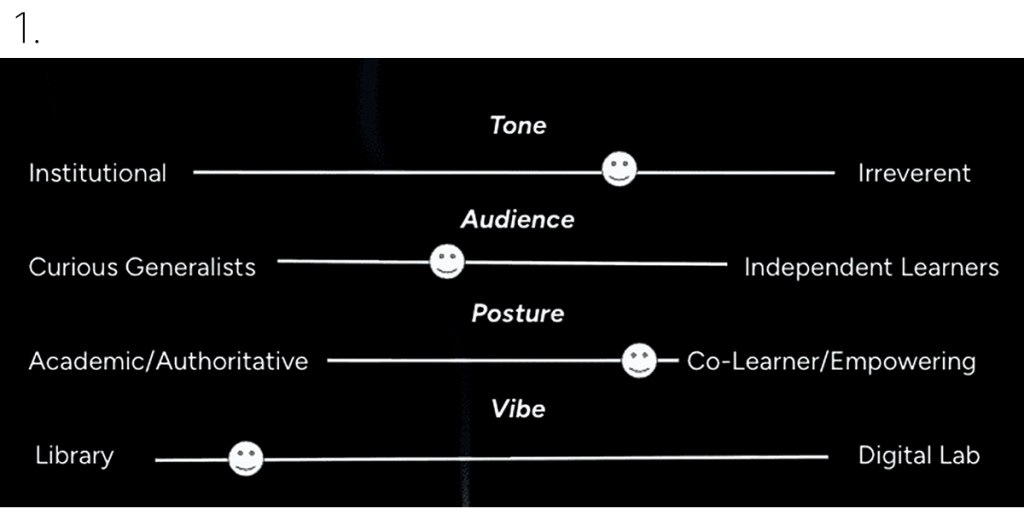
There are dozens of these dimensions. Did we want to be perceived as a teacher or a friend? Did we want to be serious or funny? Did we want to feel tangible or abstract?
It’s interesting to reflect now on how different our brand and the perception of Oboe might have been if, when presented with the sliders at the very beginning, we had nudged some of our preferences a bit to the left or a bit to the right.
Building off abstraction
The hardest work comes when you have to take those abstract preferences along the spectra and map them to concrete ideas.
Our partners got their hands dirty very quickly, spinning up ideas seemingly every hour, and receiving our feedback in real time to double down on what we thought was working.
You can see some of their early sketches (see No. 2) for branding ideas. The range of options was wide, and I found it particularly challenging not only to communicate what I thought worked and what didn’t in these designs, but also to express why. For instance, I liked the bunny in one of those options, but I didn’t love the font. Why? I don’t think I possess the typographical vocabulary necessary to explain it.
It’s a feeling. And after all, isn’t a feeling what we’re trying to elicit with our branding?
After surprisingly few rounds of iteration, the team at Work of the People presented this:
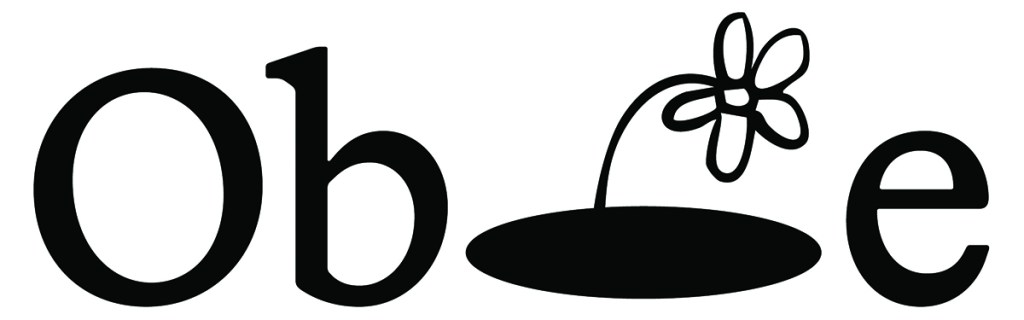
Though it wasn’t perfect, it stirred something in me that none of the others had.
Good branding, I find, is like true love. You don’t have the words to describe it. You don’t know what it’s supposed to look like. But you trust that when you see it, you’ll know. Here, the team and I knew.
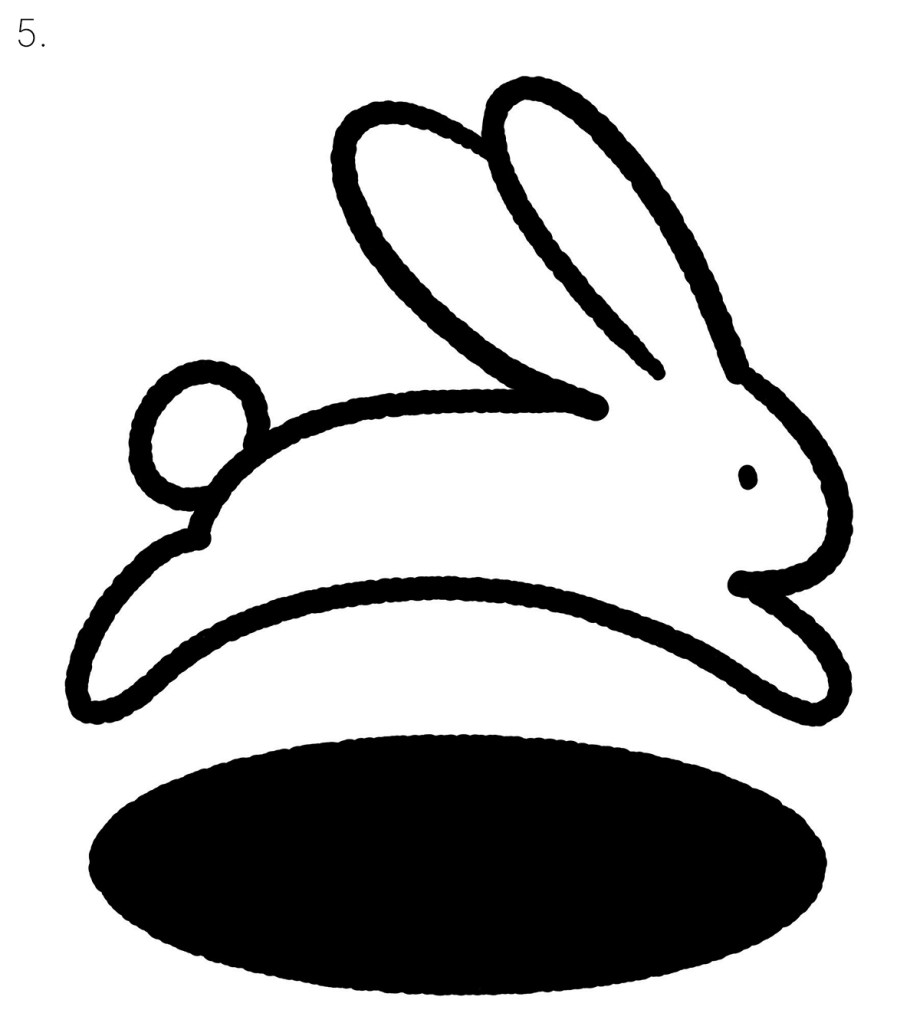
As for why? I’ll give it a try: The lightness, the accessibility, the approachability, the curiosity, the relevance to the concept of rabbit holes, the sense of discovery. It was playful without being overtly comical. It was welcoming and familiar while looking unlike anything I’d seen before.
To paraphrase what my friend Matt might have said: Who would name their company Oboe and brand it with a mysterious hole out of which things magically appear? And I mean that in a good way.
Creating a clear identity
Once we knew the direction, the rest came naturally.
The logo was perfected:
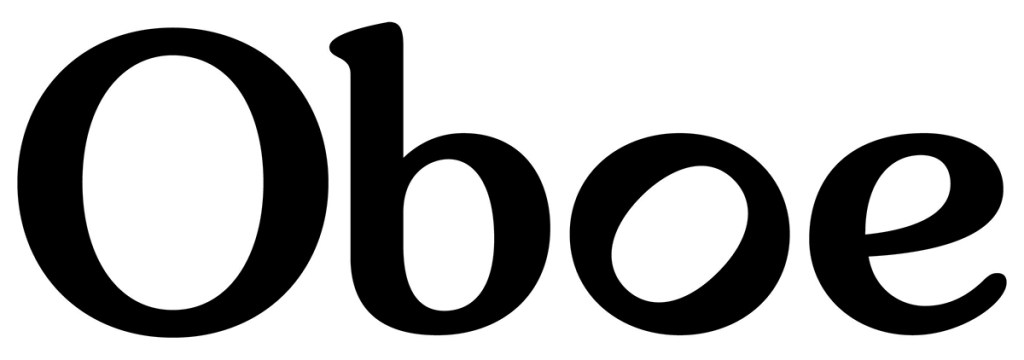
There are so many subtle things I love about our logo. The general sans-serif-ness with a little hint of sophistication hanging off the top of the B. The slanted O, and in particular, the fact that it is not even the first O that’s slanted. The repetition of the open spaces inside of every letter, which uniquely works with a word like Oboe.
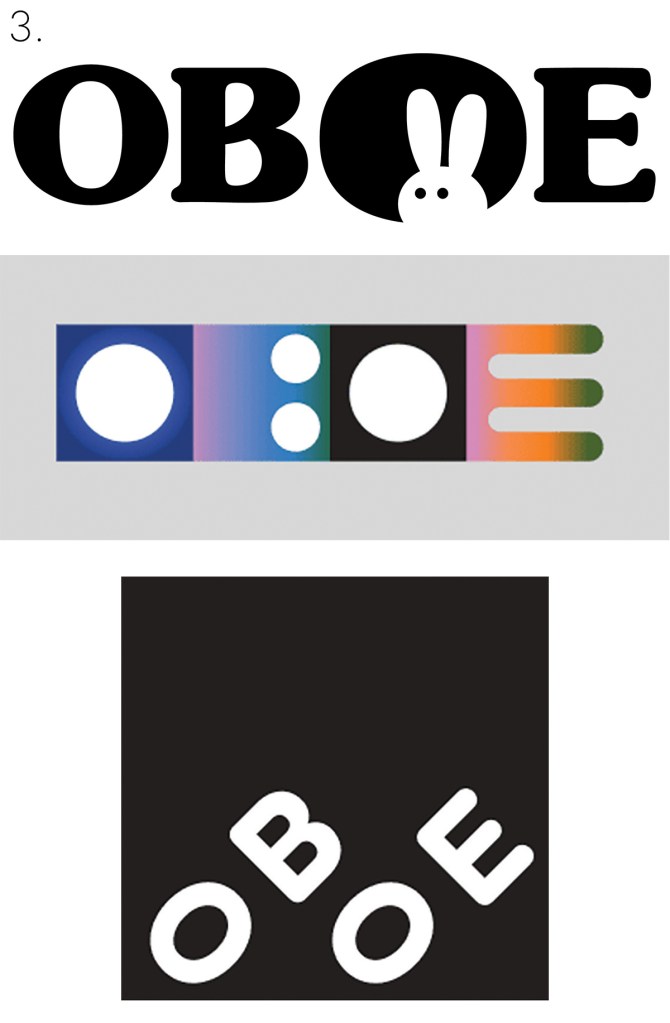
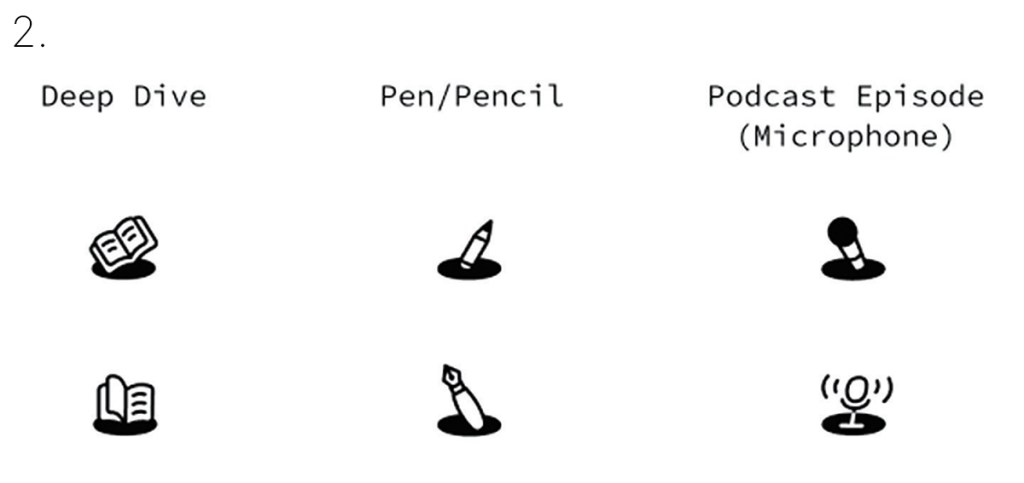
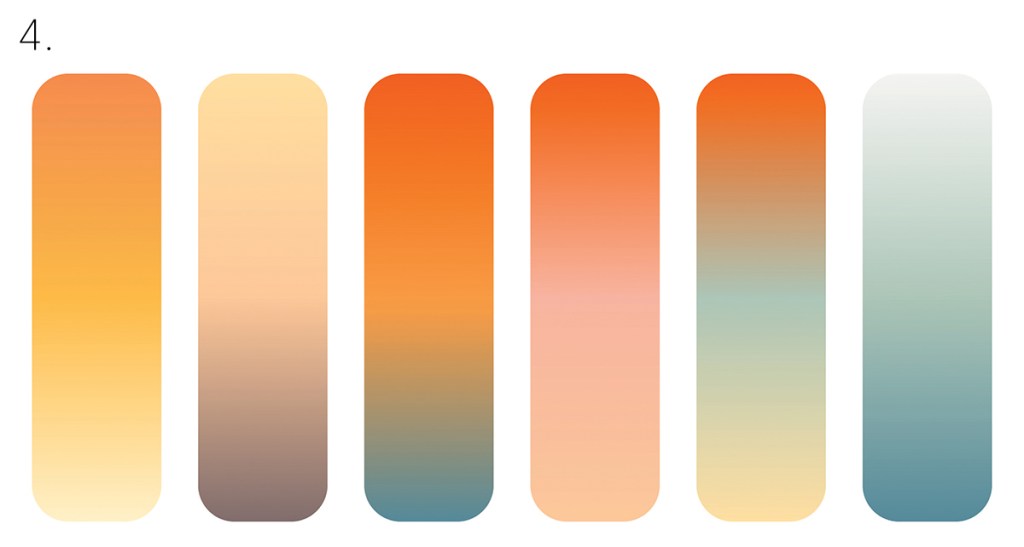
Then we turned to the iconography (see No. 3) and the color palette (see No. 4) for our branding and marketing. And although the bunny (see No. 5) didn’t stay inside our logo, it became our brand mascot instead. You’ll find it throughout our website, oboe.com.
Our product evolved considerably over the past year and will continue to evolve. But our branding has always felt perfect. That’s because it captures our mission and our tone without being tied to any specific implementation. To me, that’s what the best brands do: They communicate something deeper about a brand, something that goes beyond any one product. It’s an idea that you and your customers can grow with.
How do you build a brand identity when you’re not entirely sure what your product will be yet?
That was the challenge I faced a year ago, as my team began building our new startup, Oboe. Oboe’s mission is to become “the learning platform of the future” by aiming to teach one billion people one trillion things. At first, our product was half-baked and in beta. But we still needed a brand that would work for our launch as well as all future product iterations (then unknowable) that were bound to come.
How could we do that? How could we build for the present and for everything ahead? It was a new challenge for me. At my last startup, Anchor, our product was more clear at the start: We built a popular podcasting platform, which was ultimately sold to Spotify. Now I was entering more abstract territory, with fast-evolving AI technology. We were creating something from nothing. And given the expense and effort that goes into branding, I just had to hope this thing would have enough longevity and adaptability to last for years.