Danny Meyer Says This Is a Sign Your Company Culture May Be In Trouble
The Shake Shack founder says every leader should be asking their team this one question.
This story appears in the November 2026 issue of Entrepreneur. Subscribe »
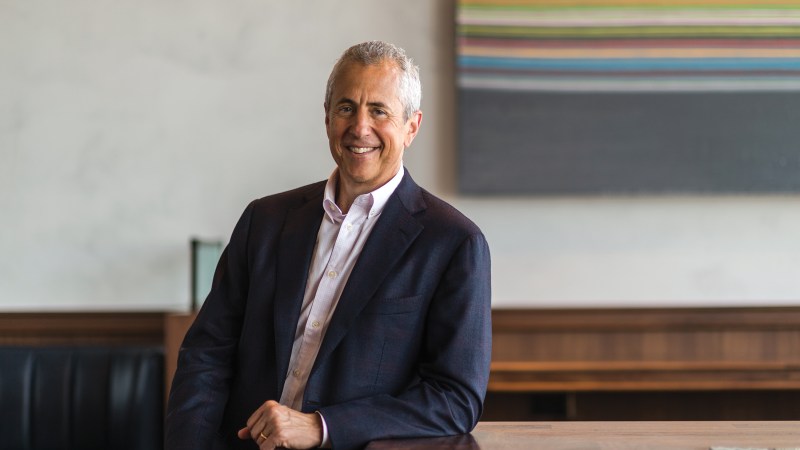
To the general public, Danny Meyer is probably best known for creating Shake Shack. But restaurateurs have been obsessed with him since at least 2006, when his book Setting the Table: The Transforming Power of Hospitality in Business became the definitive playbook for operators everywhere. It taught restaurant owners (like me) that true hospitality is about how you make people feel — starting with your own team.
That team has become legendary in hospitality. Meyer is the founder and executive chairman of the Union Square Hospitality Group, which has shaped New York’s culinary scene through restaurants like Union Square Cafe, Gramercy Tavern, and Eleven Madison Park. But as he’ll readily say himself, scaling isn’t easy, and building the right team is hard. He’s learned that through a lot of failure and experimentation.
“I call [team] culture an aspiration, because you never truly arrive,” he says. And that’s one of the central ideas behind his new book, What Could Possibly Go Right?: The Essential Journey to Scale an Enduring Culture, where he tackles the realities of scaling head-on.
In this conversation, Meyer talks about how to build a great team (and evolve as a leader) in any industry.
You say culture is an aspiration, not a destination. How do you define culture, and how do you measure progress toward something you never actually arrive at?
Culture is “the way we do things around here.” You can have a culture with no intention, but you can’t have a great culture without intention.
The intentional part is the degree to which everyone on your team knows which direction you are hoping to steer the ship. It is not about how the food tastes, but about how things feel. How does it feel to work there? How does it feel to dine there? What is your thumbprint?
If you have that consistency across all your restaurants or locations, your culture is strong. If there is inconsistency in how it feels from location to location, the culture might be a little shaky. We have experienced those shaky moments before, but we have also figured out a few things about how to get it focused again.
There will never be a moment in my entire life where I say, “We have fixed our culture. We nailed it. The thumbprint is in focus exactly the same way everywhere.” That will just never happen. And that is OK, as long as directionally our intention is to keep moving forward.
In your new book, you write about some painful missteps. Which mistake cost the
most money, and which one lost the most trust? Are they the same?
Most of the mistakes cost us time and money, but they were well-intentioned. Trust is a completely different story.
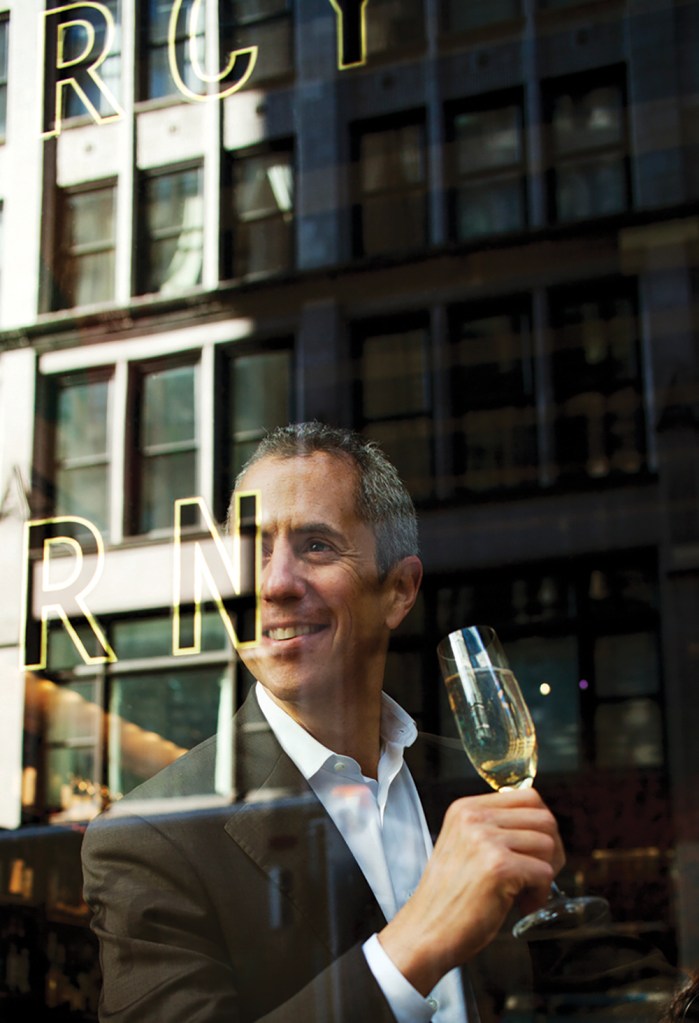
When we took our eyes off the ball, especially during the #MeToo era, there were a couple of situations where a chef or a sous chef was not acting in a way consistent with what we call enlightened hospitality. When that happened, we lost trust, and people lost trust in me. I am the leader, and the buck stops with me. Those moments are critically important opportunities for us to face the music, own it, listen, empathize, and fix it. That is exactly what we did.
Image Credit: Maura McEvoy
When a founder wants to scale their company, what is the very first thing they need to stop doing?
A founder should stop thinking that he or she should be able to do everything, or should do everything. You are simply not going to get great people on your team if you cling to how you have always done things.
In the book, I write about my own need to “change my grip.” I use that metaphor because if you played any sport growing up, like tennis, you remember how you were taught to hold the racket. You shook hands with the racket. At some point, a coach or instructor told you, “That was good enough to get started, but if you really want to get better, you have to change your grip.” When you change your grip, you get more velocity and topspin, but it feels incredibly uncomfortable at first.
In my own case with tennis, I tried changing my grip a few times, and I was awful at first. But I stuck with it on my serve, changed my grip, and it worked. On my forehand, I kept doing the same old grip, and I never got any better at it. That is the exact same thing we have to learn as leaders. The way we have always led might have been good enough to get us here, but as you scale the business, you absolutely need to change your grip. Sometimes you have to loosen your grip and let other people hold the racket.
Optimism can sound naive in a tough economy. But you argue that people must have it. Why?
Especially in a hard economy, what we are all selling is hope. At the heart of a tough economy, people are really looking hard at their personal budgets. They are looking at their spending and asking, “Is it worth leaving home tonight and buying gas for my car to go have an ‘experience’ meal that costs more money than it has ever cost before?”
In tough times, hospitality is the answer to: “What could possibly go right?” That is what we in our industry have to offer the world: a place where you can go and feel good for a little while.
What is one weekly practice a leader can use to see if their company culture is actually helping people do better work?
Ask your team directly: “How does it feel to work here right now?”
You have to give up the age-old idea where the boss says, “You should have come into my office; we have an open-door policy around here.” That is nonsense. An open-door policy is passive. It is really the boss’s job to get out there and get a real feel for how things are going.
When I have seen our culture not at its peak, it is when you see people working with their heads down. Working with your head down used to be considered a compliment. People would say, “He just grinds away with his head down.” But that is not uplifting. That is not a team coming to work for the shared purpose of inspiring each other and having fun doing great work. If I see people working with their head down, it tells me something might be a little askew.
In an era where every job applicant can rehearse polished answers, how do you test for genuine hospitality during an interview?
You have to see right through it. I have gotten pretty good at it by assuming that the human I am interviewing got all their polished answers straight off ChatGPT. Because of that, you have to ask questions that they couldn’t have possibly prepared for.
What is the one topic in What Could Possibly Go Right? that you wish more people asked you about?
Probably my favorite chapter is the very last chapter, and it is interesting how few people talk about it. It hits my primary motivation for everything we do: Can we create businesses that genuinely make people’s lives better? Can we hire leaders who make life better for the people they lead? Can we create businesses that, if they were to no longer exist, would create a hole in people’s lives in the exact same way that losing your favorite song would?
I think a lot about essentiality. We live in a world where there are more choices for everything than we have ever had before, along with endless non- essential opportunities. I want to spend my time creating places that truly matter, and I wish more people would ask about how we build for that essentiality.
To the general public, Danny Meyer is probably best known for creating Shake Shack. But restaurateurs have been obsessed with him since at least 2006, when his book Setting the Table: The Transforming Power of Hospitality in Business became the definitive playbook for operators everywhere. It taught restaurant owners (like me) that true hospitality is about how you make people feel — starting with your own team.
That team has become legendary in hospitality. Meyer is the founder and executive chairman of the Union Square Hospitality Group, which has shaped New York’s culinary scene through restaurants like Union Square Cafe, Gramercy Tavern, and Eleven Madison Park. But as he’ll readily say himself, scaling isn’t easy, and building the right team is hard. He’s learned that through a lot of failure and experimentation.
“I call [team] culture an aspiration, because you never truly arrive,” he says. And that’s one of the central ideas behind his new book, What Could Possibly Go Right?: The Essential Journey to Scale an Enduring Culture, where he tackles the realities of scaling head-on.