The Single Most Powerful Emotion In Marketing, According to Research
And here’s what breast milk, potatoes and giant armpits have to do with it.
This story appears in the March 2026 issue of Entrepreneur. Subscribe »
When’s the last time you were delighted by an experience with a brand? It’s a surprisingly important question.
In a survey of 25,000 customers across diverse industries, McKinsey & Company found that delight — that bubbly feeling at the intersection of surprise and joy — is the single most powerful emotion a company can elicit. “Delight not only cultivates loyalty and repurchase,” the management consultancy says in a report, “but also fuels revenue growth through cross-selling and upselling opportunities.”
When marketers create stunts, they tend to focus most on the first part of this journey. They capitalize on surprise — crashing into customers’ lives and seizing their attention. But the best stunts take it a step further, by challenging assumptions and prompting people to engage thoughtfully with an idea or narrative. Psychologists describe “incongruity resolution” as the experience of encountering something weird or out of place, which then forces us to grapple quickly with the inconsistency and find some logic in the absurdity. The process of being surprised, and then locating some new logic or truth, can be profoundly joyful.
Related: Most Businesses Overcomplicate Their Marketing Strategy. Here’s Why — and What to Do Instead.
In other words, delight is the feeling when the joke lands, or we come around to a new perspective that just feels true. And when a brand takes a customer on that emotional journey, they remember it.
Here, we break down three surprising (and delightful) brand stunts from the past year — to inspire your own delightful marketing efforts.
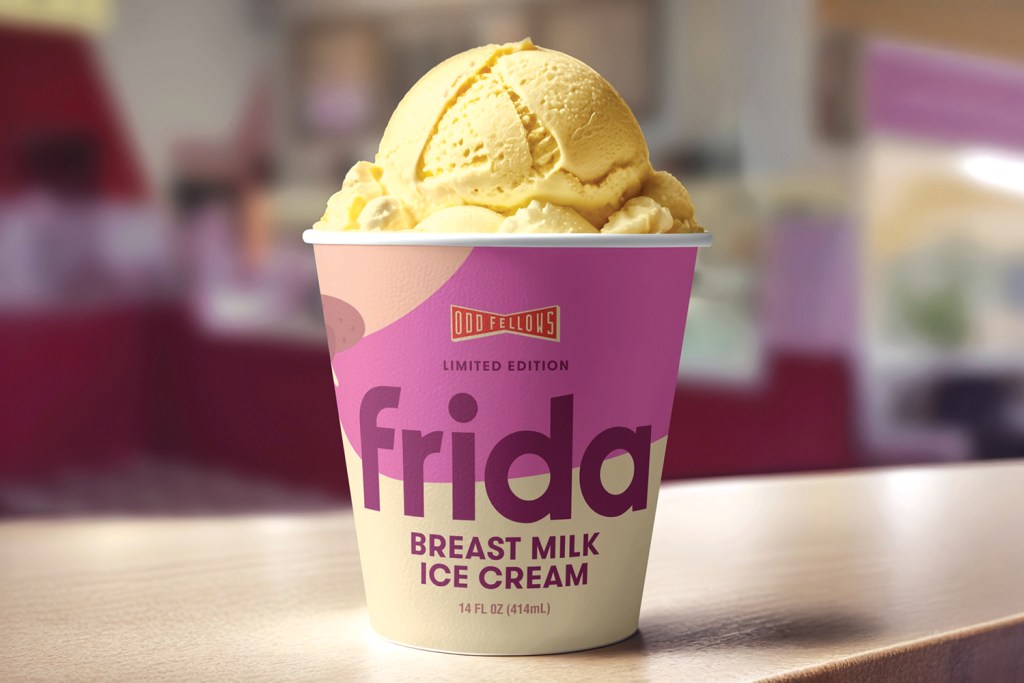
1. Breast milk ice cream
If your first reaction is “Ew!” — well, that’s what Frida was counting on.
In August, the parenthood product company wanted to build buzz around its new 2-in-1 Manual Breast Pump. So they came up with the idea of creating a custom breast milk ice cream flavor. It was sold online and in-person at a Brooklyn pop-up, and advertised with posters and a “Breast Milk Ice Cream” tanker truck that rolled around New York City. The tagline was: “Just like mom used to make.”
According to the Frida team, their objectives were “to destigmatize breastfeeding by sparking dialogue around a traditionally private topic, and to drive awareness and interest in Frida’s new manual breast pump.”
The campaign went certifiably viral. It got over 300 media placements, including two late-night shows, multiple morning shows, and more than 100 million social media impressions. Six publications ran “I Tried It” stories (including the New York Post, with the memorable headline: “New Yorkers latching on to new breast milk-flavored ice cream in Brooklyn: ‘Isn’t all ice cream breast milk?’)”. The Frida website got a boost of 177% week-over-week traffic, with daily sellouts of the limited-time ice cream and a 55% increase in breast pump sales.
Related: The Most Dangerous Digital Marketing Mistakes New Entrepreneurs Make
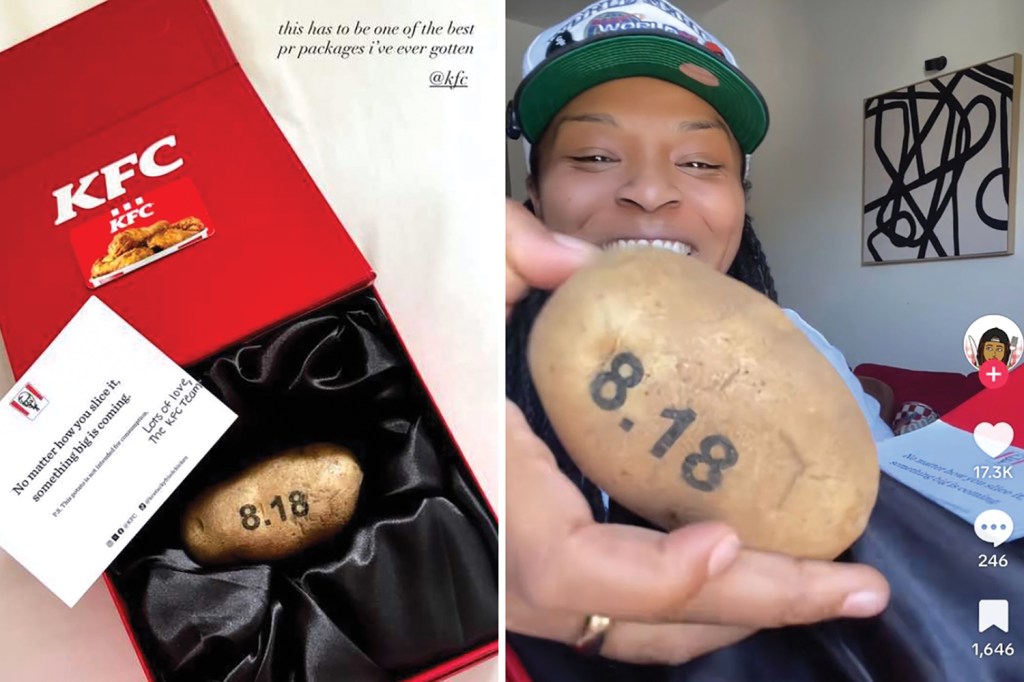
2. Mysterious potato mailer
When KFC’s beloved potato wedges were returning after a five-year hiatus, the company wanted to cook up some social media hype.
“We designed a physical mailer for a curated group of 70 social media creators — intended to inspire unpaid, earned posts,” says Kimberly Murphy from Small Girls PR, who worked with KFC on the stunt. Each influencer received a premium, KFC-branded, glossy red box. Inside: a single raw potato, stamped only with “8.18” — a cryptic nod to the wedges’ return date. Accompanying it was a simple message: “No matter how you slice it, something big is coming.”
“Rather than explicitly revealing the wedges’ return, we leaned into subtlety and absurdity,” Murphy says.
Delight and hilarity ensued, with 72% of recipients posting, creating 157 pieces of unpaid influencer content and 7.3 million social media impressions — and prompting Instagram to add a suggested search for “KFC Potato Wedges.”
Related: How to Tell If Your Marketing Is Driving Real Business Results
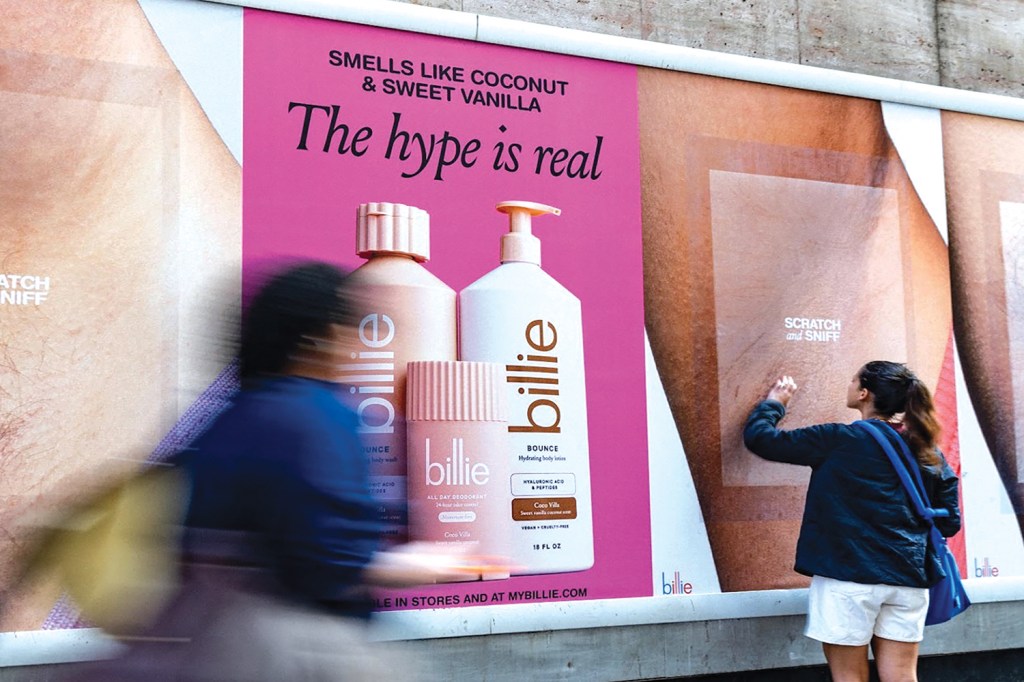
3. Giant scratch-and-sniff armpits
Armpits are not the most celebrated body parts, so most of us don’t expect to see giant photos of them on our morning commute — and we certainly don’t want to smell any armpits in the morning, either. That’s what personal care brand Billie expected when they launched their Coco Villa scent last spring.
In high-traffic areas of New York City, Billie plastered giant scratch-and-sniff armpit photos on billboards, offering passersby a whiff of their coconut vanilla fragrance. “Our goal with this stunt was to create an unexpected, immersive moment for consumers to experience the new scent at launch, rather than waiting for them to discover it on a shelf,” Billie’s team says.
Stopping to sniff the armpit was funny and a little embarrassing, which made the interaction both delightfully sensory (the smell was nice!) and emotional (doing something weird in public). The billboards got over 5 million in-person interactions, and were covered in consumer media as well as Good Morning America, Good Day New York, and Late Night with Seth Meyers.
When’s the last time you were delighted by an experience with a brand? It’s a surprisingly important question.
In a survey of 25,000 customers across diverse industries, McKinsey & Company found that delight — that bubbly feeling at the intersection of surprise and joy — is the single most powerful emotion a company can elicit. “Delight not only cultivates loyalty and repurchase,” the management consultancy says in a report, “but also fuels revenue growth through cross-selling and upselling opportunities.”
When marketers create stunts, they tend to focus most on the first part of this journey. They capitalize on surprise — crashing into customers’ lives and seizing their attention. But the best stunts take it a step further, by challenging assumptions and prompting people to engage thoughtfully with an idea or narrative. Psychologists describe “incongruity resolution” as the experience of encountering something weird or out of place, which then forces us to grapple quickly with the inconsistency and find some logic in the absurdity. The process of being surprised, and then locating some new logic or truth, can be profoundly joyful.