How to Know If Your Idea Is Good: Advice From Shaq, Tom Brady, Ken Burns, Susan Orlean and Other Icons
A round-table of widsom and strategies from business titans, sports legends and TV favorites.
This story appears in the March 2026 issue of Entrepreneur. Subscribe »
What does it take to be successful?
Every week on my podcast, How Success Happens, I get to ask that question — and hear answers from people who are smarter, richer, and more talented than I am (it’s not a high bar). While my guests work in vastly different arenas, from making vacuum cleaners to leading soldiers in global conflicts, the common thread is that they all locked in on something that truly excites them. Fame and fortune were a side effect.
Their excitement for what they do is infectious, so we decided to share some of our guests’ greatest hits, ranging from straight-up advice to funny and inspiring stories that may have a kernel you can relate to. Sure, you may not be broadcasting from an NFL game anytime soon, but you could be walking into a pitch meeting — and hearing what Erin Andrews has to say about tamping down nerves before going live to an audience of millions might help you through that moment.
Let the inspo begin!
How to fully commit to yourself

Image Credit: Courtesy of Passes
Lucy Guo
Self-made billionaire, cofounder of Scale AI, and founder of Passes
“I dropped out of college to be surrounded by young, ambitious people that wanted to start companies. It was a super easy decision to make. I think people over-index on the risk — like, they think that things are riskier than they actually are. At the end of the day, you’re not really losing much, right? If you drop out of college, you can always go back to college. If you leave that job, you may lose a few years or some money, but that’s not the end of the world. That’s especially true when you compare it against what you’re pursuing, and how it hopefully gives you the knowledge needed to really advance your career. Like, the worst-case scenario is that you gain a bunch of knowledge. Best-case scenario is life-changing money.”
How to prioritize your life

Image Credit: Courtesy of Alexis Ohanian
Alexis Ohanian
Cofounder of Reddit and the VC fund 776
“I reset my priorities right around the time I proposed to my now-wife, Serena Williams. We had a conversation where she said that I worked harder than her, and then clarified, ‘That’s not a compliment.’ As an athlete, she knew better than anyone that recovery time is just as important as the time you’re putting in practicing and playing. Or in my case, being in the office. When she’s at work, she’s 110% committed to that, and when she’s not, she’s 110% not. And it’s something I’ve strived for, because ‘working more’ is not the path to greatness. It’s not as simple as just logging as many hours as you possibly can. After a certain number of hours of not reinvesting in yourself and reinvigorating yourself, you’re doing worse and worse quality work. And you’re also losing touch with the things and people that really matter in your life and missing gaining new perspectives. I’ve gotten a lot better about finding balance. I give myself a B-plus, maybe an A-minus. And I would argue that these years have been even more productive and effective than the first, thanks to finding that balance.”
Related: How 15 Years of Almost Failing Helped Me Find a Pathway to Success
How to run many businesses at once

Image Credit: Courtesy of Ian Spanier
Robert Irvine
Chef, entrepreneur, author, founder of the Robert Irvine Foundation and cofounder of FITCRUNCH
“Hard work, empathetic leadership, authenticity, trust, loyalty. I don’t become successful without the people that work with me, not for me. For example, if I have an employee who I know has an autistic son at home, and she’s having a bad day? I tell her to go home. Don’t worry about the time off. I got you. What does that do? Tells me, number one, that Maria knows I care about her and her family. Number two, it builds the best loyal employee you’ll ever have in your life. She will bleed for you till the end of days. And I think for me, that’s what success is — because if I understand Maria’s life, she understands my goal.”
How to take risks in a cancel-culture world

Image Credit: Courtesy of Michael Avedon
Ken Burns
Filmmaker of documentaries like The American Revolution and The Civil War
“The problem with cancel culture is that it leaves us feeling lonely. We feel bereft of ideals and heroes. But we have to remember that a hero was never perfect. The Greeks were telling us that here are these imperfect people. Achilles had his heel and his hubris to match his great powers. It is so easy to dispense with somebody when you discover, ‘Aha, you did this!’ It is much more difficult to sit with those contradictions and to not accept them, but to try, as Benjamin Franklin would say, to improve on them. To get better. He did enslave people, but he also became an abolitionist and proposed in the United States Congress the first attempt to outlaw slavery. He was completely ignored in the Senate and voted down in the House, but he tried. So this is what we have to do. We’re too static right now. Everything is frozen because of this interest in ourselves. We have become focused on the transactional, rather than the transformational.”
Related: Answering This Question Can Predict Your Startup’s Success
How to know your idea is good

Image Credit: Courtesy of Corey Hendrickson
Susan Orlean
Staff writer for The New Yorker and bestselling author of The Orchid Thief and Joyride
“Many ideas have an immediate appeal. But what I do — and this is what people always say about shopping online — is don’t do it immediately. Put it out of your head. Force yourself to forget about it. Does it come back? Does it keep surfacing? Does it keep nagging at you?
I think it’s also important to know that there will be points along the way that you begin thinking, Look, this isn’t maybe as good an idea as I thought. Do you then give up, or do you push past that moment of doubt? The best thing in those situations is to pause and give it a beat. Try to analyze why you’re losing your nerve. Is it that the idea is changing from what you first imagined? Changing is not bad. Take a deep breath and say, All right, what I thought it was gonna be isn’t all that important. It’s more important to see what it really is. And proceed.”
How to deal with failure

Image Credit: Courtesy of James Dyson
Sir James Dyson
Inventor of the Dyson vacuum cleaner and home products
“It took 5,127 prototypes to actually make my vacuum work. And I enjoyed every minute, because I was learning all the time: How can I make that better? Is this a good route to follow or not? It sounds tedious, but it’s fun, actually. I was and still am a long-distance runner, so I’m in it for the long haul. In my mind, once you’ve started and you’re working on it, you make it work. Every day you do experiments and they fail, and you just have to get used to that failure. In fact, I always get quite excited when there are more failures, because you realize it’s a difficult problem to solve. It wasn’t obvious. If you manage to solve something that other people can’t solve, then it’s quite a strong patent.”
Related: Why Do You Want to Live Somebody Else’s Life? 5 Ways to Build the Life You Really Want
How to increase demand
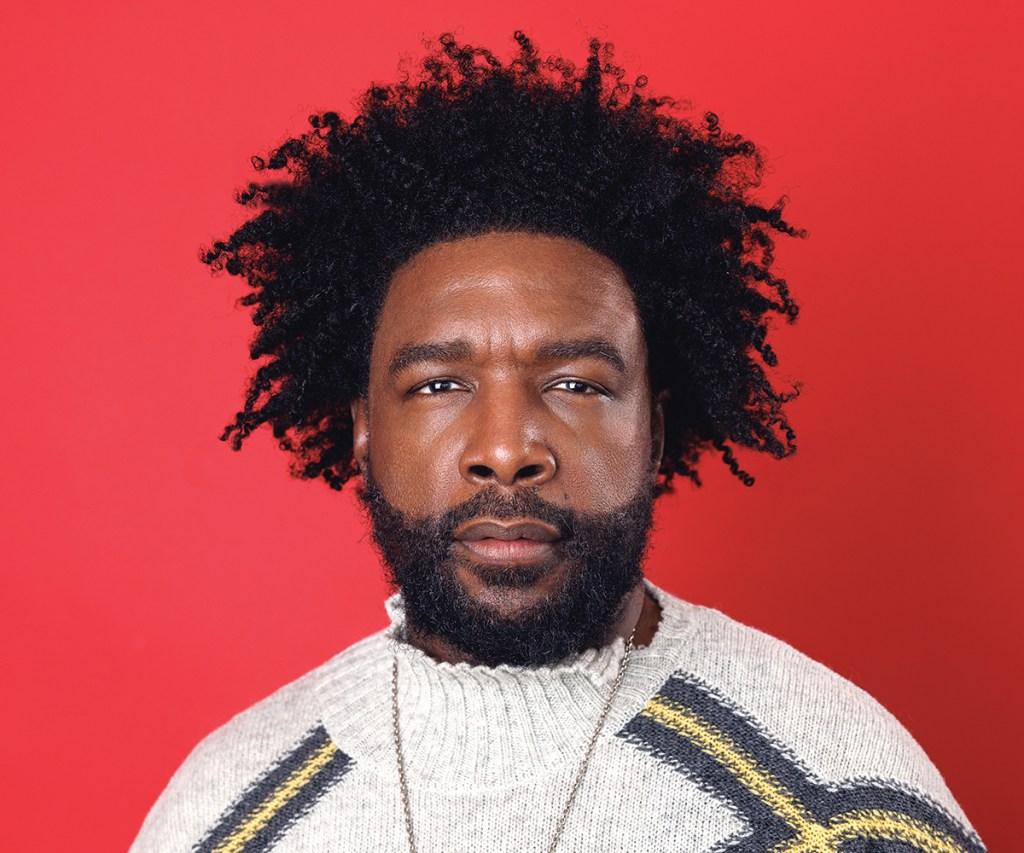
Image Credit: Courtesy of Christian Germoso
Questlove
Musician for The Roots and the in-house The Tonight Show band, director of the Oscar-winning documentary Summer of Soul
“In 2008, I announced that it would be The Roots’ last big world tour. People didn’t believe me, because it’s like, Everyone says that it is their last tour, but it never happens. Then we got the gig as The Tonight Show’s house band, which cut our tour schedule from 250 dates to 60. Suddenly, I understood scarcity marketing. Promoters are like, ‘Please come back, please!’ I never knew the power of the word no. When you say no a lot, then suddenly there are extra zeros on that check.”
How young entrepreneurs can get funded
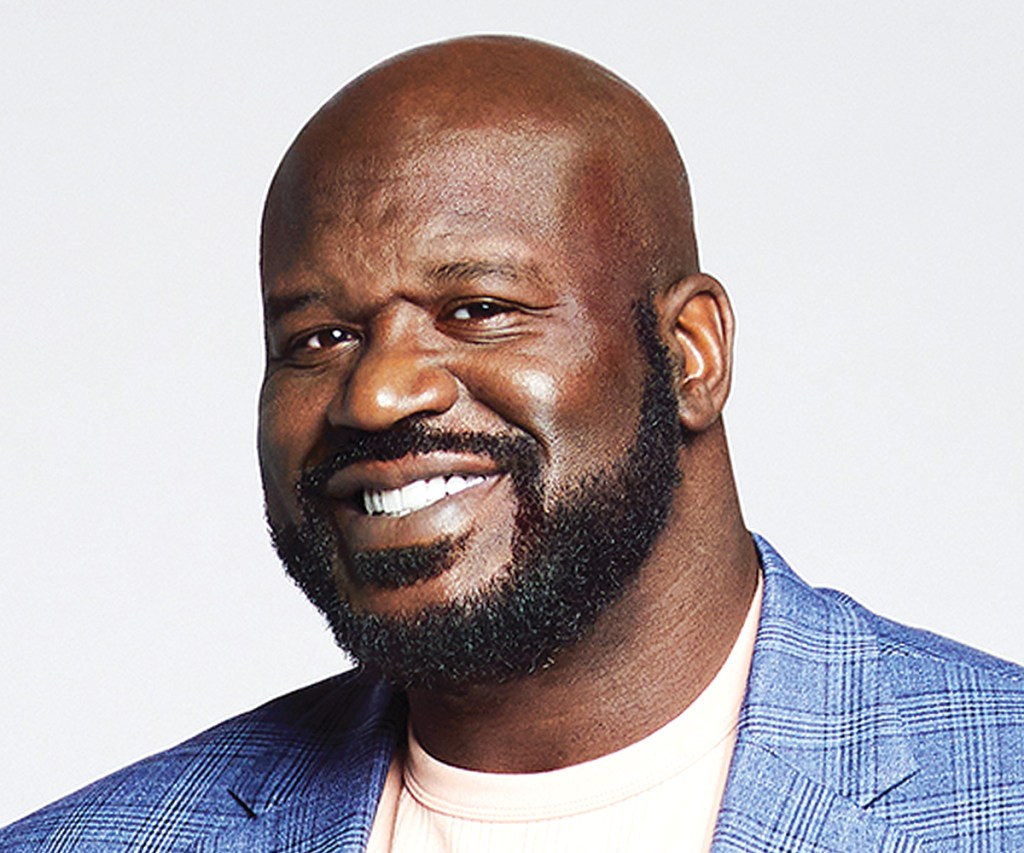
Image Credit: Courtesy of Authentic Brands Group
Shaquille O’Neal
Four-time NBA champion, co-host of ESPN’s Inside the NBA, and cofounder of Big Chicken
When you come into somebody’s world and want to borrow their money, you have to be confident. You gotta speak to the experts and know the ins and outs of your business. I do my due diligence so I can really understand what I’m asking for. You don’t want to go into a meeting with Jeff Bezos and just ask for $100 million. You want Jeff to understand your business and [what you will do with that money]. You want him to believe in you.”
How to not get nervous

Image Credit: Courtesy of WEAR by Erin Andrews
Erin Andrews
Cofounder of WEAR by Erin Andrews, NFL on FOX broadcaster, and host of iHeart’s Calm Down podcast
“I get nervous for every game. When you don’t get nervous, that’s probably when it’s time to bow out. Once I get my first ‘hit’ over — kind of your first time talking on air — I’m good. But before that, I’m shaking. There’s a lot of eyeballs on you. I’ve practiced it right before I go on air. Once I was practicing a hit I was going to do on Jared Goff and I called him Jarret Stoll, who is my husband. Sometimes you need to smack yourself or do a little smelling salts to get yourself ready to go.”
How to do what you’re not prepared for

Image Credit: Courtesy of Scott Dentinger
Chelsea Green
The first WWE Women’s United States Champion
“I’ve broken bones in the ring. I’ve had concussions in the ring. And had other people been injured in the ring. So I don’t think any pre-match ritual is going to make or break that. But I’ve got Piper and Alba [two wrestlers she fights with] and we do like to do a little something before we walk through the curtain. I turn to them, and we put our hands together and say, ‘We’re pretty, we’re rich, we’re sparkly, we’re tanned, we’re beautiful, everyone loves us, we’re going to kill it!’ And then right before my music hits, I say, ‘Girls, in 10 minutes, we’re going to be done and on our way to bed.’”
How sports is (and isn’t) like business

Image Credit: Courtesy of Gopuff
Tom Brady
Record-setting seven-time Super Bowl champion and cofounder of brands including TB12 and GOAT Gummies
“When I played football, part of me was a psychopath. Am I the same way in business? Actually, no. That’s what I need help with. And that’s why I have business partners that are psychopaths — and they are. They cross every t and dot the i’s. To me, when it comes to dealmaking in business, I was kind of like, ‘Oh, why not? That sounds like it makes sense.’ But I approached football in a very different way, and I was deep in the nuances of the sport I understood so well. I’m realizing that in business, that’s what matters too. Everything matters, especially against tough competition. So partnering with great people in the end is what matters the most. So you gotta bet on people that have vision, experience, great work ethic, and great teamwork.”
How to keep an old idea fresh

Image Credit: Courtesy of Michael Segal
Mike Rowe
Creator and host of Discovery Channel’s Dirty Jobs, host of The Way I Heard It podcast, and head of the mikeroweWORKS Foundation
“In the first couple of seasons of Dirty Jobs, I had a list of particularly disgusting adventures I was determined to embark upon. And we checked all the boxes. Then the show kind of morphed from exploding toilets and misadventures in animal husbandry into more of a crucible of pain, going to some very high places and some very low places and some very physical tasks. As far as production goes, well, I started looking for the jobs I wanted to profile — but once those were exhausted, we turned everything over to the viewer and asked them to send in suggestions. And they did. Everything you see comes from the fans of the show. The fans program it, the fans watch it, and we just try and stay out of the way. So when you run out of ideas, you can either admit it or pretend you haven’t. And in my experience, there’s no real upside in pretending to have an idea when you don’t. It’s best to just admit it and ask for help.”
How to lead in unpredictable situations
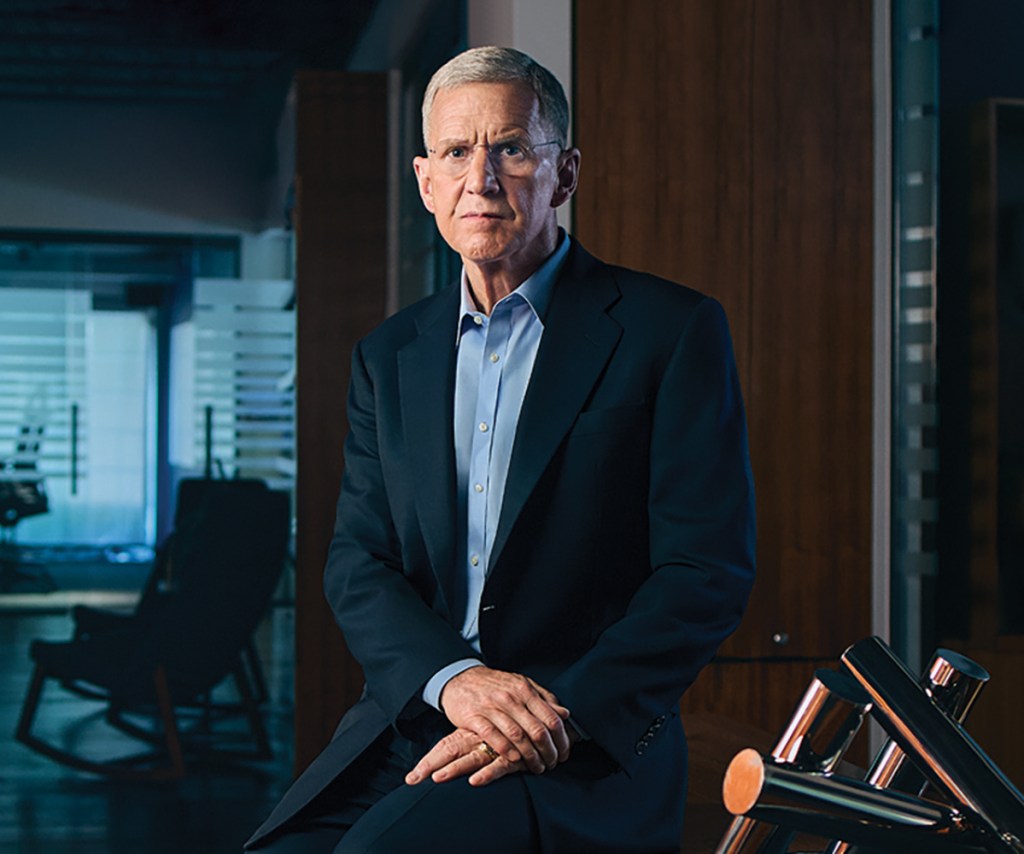
Image Credit: Courtesy of Masterclass
Ret. Army General Stanley McChrystal
Former U.S. commander of Joint Special Operations Command
“Sometimes you make a decision to commit people in certain situations, and there’s a high probability that some will be killed or badly wounded. For the leader, it’s quite possible that you can get yourself almost stunned into an action. You make a decision, for example, and you send people in harm’s way, and it doesn’t work out. Sometimes it turns out that it was a stupid decision, and I have made some.
The problem is: You can’t then go into a fetal position in the corner and sob and feel sorry for yourself because you made a decision and it didn’t work out. That’s not what the organization needs. What the organization needs you to do is to say, my job is to make decisions facing forward. I should learn from the decisions that didn’t work. I should pay attention to that, but I need to make decisions facing forward. And sometimes it’s going to be very, very painful when I don’t get the outcome that I want. But it’s important that the leader knows that’s what they’re there for. If they’re not willing and able to make those decisions, they need to leave that position.”
How to keep going when it’s hard

Image Credit: Courtesy of Michael Strahan TMMS
Michael Strahan
Cofounder SMAC Entertainment, cofounder of Michael Strahan apparel brand, coanchor of Good Morning America, analyst for Fox NFL Sunday
“I wake up and I don’t mope around. I put on positive music, get myself in the right mood. I can’t control a lot of things that are thrown my way; I can only control the way that I deal with them. So I just try to get my attitude as close to being as good as it can be as soon as possible. There were times I hated football. Who wants to get beat up and hit when it’s cold and it’s wet? The games are fine. I’m talking about practice. It’s freezing out there, man. My fingers are hurting, knees are hurting, and you want me to run into the same guy I’ve been running into for the last six months? So I had to tell myself I love this game. I love it. There will always be negative, but within a negative or within failure, I try to find what the lesson is. I don’t look at things as failure; I look at it as an opportunity that I had a chance to learn something that I won’t repeat in the future if I get the opportunity to use that lesson.”
How to make smart business decisions

Image Credit: Courtesy of DuckDuckGo
Gabriel Weinberg
Founder and CEO of DuckDuckGo
“People have to be really wary of narratives, like why you think this is going to be successful, why you think this is going to work. Instead, put some numbers to things. That starts with having a defined goal. Let’s say your goal is getting your first 100 customers, or your goal is to get to profitability. That is a numeric goal. Then you can start to think about each of your channel marketing strategies and ask, ‘Is this going to achieve that goal?’ Because I see a lot of people who say, ‘I’m going to go to conferences and I’m going to tell everybody about my product.’ That may work in certain situations, but if that is going to get you 10 customers and you need 100, that’s not going to work. Pull away from narratives and put your goal into something more concrete that you can call a business plan.”
Related: How Cowboy Kent Rollins Went From ‘Poor As Dirt’ to a YouTube Star With 3.5 Million Fans
What does it take to be successful?
Every week on my podcast, How Success Happens, I get to ask that question — and hear answers from people who are smarter, richer, and more talented than I am (it’s not a high bar). While my guests work in vastly different arenas, from making vacuum cleaners to leading soldiers in global conflicts, the common thread is that they all locked in on something that truly excites them. Fame and fortune were a side effect.
Their excitement for what they do is infectious, so we decided to share some of our guests’ greatest hits, ranging from straight-up advice to funny and inspiring stories that may have a kernel you can relate to. Sure, you may not be broadcasting from an NFL game anytime soon, but you could be walking into a pitch meeting — and hearing what Erin Andrews has to say about tamping down nerves before going live to an audience of millions might help you through that moment.