I Took a Tiny Hometown Restaurant and Built It Into 235 Locations For Very Little Money. You Can Too.
Eddie Flores Jr. couldn’t get a loan, so he built L&L Hawaiian Barbecue without much cash for traditional marketing. Here is his “impact marketing without spending money” strategy.
This story appears in the January 2026 issue of Entrepreneur. Subscribe »
To view our entire 2026 Franchise 500 list, including category rankings, click HERE.
You may not know me, but if you’ve ever had a plate lunch (two scoops of rice and a scoop of mac salad with your entrée), then we are connected. L&L Hawaiian Barbecue, which made Hawaiian barbecue famous around the globe, started with humble beginnings over 40 years ago.
My business partner, Johnson Kam, and I transformed L&L Drive Inn, an obscure family restaurant, into an international restaurant franchise, L&L Hawaiian Barbecue. We built a new business model in franchising in the process. I did not know what I was doing. But it worked. We succeeded in building a new food segment in the restaurant industry and a successful international restaurant chain. There is more than one way to build a viable franchise company. I did it differently.
L&L started the plate lunch, and when we branched into California, there were only a handful of fast-food restaurants selling plate lunches. Fast-forward to today, and you’ll find 235 L&L restaurants and at least 300 to 400 other Hawaiian fast-food restaurants throughout the U.S.
We were able to accomplish such an impossible feat by breaking almost every business rule most people follow. One was how I approached advertising and marketing. We promoted L&L Hawaiian Barbecue with great success, for very little money. It became one of my secret weapons for building this business. But before I explain how I did that, let me tell you a short version of my story. (For the full version, you can read my book, Franchising the American Dream.)
Related: These 5 Brands Are Conquering the Franchise Industry at Warp Speed. Here’s Why.
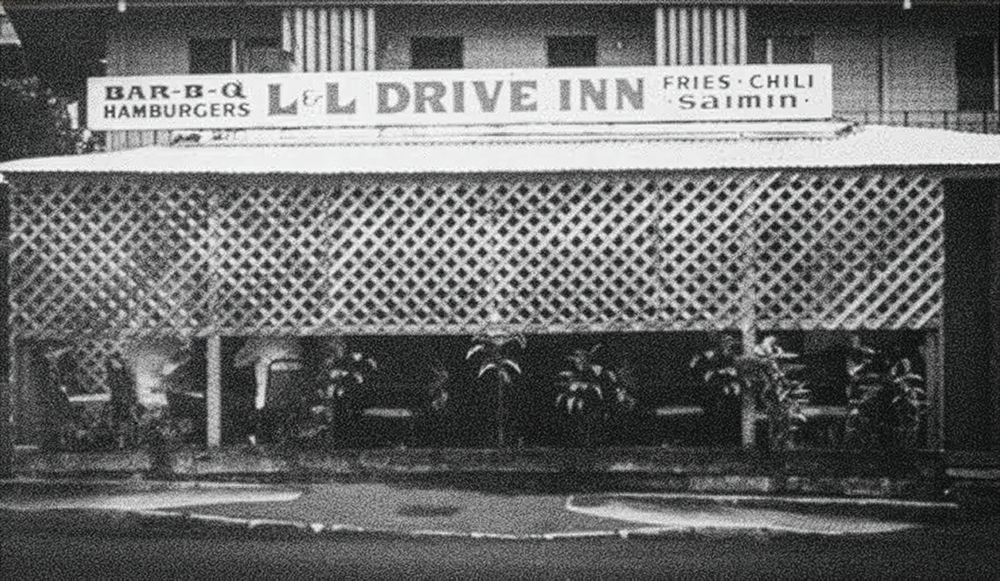
THE FIRST RESTAURANT
I was born in Hong Kong, to a Filipino father and Chinese mother. My family emigrated to Hawaii in 1963, though my parents sent my oldest sister and me to live with two of our uncles in San Francisco. I returned to Hawaii when I went to study business administration at the University of Hawaii at Manoa.
Because I was from a low-income family, I qualified for a work-study program, and I worked year-round, even during school breaks. My first job was at Charles Hemenway Hall Cafeteria, washing dishes for $1.25 per hour — or $1.50 if you chose to get paid with meal tickets. That was a no-brainer. I chose the meal tickets. Why? I could sell some to my friends.
After graduating, I went on to spend 20 years building a successful career in business brokerage and commercial real estate. In fact, it was not me who first got into the restaurant business — it was my mom. While I attended UH, my mother worked at Lynn’s Delicatessen at Ala Moana Shopping Center. She was the cashier, waitress and bus person. I would pick her up from work after school, and I could see the fatigue in the way she carried herself. The long days at the restaurant were tiring. Even though she was exhausted from work, she would still come home, clean the house and cook for us. My heart bled for her. I wanted to do something to help.
One day in 1976, L&L Drive-Inn, a restaurant just a couple of blocks from the dilapidated house my family shared with three other families, went up for sale for only $22,000. What a deal. I decided to buy the restaurant for my mother, and my offer was accepted. Yet when I went to the bank asking for a $10,000 loan, I was rejected, even though I had an impeccable credit record there. The manager reasoned that 80% of restaurants fail in the first year. Because my only restaurant experience was washing dishes, my chances of success were almost zero. Luckily, when a friend referred me to someone at another bank, I was accepted within an hour of him checking my credit record. That banker and I became friends. If you are in business, make sure you have clean credit and keep a banker as a good friend.
My mom was happy to be the owner of L&L Drive-Inn. But she had no experience as a cook, and she did not want to work at night. I found a solution by asking my good friend, Johnson, to be a 50% partner. He gladly agreed.
My mom worked the day shift and Johnson ran the evening shift. The menu was very simple. It consisted of simple plate lunches like hamburger steaks, beef stew, curry chicken, hamburgers, and hot dogs. The plate lunch was selling for about 40 to 60 cents. L&L Drive-Inn had many customers from the hospital nearby and students who congregated after school.
I had no interest in L&L Drive-Inn. With my mom and Johnson running the restaurant, my only jobs were to help them with the lease, to take care of the finances and to give business advice whenever they needed it. Eventually, my mother tired of working at the Drive-Inn. I called Johnson and asked if he was interested in buying my mother’s 50% interest. He immediately said yes. He could see the potential.
After my mother sold her shares, I was not involved in the L&L Drive-Inn operation. Johnson was expanding by himself and helping his friends. When he had questions, he called me. Because of my real estate experience, I negotiated most of the L&L leases and gave him business advice. I was his real estate and business confidant.
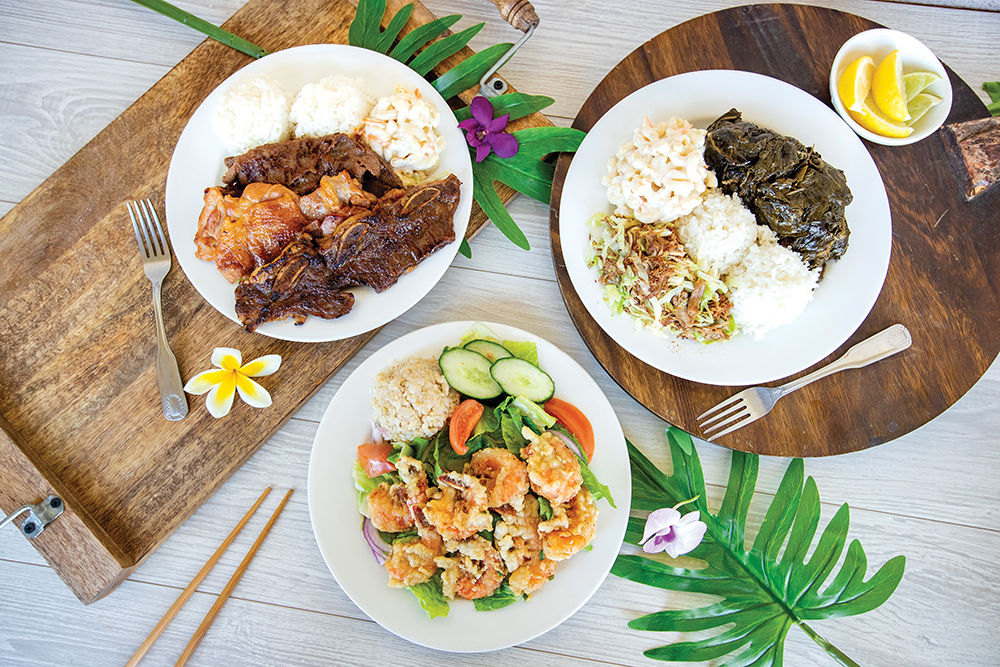
THE NEXT RESTAURANTS
Johnson was very successful in expanding the L&L Drive-Inn. The restaurants kept popping up everywhere in Honolulu. Many of his friends saw his success and asked him if they could open an L&L Drive-Inn. Johnson, being a very generous person, would say yes. He helped to set up four or five restaurants for them. He taught them how to cook and even financed some of them. Johnson asked for nothing in return. He simply wanted to help his friends. Whenever Johnson asked me for assistance, I made sure that he was protected. He was too nice of a person. I told him frequently that he had to be careful with certain friends who might try to take advantage of him. Johnson, invariably, would say, “It is OK.”
I questioned his wisdom of giving away the L&L restaurant secrets and letting people use the name without charging a fee. I told Johnson that he was too generous with some of his friends. I joked that that was not the Chinese way of doing business — you should get something in return. He laughed and asked me what he should do. I hesitated for a second, and then I suggested that he should franchise L&L restaurants. Johnson said he had no idea how to do it and asked if I would help him. I had to be honest. I told Johnson that I knew nothing about franchising, but I would try to learn. At that time, I was a little tired of the real estate and business brokerage business.
I have always loved doing things on my own. During my youth in Hong Kong, I learned to be independent and multitask. My training in real estate, banking, insurance and various business ventures gave me confidence that I could do anything without professional help. To start franchising L&L locations, I formed a sub-S corporation with $1,000 capital and 100 shares by copying the original L&L Drive-Inn document.
L&L started with probably the lowest royalty and marketing fees in the franchise industry. The L&L corporate office survived because we ran a shoestring operation. The L&L franchise company was sharing my real estate office without paying rent and sharing some of the staff. My wife, Elaine, was working part-time as the bookkeeper and clerk. I had to continue with my business brokerage and my real estate school for many years to support my family.
Starting a new restaurant franchise chain is very difficult. Most people may have several successful restaurants and decide to expand by starting a franchise company. They may be encouraged by their friends or customers to franchise the restaurant. But running a restaurant is completely different from managing and organizing a franchise chain. Dealing with employees is different from dealing with franchisees. The franchisees are more demanding and have more expectations. Most new franchise companies fail. They lack the control and know-how. They close with disappointment, not knowing what they have done wrong. Proper management and organization are the keys to the success of a national restaurant franchising chain.
I spent countless hours at the library and at conventions studying the franchise business. Somehow the L&L franchise company drifted into the opposite of what I had learned. Something told me I could feel confident in doing it another way. My way. I analyzed L&L restaurants’ reasons for continual success.
L&L Franchise Inc. started with practically no cash flow. Johnson and I did not contribute money except for the $1,000 capital as required by our new corporation. Still, L&L Franchise Inc. managed to prosper, and the company was profitable from the first year of operation. We did not make a lot of money in the early years. However, we did not have to contribute any additional capital once we started.
But throughout the 1990s, L&L restaurants were able to grow. Johnson opened three L&L restaurants in the first 13 years on his own and 40 new L&L restaurants in the next 10 years after I partnered with him. L&L became the darling of the restaurant industry in Hawaii. In the early 2000s, we expanded to the mainland. But we needed to find another name for the expansion. People would be confused if we used L&L Drive-Inn. It would not work in California. That’s how L&L Hawaiian Barbecue was born.
Related: He Started One of the Original Froyo Brands 14 Years Ago. He’s Still Serving Up Fresh Concepts.
MY KIND OF ADVERTISING
All of my experience building L&L Hawaiian Barbecue our own way, with very little money, taught me to think of advertising and marketing differently.
Businesses advertise for two reasons. You could advertise to promote sales like having a special or a discount on your meal items. A known restaurant brand normally does not advertise unless the business is slow or it is introducing a new product. When you see a restaurant constantly advertise with discounts, you can probably assume the business is not doing well.
The second reason for advertising is to build a brand. The brand may be unknown or new. If you spend enough money, you can make any brand well-known. Advertising is a very powerful tool. It costs money to be effective. The more you spend, the better your brand recognition.
When I bought L&L Drive-Inn for my mother, there was no marketing fund. L&L was merely a small family business. We did not need to advertise. Our customers were people who worked or lived around the restaurant.
When I took over the L&L Franchise Inc. operation in 1990, our advertising fee was a measly $200 for each location monthly. The L&L restaurant only had about 10 stores. There was no marketing fund to speak of for branding. I used most of the money to buy advertisements for the restaurants to promote sales.
Over time, I figured out my own way to promote L&L. I call it the impact-marketing-without-spending money strategy. Here, I’d like to share with you some of my most successful methods. Though, it is important to keep in mind that this was during a different time — when social media didn’t exist, traditional media was more robust, and that media attention could have a significant business impact.
Today, of course, the greatest levers of attention are now digital — but digital advertising is expensive, and competition for eyeballs is fierce. This means that franchisees and franchisors must be very creative about how they get attention. My strategies are hard to replicate today, but my hope is that my stories inspire others to think creatively.
Related: Looking to Expand Your Business? Here are 4 Franchise Alternatives You Need to Explore.
THE FIRST STEP: Branding the Principal
I could promote the L&L brand two ways, by endorsing the principal of the company and the company itself. I was able to use this method to maximize L&L brand exposure. There would be two brands to promote: one for the principal and the other for the company. They are interrelated. Let’s start with branding the principal of the business. Because L&L restaurants had two principal partners, it would be sensible to promote both of us. However, Johnson wanted to stay low profile. He did not want to be interviewed or talk in public. I have asked him many times to be interviewed and he has always declined. I became the sole representative for L&L restaurants in most media interviews. I gave speeches, wrote articles, did volunteer work, participated in political campaigns, made donations, and did whatever was necessary to promote myself as a major component of the L&L brand. I truly believed that by branding the principal, L&L would have more chances of exposure to media coverage.
Branding the principal of the business is seldom used in the marketing community. I identified myself as the principal person to associate as a brand for the company. The least expensive method to promote is by sending press releases to every media outlet about what I had been doing. I developed a contact list of key persons to talk to with the television stations, radio DJs and newspapers. The contact list included the clubs and organizations that I belonged to, trade organizations and schools that I graduated from. To me, more contacts would be more effective in spreading the news item. Quite often, the main media may not have picked up the story but the others on the contact list would. Anything that I or L&L restaurants did that was interesting would make the news. The mainstream media may not always cover stories about me or L&L, but the ethnic papers published almost every one. You need to write up the story and they will publish it for you. The two Filipino papers always liked to carry stories about a successful Filipino entrepreneur. The Chinese newspaper always wanted to know what I was doing. Organizations and associations like the Chamber of Commerce or the Rotary Club could be another avenue for free publicity. They always liked stories about their members. I joined many clubs and associations and was in a leadership position. In a short time, people started to take notice of me as the owner of the L&L restaurant chain.
Being a spokesperson and expert in the restaurant industry is very important to getting coverage. Television stations and newspapers are always looking for people to interview. I made contact with several television stations and newspaper reporters frequently. When they needed to interview someone on an issue, they would always call me. When the legislature was in session, there were many bills related to the restaurant industry. I may have given three interviews in a week on various issues such as Styrofoam boxes, minimum wages or COVID-19 requirements. I would give an interview wearing my L&L uniform, standing in front of an L&L restaurant. I broke a record recently. I was on the television giving interviews five times in one week. The exposure was invaluable. It made me part of L&L restaurants and solidified the L&L brand. When people see me, they automatically see the L&L brand.
Some of the companies that successfully brand their principals are Apple and Tesla. Whenever you mention Steve Jobs, you are advertising Apple, and whenever you talk about Elon Musk, you associate him with Tesla. Steve Jobs and Elon Musk have both been great with the media. They constantly promote their companies as their principals.
There are a number of ways to expose the principal to the media. They include volunteering in the community, winning awards, campaigning for political candidates, writing articles and books, giving speeches and donating to charities. These projects, however, took many hours of my time and financial resources. I always remind myself that I am doing it for fun and for the community. I always enjoy helping people. It is a great feeling of accomplishment. In return, I am able to promote myself and L&L restaurants.
I boasted to many people that my branding method works. I challenged some of my friends to name the owner of some of the major companies in Hawaii. Very few could. I dared them to name the owner of L&L restaurants, the majority would say Eddie or the L&L guy. I must have done a prodigious job in branding myself and L&L restaurants. My branding method works, but I worked hard and participated in countless activities to accomplish the feat.
In 2022, I traveled to New Orleans for a short Mississippi River cruise with my wife, Elaine. It was a long-awaited trip after COVID-19. We arrived at the Ritz-Carlton Hotel lobby in New Orleans. I was wearing my mask and my sunglasses. A pretty young girl came to me and said, “Mr. Flores, good to see you.” It scared me out of my wits. People recognized me with my mask and sunglasses on. I am no longer a private person. At least my branding and impact marketing work. She turned out to be a graduate of UH Manoa. In recent years, I was able to give back by donating more than $2 million to the UH Shidler College of Business for students in need and for an annual real estate lecture series to thank the real estate industry. The young girl thanked me for the scholarship that she received from money I donated to the university. I was pleased to see a student I helped with the scholarship at UH graduate and be employed. I always knew that my impact marketing techniques worked and also helped many people.
Related: Making Your Community The Secret Weapon in Rapid Franchise Expansion
THE SECOND STEP: Branding the Business
I used a pretty similar approach for branding L&L restaurants. I sent press releases for any events L&L was doing — for example, a grand opening for a location. If there was an event that I thought the media would be interested in, I would call them. I had a list of contacts of television and newspaper reporters who were anxious to hear from me. I also used all the social media and electronic delivery methods.
L&L’s corporate office sponsored many community events like the Filipino Fiesta, Narcissus Festival, Chinatown National Day Celebration, Filipino Parade and Spam Jam, just to name a few. Our corporate staff usually participated in the events to maximize the exposure. We would always be at the frontline.
L&L restaurants won a number of awards that we publicized. Among our accolades: Best Local Food, Best Plate Lunch, and Best Fast Food. Our marketing department would publicize those awards as much as possible. Winning awards got us into the media quite often. I emphasized that any newsworthy event must be publicized. Donations had the same effect. We tried to make sure we took pictures and held a check presentation with the L&L logo as the backdrop. Mainstream media did not always pick up the story, but we usually got excellent coverage from ethnic media. One lesson I learned was to always send out the press release at least twice. The more you send out, the more likely you get covered.
In addition, I created two more approaches. One was to promote and create special events, and the other was to seize the opportunities for promotion when the occasions would arise. These are proactive events to draw attention to the media. Quite often, you need to move quickly for maximum coverage.
THE NEXT STEP: Branding Events
The public was attracted to interesting and unique events. So, I created a number of events that generated tremendous media coverage for L&L restaurants. Some of these events have been very successful and continue to generate publicity for L&L Hawaiian Barbecue annually. Here are some that helped to elevate our profile.
→ THE 76-CENT GIVEAWAY
You need to have new ideas that draw a crowd if you want to attract the media. The annual 76-cent plate (now known as 52-cent) lunch promotion was one of my favorites. It is also one of the most successful. We did it once a year in June around the time kids are on summer break. We sold plate lunches for 76 cents each. The first 100 customers also received a T-shirt and some Pepsi products.
Hundreds of customers would line up overnight for the almost free meal. There would be thousands of customers by 10 a.m. The television stations and newspapers would show up and cover the event. Some television stations would spend two hours on location and interview me and the people standing in line every half hour. The exposure was invaluable. Our customers looked forward to this special promotion. We reduced our expenses by asking our suppliers and vendors to provide most of the products. The L&L corporate office would donate the income during the sale to charity. The sales for all the L&L restaurant locations increased 10% to 15% after the 76-cent promotion for at least a week.
To make special promotions successful, you need to plan months ahead of time. For example, L&L staff had to arrange for the location. We needed to select a date when we expected many people. We have to get staff ready to cook 2,000 nearly free meals. It would not be easy without proper planning. The key to your success is promoting the event. People must know about the 76-cents promotion and the media must be told ahead of time. L&L usually sends out the press release one week before the promotion, and we do it again the day before. My marketing team would place telephone calls to the media in the morning to remind them.
It is very time-consuming, but if you want free media coverage you need to do it yourself, or pay to hire a public relations company.
→ THE NATIONAL SPAM MUSUBI DAY
I have to give credit to Derryck and Elaine Tom, who ran a Huntington Beach location, for taking Spam musubi to the continental US. Spam musubi was relatively unknown to most people prior to that, and L&L was the first company to popularize it.
It started one day when Elaine told me that she would sell Spam musubi. I had no idea what Spam musubi was. L&L restaurants did not sell Spam musubi at that time. It was a piece of Spam wrapped around a block of rice in seaweed. I was hesitant. Would the mainland customers eat rice with seaweed and Spam? I seriously doubted it. Elaine made me a Spam musubi to try. I took a bite and I fell in love with it. Spam musubi became one of L&L Hawaiian Barbecue’s top-selling items.
We love our Spam musubi so much that on August 8 each year, L&L celebrates National Spam Musubi Day. On this day, L&L restaurants offer up to 100,000 free Spam musubi to people who utilize our L&L mobile app. The promotion has been a tremendous success. Our longtime goal is to grow National Spam Musubi Day to the point where we can give away 1 million free Spam musubi.
L&L marketing staff is constantly looking for new ideas to promote the L&L brand. We are in a unique situation being in Hawaii. L&L restaurants could tie closely to Hawaii for any promotion. The governor and mayor are always very receptive to helping promote the L&L brand. They know the importance of L&L restaurants spreading the aloha spirit for Hawaii. We are the point of sale to bring tourists to Hawaii. They know that L&L restaurants are Hawaii’s favorite, and they are proud to support us. L&L restaurants had and still have a clear advantage over the copycats from the continental U.S. Most of the copycats know nothing about Hawaii. They have no roots in Hawaii.
Related: Why Storytelling (Not Selling) Is Your Most Powerful Branding Tool
→ THE SPAM MUSUBI EATING CONTEST
The Spam Musubi Eating Contest was always a hit. It gave us an opportunity to introduce Spam musubi to the mainland audience. The television news anchors constantly joked, why would people eat Spam on a rice cube wrapped with seaweed? Spam musubi was very foreign to them. The contestants would compete in front of an L&L restaurant. We had a large audience and television coverage. The mainland television stations loved to talk about the contest. The exposure had been phenomenal for the money we paid. Again, we asked the vendors and suppliers to provide their products to lessen the cost of the promotion. Media coverage is priceless.
→ EAT MEAT, LOSE WEIGHT
Another opportunity for low-cost promotion was with the Atkins diet fad. The Atkins diet was basically a diet to consume lots of meat and no carbohydrates. It baffles people that eating lots of meat will help you lose weight. L&L’s food is known to be a little greasy and with large portions. But that didn’t keep me from playfully creating a “Hawaiian Atkins diet,” which is composed of more than two pounds of meat but no rice or macaroni salad. I called up the local television stations and arranged a news conference at one of the L&L restaurants. I had my cook prepare an extra-large portion of meat on top of shredded cabbage. The reporters were questioning me on the logic of eating so much meat and losing weight. It was impossible to believe. They asked, “Does it work?” I responded, “Just look at me.” They had a good laugh, because I am very skinny. The Hawaiian Atkins diet was impossible, but funny. MSNBC briefly carried part of the story. I was happy with the coverage. I created an opportunity. It had to be the right subject at the right time. You need to execute the promotion when the opportunity arrives.
→ THE MEGA MILLIONS WINNER
Another opportunity came up in 2010 when a customer bought a lottery ticket at our L&L Hawaiian Barbecue at the Pico Rivera location in California and won one of the biggest lotteries at that time. Jackie Cisneros, who worked at a television station in downtown Los Angeles, wanted to eat at KFC but her husband, Gilbert Cisneros, insisted they eat at L&L in Pico Rivera. Gilbert bought a lottery ticket and six hours later, they won $266 million. Ben Gudoy from San Diego called me at 4 a.m. to tell me the good news. I immediately called my marketing team and prepared for a number of interviews at 5 a.m. It would be another opportunity for us to seize for free publicity. We had to act fast. We were able to get into a number of major television stations and The Oprah Winfrey Show. We were able to get so much news coverage because our marketing team acted immediately. We had a plan and executed it properly. We were creative and acted instantaneously.
One franchisee was ecstatic. His Pico L&L store received $1 million in cash for selling the winning ticket. I jokingly told him that he had to pay a royalty fee on it. Pico Rivera is the only L&L location that sells lottery tickets in California. You would always see a long line of people standing in line to buy lottery tickets at Pico Rivera whenever the state was ready to pick another winner. The store is a lucky place to buy a lottery ticket.
→ SPAM AND SPAMALOT
I was in New York City visiting an L&L location near the South Street Seaport near the financial district in New York City. A hot new Broadway musical, Spamalot, was having a grand opening showing. The New York Times had an advertisement for the new musical. I saw an opportunity to promote L&L restaurants with Spam that we served. I called The New York Times and told the reporter that we were the only restaurant selling Spam and Spam musubi in New York City. The idea generated interest in the reporter to write an article on Spam musubi and Spamalot. He came to the restaurant to interview me. I served him a Spam musubi. He ate it reluctantly. L&L was in The New York Times the next day. I obtained thousands of dollars’ worth of coverage with a simple telephone call. I found the opportunity and I executed the idea without delay. You have to constantly look for an opportunity and act immediately. The New York L&L had a flood of customers visiting the restaurant for Spam musubi right away.
THE LATEST STEP: Branding a New Principal
My daughter Elisia returned to work for the L&L franchise in 2014. She became the second principal spokesperson of the company to promote the L&L brand. Elisia became active in many business and community organizations. She gave many speeches and made numerous appearances in civic activities. Elisia gave interviews for television stations and wrote articles for several publications. She was featured in several television and radio shows.
Elisia graced the pages of Hawaii Business Magazine, Mid-Week and The Filipino Courier in a short time. She won many awards for her community volunteering and business service. I was very surprised that she was able to brand herself so quickly. She was far ahead of me when I was promoting myself as the principal spokesperson of the company. L&L restaurants have been very fortunate that Elisia is so successful in branding herself. We had two principal spokespersons to promote the L&L branding using very little marketing money. Eventually, Elisia replaced me as the principal, and I became the second principal.
When my daughter Elisia took over as the new CEO, she complained that our marketing fee was too low at 1% to 2%. She said that to grow the brand, we needed to spend more money. I agreed with her. We continuously review the fee structure for marketing to stay competitive and act in the best interest of our franchisees.
Elisia also hired a marketing firm to help us promote in Hawaii and in the continental U.S. I always did all the marketing through L&L’s marketing department. I realized that it is the changing of the guards. L&L is getting bigger, and it needs help from a marketing firm that can promote the brand outside of Hawaii. I can no longer be a do-all person.
Elisia also increased our presence on social media with more electronic delivery. L&L marketing staff employed Facebook, X (formerly known as Twitter), TikTok, WeChat, intranet, YouTube and our L&L mobile app. Our marketing staff has done a fantastic job. During L&L restaurant’s seventieth anniversary in 2022, Yahoo News mentioned our celebration at Sheraton Waikīkī and got 30 million hits. L&L restaurants still have some franchisees that are computer illiterate.
We continue to help them without charging a fee. Besides L&L’s in-house social media, we employed some social media marketing firms, such as Hook+Ladder, to help us to market L&L social media and streaming digital video.
NEW PRINCIPAL, NEW BRANDING RULES
The conventional wisdom to franchising a brand is to maintain the same design, quality of service and menu. Most big franchise companies follow very strict and rigid rules. Any violation is subject to fines or termination. Although we trained and provided each franchisee with our operation manual and design requirement, many still deviated from our standard operating procedure. We were lax in enforcing the brand rules.
When we first started franchising in Hawaii, the only franchisee was Johnson. Our design was still in an infant stage, and our menu kept changing. When he sold or partnered with Chinese immigrants, it was very difficult to enforce the rules. Most of the immigrants could barely speak English. The L&L franchise company decided not to enforce strict rules and requirements. We wanted the franchisees to be able to adjust to the market and be profitable. Fortunately, we have received very few complaints. The loose compliance gave the franchisees the flexibility to adjust to a problem. The system helped them do better in business.
Since my daughter Elisia took over as CEO, she is enforcing the rules much more than before. She can see the future of L&L similar to a big-name franchise company. The L&L franchise company required the franchisees to upgrade to the current décor and meet the standard operating procedures. It is wise to make the requirements early rather than trying to change them at a later date.
A loose standard may be one of the reasons L&L restaurants were able to grow. It allowed the L&L franchisee to adapt and adjust without waiting months for the corporate office approval. It helps the franchisees to be creative and create dishes that are popular in their markets. L&L franchisees are happy without constant interference from the L&L corporate office. The franchisees, however, must still follow the L&L restaurant menu and recommended design.
ONE LAST LOOK BACK
There is no other company in the continental U.S. that can spread the “aloha spirit” and share the ohana (family) that L&L has with our friends and employees. Johnson and I made the American dream into a reality and, in turn, helped many of our friends and employees share the same dream along the way.
As immigrants, Johnson and I have come to learn the unique drive that immigrants have when they come to the U.S. We have made it an unofficial mission to help others through our success. Many of the Chinese immigrants who have become part of L&L would not have qualified or even been considered for many other franchise chains because they lacked fluency in the English language and/or capital. We built a simple and flexible system at
L&L restaurants that was perfect for immigrants. L&L restaurants gave many immigrant franchisees the opportunity to succeed. We are happy to see many of them prosper.
To this day, L&L has one of the lowest costs for royalty and marketing fees in the restaurant franchise chain. Our royalty fee of 1.5% to 4% and marketing fee of 1% to 2% is a fraction of what you will normally pay at other national franchise chains. L&L’s corporate office was able to keep our marketing fees low by using the impact-marketing-without-spending-money strategy.
L&L fees are low but we do not skimp on our services and support. L&L office staff genuinely care for our franchisees and provide personal services far beyond what other similar-size franchise companies do. The L&L corporate office is probably one of the only restaurant franchise chains that does not charge for its annual convention or technology fees. L&L staff treat all the franchisees as family members. As a franchise owner, you become part of the L&L ohana.
Adapted excerpt from Franchising the American Dream by Eddie Flores Jr., published by Legacy Isle Publishing. Copyright © 2025 Eddie Flores Jr. All rights reserved.
Sign up for our weekly Franchise newsletter to get the latest franchise news, advice and opportunities. Get it in your inbox.