The NFL Quarterback Who Runs His Winery Like a Locker Room
Drew Bledsoe learned that on great teams, everyone shares the pain.
This story appears in the November 2026 issue of Entrepreneur. Subscribe »
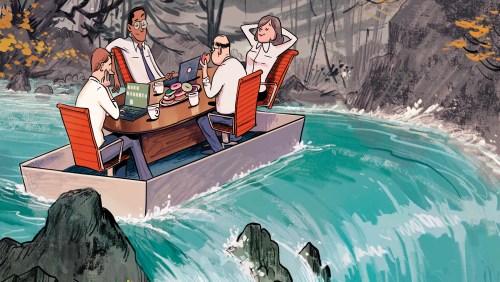
Want to test the strength of your team? Watch what happens when someone screws up.
As an NFL quarterback, I saw this repeatedly. When a player on a great team failed — say, made a fumble that lost us a game — we’d go back to the locker room, and everyone would share in that pain. Everyone knew who was to blame, but instead of piling on, the good teams rallied to support a teammate in the hardest times. Teams like that won championships. And teams like that were rare.
When I left football, I wanted to build that same culture at my winery, Doubleback. But it wasn’t easy. My cofounder, CEO/partner Josh McDaniels, and I put too much responsibility on our initial team, and we didn’t foster their talents enough. Three people left within a month. We felt crushed.
It was a wakeup call: If we want a resilient team, then we must build a system that everyone trusts long before the failure happens.
For us, that started with defining our team values. McDaniels and I came up with a mission statement: “To create genuine happiness for our customers and ourselves.” Then we presented it to our team and invited them to define our values together. They did. This process remains ongoing; we revisit our values in a meeting every week. The goal is to give everyone a sense of shared ownership so that we’re building something together.
Next we changed how we hired. We focused on character more than raw talent. This is also something I’d seen in football, where the most talented players often were not the most successful. Instead, the ones who rose to the top had a combination of skill, work ethic, intelligence, and the ability to be a good teammate when things go wrong. I wanted those people at Doubleback.
Then we gave employees more room to make decisions on their own. When people feel a greater sense of autonomy, they also feel greater trust. Additionally, they weigh their own decisions more carefully.
And, finally, the test: How would the team act when something went wrong?
A few years ago, we got to see the answer vividly. Someone at Doubleback made a huge mistake that affected our entire sales team. There were real consequences. There were tears.
But — and I’m very proud of this — there was not blame.
Instead, we moved into what we called a “no-fault autopsy.” The goal was to understand what happened without emotion, so we could prevent it from happening again. One person might have made the mistake, but they worked in a system that allowed it to happen. So if we blame only them, we oversimplify the problem and never really learn from it. Our goal, as we told our team, was to focus entirely on a solution.
Everyone stepped up, supported the person who made the mistake, and got to work. That moment was more important to our culture than almost anything else that happened that year.
Afterward, I realized something equally important that had gone unspoken: When the team banded together, they weren’t just supporting each other. They were also feeling safer as individuals. If someone on your team is punished for a mistake, imagine what everyone else starts thinking: I can never screw up here, or I’ll be the one punished next time. Then they’ll play it safe, always afraid to take a risk. That’s how companies die.
So by not assigning blame to one person, we emboldened everyone to win.
This creates the flip side of shared failure: shared success. Like I said before: On a good team, pain gets divided. But when something goes right, that joy gets multiplied. You all get to share in it. That’s the trade. You take on some of each other’s pain, and in exchange, you get to multiply your joy. It’s a pretty good deal. And it’s the foundation of truly great businesses.
Want to test the strength of your team? Watch what happens when someone screws up.
As an NFL quarterback, I saw this repeatedly. When a player on a great team failed — say, made a fumble that lost us a game — we’d go back to the locker room, and everyone would share in that pain. Everyone knew who was to blame, but instead of piling on, the good teams rallied to support a teammate in the hardest times. Teams like that won championships. And teams like that were rare.
When I left football, I wanted to build that same culture at my winery, Doubleback. But it wasn’t easy. My cofounder, CEO/partner Josh McDaniels, and I put too much responsibility on our initial team, and we didn’t foster their talents enough. Three people left within a month. We felt crushed.