How She Grew a ‘Joyful’ Children’s Clothing Brand — Complete With a Song and a Book — Into a 6-Figure Business
Elizabeth Brunner is building a brand ecosystem to spread her message of wonder and self-discovery.
Key Takeaways
- Elizabeth Brunner is the founder and CEO of StereoType Kids, a children’s fashion brand.
- The brand was inspired by Brunner’s son and daughter exchanging clothes at a young age.
- Brunner bootstrapped the company from savings and grew it slowly and organically through word-of-mouth, press and podcasts, into a six-figure, self-funded business.
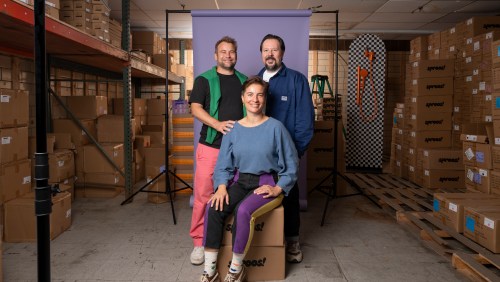
When Elizabeth Brunner watched her twin son and daughter swapping glitter and camo clothing, she did not see a problem to fix. She saw a business.
StereoType Kids, her San Francisco–based childrenswear label, is built on what she calls “blended fashion,” a mix of traditionally masculine and feminine elements designed to let kids “dress for joy, not gender,” Brunner tells Entrepreneur in a new interview.
Bootstrapped from savings and launched in the middle of the pandemic, the brand has since grown into a six-figure business anchored by clothing, a children’s book and a song that now reaches audiences as far as South Africa.

The idea she wasn’t looking for
Brunner’s path to StereoType started with a decade in sustainable fashion. After earning a fashion degree from California College of the Arts, she launched her first label, Piece x Piece, in 2010, using discarded sample fabrics to make new garments.
When she closed the business in 2018 to focus on writing children’s books, her twins unintentionally handed her the next idea.
“I have a boy and a girl, and around age four, they started sharing each other’s wardrobe,” Brunner says. “I saw how much wonder and joy it brought them.”
That everyday scene became the thesis for StereoType: “Children should be expressing who they are through clothing,” according to Brunner. She coined the term “blended fashion” to describe her category — an intentional mix of masculine and feminine aesthetics. “I really focused on those two elements coming together to create one look,” she explains, noting her daughter’s love of black and her son’s love of sparkle as early design cues.
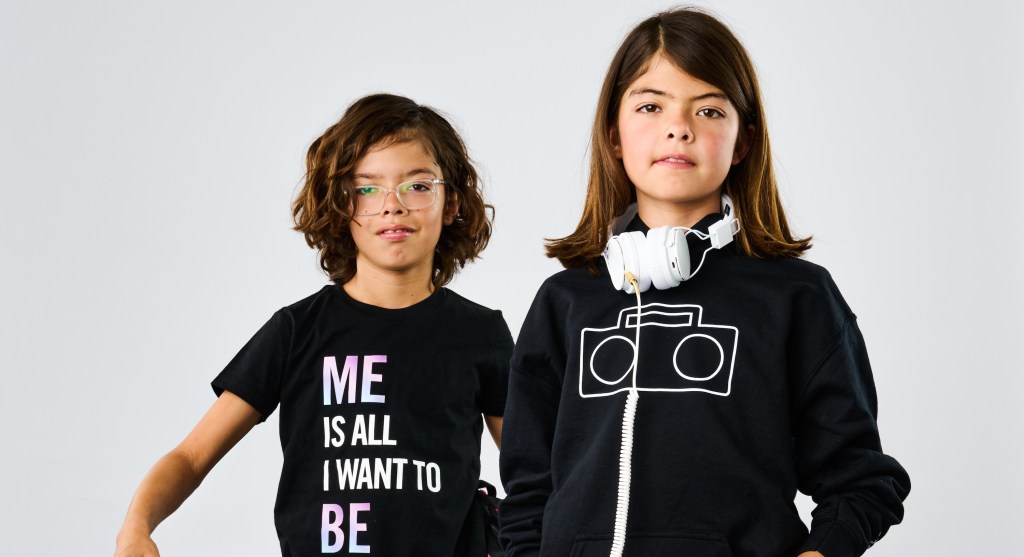
Brunner officially launched StereoType in 2020, self-funding the business from savings and piecing together production through local factories she knew from her first label. She estimates initial costs, including inventory and a photo shoot, were roughly $20,000. The timing, in the chaos of the pandemic, was far from ideal.
“I launched during the pandemic,” she says. “I’m not sure that was the wisest choice, but I was energized by it.”
She went live with only samples in stock and waited eight to nine months before the finished product arrived — a reversed launch sequence she now calls the product of “such a strange time.”
Adding in storytelling and music
Brunner’s mission has always been about more than profit. She describes herself as a “heart-centered founder,” adding, “I didn’t come into the idea of the business to say, wow, I’m gonna make a ton of money off this idea.” Still, the numbers have followed — she says StereoType now sits “in the six-figure area” of revenue, the result of several years of slow, organic growth without paid ads.
To grow beyond clothing, Brunner began layering in storytelling and music. In June 2025, she launched a children’s book, Me Is All I Want to Be, which is about a snake who longs to wear a T-shirt, but believes he can’t because he has no arms. “It’s really a book about self-discovery and thinking outside of the box and getting uncomfortable, but standing true to yourself and being authentic,” she explains.
Demand for the book has surfaced in unexpected places. Independent bookstores, especially in the Midwest, have placed sizable orders for it, Brunner says.
At the same time, she released a companion song of the same name, co-written with a children’s songwriter and featuring her twins on backup vocals. The song has unexpectedly become a powerful brand ambassador for Brunner. “It’s reached all the way to South Africa,” she says. “It’s so meaningful that the song is reaching different parts of the world and having such a profound effect.”
Brunner spends heavily on quality rather than advertising, using fair-trade factories and sustainable fabrics to justify prices for children’s clothing that range from $30 to $130. Her breakout product is a $129 sweatshirt blazer, which she calls a “modern hoodie.” It’s a garment that looks like a blazer, but is made from soft sweatshirt material. Parents keep asking for an adult version, but the real proof is in kids’ reactions — one child loves it so much, they sleep in it, she says.

For the clothing line, growth comes through word-of-mouth, press, and podcast appearances more than social media. Brunner keeps her Instagram presence modest, with around a few thousand followers, and unapologetically resists the pressure to chase virality.
Dealing with critics and advice for founders
Brunner’s stance — “kids should dress for joy, not gender” — has naturally attracted critics. She copes by refusing to read negative comments and returning to her core why. “For me, it’s really about looking at my own children and the kind of world that I want them to grow up in and the kind of world I want them to be free in,” Brunner explains.
She calls her approach “slow is fast,” deliberately choosing intentional, sustainable growth. “I’m not trying to win a race or compete with anyone,” she says. “I’m trying to create an ecosystem that is thoughtful, meaningful, authentic and safe. That just takes time.”
Her advice to other founders is to “get comfortable being uncomfortable.” Brunner describes herself as an introvert who once hoped to run StereoType like a “Wizard of Oz” behind the curtain. She has now learned to show up publicly for her message.
“Just seeing my own children and how free they are to express themselves, I wanted that for other children as well,” she says. “So that has really pushed me beyond my comfort zone.”
Sign up for How Success Happens and learn from well-known business leaders and celebrities, uncovering the shifts, strategies and lessons that powered their rise. Get it in your inbox.
Key Takeaways
- Elizabeth Brunner is the founder and CEO of StereoType Kids, a children’s fashion brand.
- The brand was inspired by Brunner’s son and daughter exchanging clothes at a young age.
- Brunner bootstrapped the company from savings and grew it slowly and organically through word-of-mouth, press and podcasts, into a six-figure, self-funded business.
When Elizabeth Brunner watched her twin son and daughter swapping glitter and camo clothing, she did not see a problem to fix. She saw a business.
StereoType Kids, her San Francisco–based childrenswear label, is built on what she calls “blended fashion,” a mix of traditionally masculine and feminine elements designed to let kids “dress for joy, not gender,” Brunner tells Entrepreneur in a new interview.
Bootstrapped from savings and launched in the middle of the pandemic, the brand has since grown into a six-figure business anchored by clothing, a children’s book and a song that now reaches audiences as far as South Africa.