She Invited Homeless Men to Run. That Instinct Fueled Her $100M Business.
Anne Mahlum’s greatest strength was her ability to see potential where others did not.
This story appears in the March 2026 issue of Entrepreneur. Subscribe »
On a Philadelphia street corner at 5:30 a.m., a twentysomething jogger ran past the same homeless men she’d seen hundreds of times before. They were always there, clustered outside the Sunday Breakfast Rescue Mission in the predawn darkness. Like most city dwellers, Anne Mahlum had mastered the art of practiced indifference — averting her eyes, maintaining her pace, treating their presence as just another fixture of the urban landscape.
But one morning, one of them waved. She waved back.
The next day, one of the men made a sarcastic joke as she passed. These casual interactions sparked a question that stopped her midstride during a run: “Why do I get to be the runner, and these guys get to be the homeless guys on the corner? Why can’t we all be runners?”
She didn’t have an answer. It would’ve been easy to let that question dissolve with her footsteps. Most people would have. But Mahlum saw something in those men that others had missed: potential.
So she invited them to run with her. That invitation would evolve into a national nonprofit called Back on My Feet. Bolstered by that success, Mahlum went on to launch and sell a fitness business, making more than $100 million.
When reporters ask her if she ever imagined such success, Mahlum answers with an unusual kind of confidence: “Of course I did!”
What Mahlum is saying is that she believes deeply in the potential in everyone, including herself. Later in her journey, Mahlum will learn that this kind of unwavering self-assurance can create blind spots. But without it, she would never have taken that first step.
Fortune isn’t the result of luck. It’s the product of what psychologists call “entrepreneurial alertness” — a unique (and learnable!) ability to recognize opportunities that others do not.
Related: You Are the Architect of Your Life. Here Are 4 Ways to Design the Life You’ve Always Wanted.
The first turnaround
For some, this mindset comes naturally. For others, like Mahlum, it was the result of a childhood experience that taught her something very important about people, and our infinite potential to grow and change.
Long before Mahlum ran a company, she ran circles around her neighborhood in Bismarck, North Dakota. At 12 years old, she was desperately trying to outpace the chaos waiting at home.
Mahlum’s father had gambled away $50,000 that the family didn’t have. The marriage collapsed. “I just felt really inadequate,” Mahlum said. “In my small town, people knew my business. Everybody knew that my dad was a gambling addict and my parents didn’t live together.”
Running became her therapy, giving her “this sense of confidence and accomplishment before most people even wake up.”
What happened next would reshape everything Mahlum believed about human potential. Her father — the man who had lost everything — began to change. Slowly, painstakingly, he rebuilt his life. He got help. He controlled his gambling. The marriage didn’t survive, but he did.
Watching her father’s transformation planted a belief that would define her worldview: that anyone, no matter how far they’d fallen, could rebuild, so long as they had structure, support, and someone beside them who refused to abandon hope.
That belief became an internal compass. It shaped what she noticed, what she remembered, and what she interpreted as progress versus failure. That’s why, years later, when that invisible man outside the homeless shelter waved, she saw him in a way no one else did.
Related: This Belief Has Shaped Every Major Decision I’ve Made Since Founding My Company in 2016
Back on My Feet
The first time Mahlum invited the men from the shelter to join her for a morning run, nine of them showed up. She had no program, and no degree in social work — just an unshakeable belief that perhaps running could do for them what it had once done for her.
“Over the course of a few weeks, I began to see these guys light up about what they were doing and who they were becoming,” Mahlum recalls. “You think about homelessness and the stereotypes that surround it, right? You’re lazy, you’re probably a drug addict, dangerous. And then you think [about] somebody who runs three days a week at six in the morning — that person is disciplined, focused, reliable, responsible, ambitious.”
Mahlum had trained herself to look for what she believed in. Where others saw setbacks, she spotted breakthroughs. A man showing up on time. Another man running an extra city block. The more Mahlum believed in their potential, the more she noticed evidence of it. Simultaneously, the men began to see themselves differently as well.
That small circle of runners became Back on My Feet. Of course, not every mile was easy. Some men stole from the organization. Others weren’t ready. But Mahlum processed these as temporary setbacks rather than proof of failure. She wasn’t ignoring reality — she just chose to focus on possibilities rather than problems.
Just seven years after its founding, Back on My Feet had grown into a national movement, with 16 chapters, more than 15,000 people facing homelessness served, and over 10,000 jobs and housing placements.
Related: How to Rewrite the Mental Scripts That Are Quietly Sabotaging Your Success as a Leader
Making your own luck
Mahlum’s early experience is an example of “provoked luck” — when small actions create big opportunities that, in hindsight, seem like simple good fortune. However, researchers now know that, more often than not, “luck” isn’t chance.
Dr. Richard Wiseman spent over a decade studying why some people feel perpetually “lucky” while others always feel “unlucky.” His research revealed that so-called lucky individuals don’t actually experience more good fortune; they simply see more of it.
In one of Wiseman’s most famous studies, he asked participants to flip through a newspaper and count the number of photos it contained. What they didn’t know was that on page two, a huge ad proclaimed: “Stop counting. There are 43 photos in this newspaper.” Halfway through the paper was a second message: “Tell the experimenter you have seen this and win $250.”
Most “unlucky” participants missed the two messages entirely. They were so focused on completing the assigned task, they filtered out everything else — including a cash prize staring them in the face. Meanwhile, those who considered themselves “lucky” were far more likely to spot the message and claim the money. The winners weren’t imagining their luck. They were looking with a wider lens and seeing more.
Mahlum’s transformation from a runner who ignored homeless men to someone who saw untapped potential in them wasn’t random. It was the result of specific perceptual training. Watching her father’s recovery had instilled in her the belief that transformation was possible. That belief changed what her brain flagged as important, focusing her attention on new possibilities others couldn’t see.
Mahlum wasn’t consciously scanning for nonprofit opportunities. This is how beliefs create visionary entrepreneurs. Beliefs don’t just change what you think is possible; they change what you’re capable of seeing is possible.
Related: I Believe, Therefore I Can — How to Build the Self-Efficacy You Need to Start Your Own Business
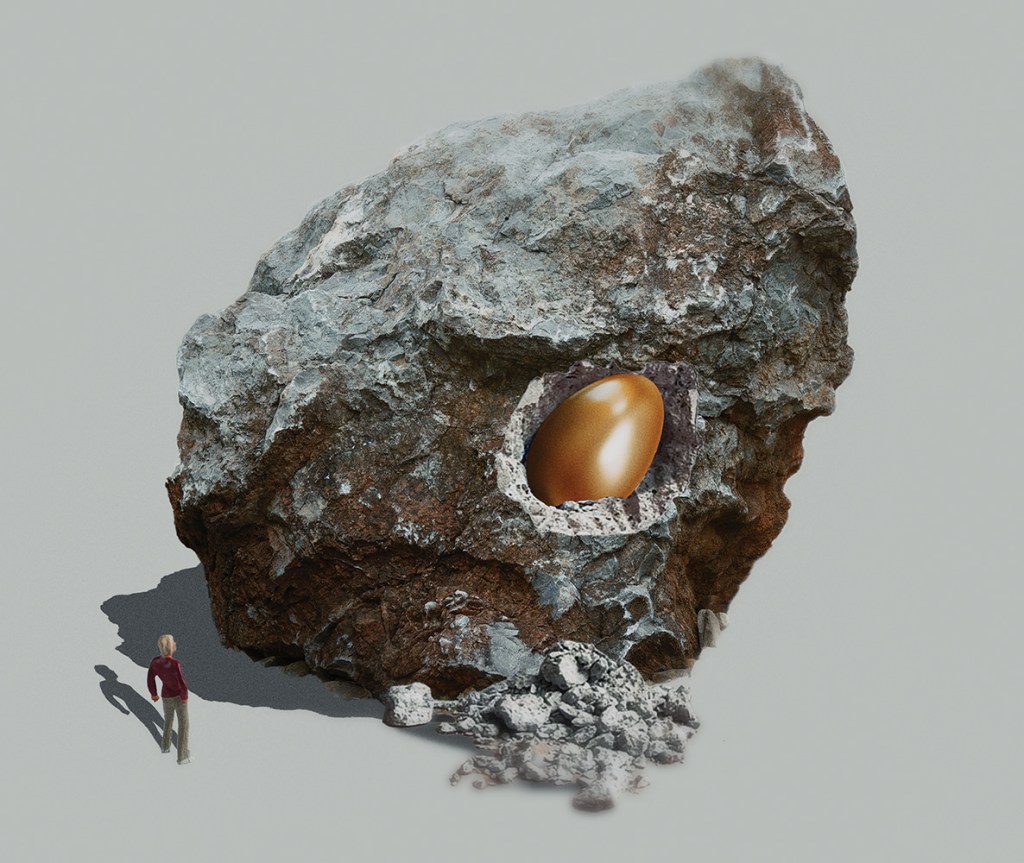
Image Credit: Nicolás Ortega
The belief blind spot
After Back on My Feet’s success, Mahlum spotted another opportunity — a small fitness studio in Los Angeles with untapped potential. She invested $175,000 of her own savings to launch Solidcore. Within years, it became a phenomenon. Studios opened across the country. Mahlum was earning seven figures.
Each success seemed to reinforce what she believed about herself: Her vision was crystal clear. Her judgment was sound. Her approach worked.
However, the same filters that help us see what’s possible can also conceal things we’d rather not see. Mahlum’s intensity was everywhere at Solidcore. In the early years, that energy was rocket fuel. But her passion often erupted in harsh critiques and public callouts. As one employee put it, “She expected everyone to care about Solidcore as much as she did, which just wasn’t realistic.”
One team member said, “The anxiety of seeing an email come through from Mahlum or a phone call…your heart would jump.”
When dozens of employees signed a petition calling for her resignation, she didn’t retreat into defensiveness. She invited the board to launch an independent investigation. “There’s a lot of expectations and responsibilities that come with leadership,” Mahlum said on a companywide call. “Not only do I know better than that, but you guys deserve better than that.”
The same woman who had built her identity around helping others transform now stood face-to-face with the one transformation she hadn’t expected to make: her own. She drew on the same belief that had shaped everything else in her life: transformation is always possible.
Related: How to Create a Brand Philosophy That Everyone Believes In
Building new beliefs
Mahlum evolved. She recognized that sustainable organizations don’t just need intensity — they need leaders who can grow with them. She stepped down as CEO of Solidcore and became executive chairwoman, elevating her COO to the CEO role.
In 2023, Mahlum sold Solidcore, just as she believed she would. As part of the sale, she awarded millions of dollars to employees — not out of legal obligation, but because she said she would. “Solidcore’s success is far from just my own,” she said.
At every stage, Mahlum’s greatest strength was belief: in people, in possibility, in her own ability to shape the world. But even the strongest beliefs, left unchecked, can become blind spots.
This is why the most successful people regularly review and refine their beliefs.
You can do the same by asking: What beliefs helped you get where you are today? Which ones still open doors? Which might be quietly closing them?
It’s tempting to dismiss success as a matter of just being in the right place at the right time, as if all it takes is stumbling upon a once-in-a-lifetime idea. But that diminishes what success really takes: noticing the world around you. Right now, your perceptual filters are quietly determining what you notice and what you miss. Are you consciously choosing your beliefs, or letting old programming run on autopilot?
Mahlum’s insight was that belief-driven transformation is always possible — including her own. The same is true for your beliefs. They’re not fixed. They’re tools. And the wisest builders know when it’s time to upgrade their toolkit.
Nir Eyal’s new book is Beyond Belief, which explores how invisible beliefs shape our actions — and how to redesign them.
On a Philadelphia street corner at 5:30 a.m., a twentysomething jogger ran past the same homeless men she’d seen hundreds of times before. They were always there, clustered outside the Sunday Breakfast Rescue Mission in the predawn darkness. Like most city dwellers, Anne Mahlum had mastered the art of practiced indifference — averting her eyes, maintaining her pace, treating their presence as just another fixture of the urban landscape.
But one morning, one of them waved. She waved back.
The next day, one of the men made a sarcastic joke as she passed. These casual interactions sparked a question that stopped her midstride during a run: “Why do I get to be the runner, and these guys get to be the homeless guys on the corner? Why can’t we all be runners?”