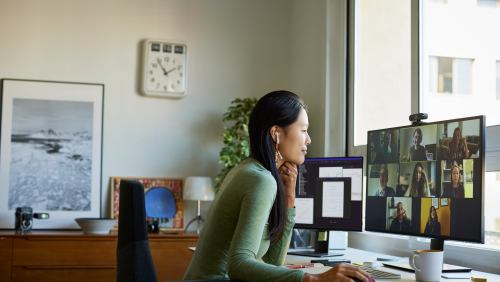
Working with a distributed team in a remote setting has its challenges. I am sharing how managing a distributed team works for me and what the advantages are.
Now that remote work is all the rage, perhaps you're spending more time at home or the local coffee shop than ever before. Here's how to maintain a sense of continuity and productivity, even if you're moving a lot from place to place.
From my experience helping 21 companies figure out their hybrid and remote work arrangements, the best practice is for the leadership to provide broad but flexible guidelines for the whole company. Here's why and the steps you need to take to do it.
In today's day and age, companies are tasked with the difficult challenge of building a remote sales team. Learn how to build a remote sales team that'll take your business to the next level.
As the severity of the Covid-19 pandemic has started to wane, leaders have begun to hypothesize what a return to normalcy will look like, which social and economic changes will stay and which will fade. Their top priority, however, should be the issue of loneliness.
Theresa Feulner lives on a sailboat with her partner while traveling the world. She works part-time as a remote psychologist specializing in dating and relationships.
The trouble with this stance is it decries the negative impact of remote and hybrid work on wellbeing, yet glosses over the damage to wellbeing caused by the alternative, namely office-centric work.