This Cult Filmmaker Learned Something About Audiences Every Entrepreneur Needs to Know
Kevin Smith built a personal brand without realizing it. It saved his career.
This story appears in the March 2026 issue of Entrepreneur. Subscribe »
Kevin Smith built a personal brand without realizing it. And it probably saved his career.
In 1994, he released a movie called Clerks — and self-funded it with credit cards. When the movie exploded, it inspired a generation of self-funded filmmakers. He followed that up with Mallrats, Chasing Amy, Dogma, and a string of other movies that helped define a filmmaking era (and defined him by his character, Silent Bob).
But along the way, Smith noticed something: Fans weren’t just interested in his movies. They were also interested in him. And in a fickle movie industry, where filmmakers live or die on their next project, he saw a lot more longevity in selling himself.
So he leaned into it, engaging directly with fans in a way that people back then rarely did. He toured, hosted screenings, and connected on nascent internet forums. He leaned into the role of the everyman geek — a guy just like you, who’s obsessed with pop culture. A following formed, before social media “followers” existed. Even the term “personal brand” was new: It was popularized by management expert Tom Peters in 1997. In the early days of podcasting, Smith created a network called Smodcast that served this new fanbase — and drove even more business opportunities.
Related: Why Storytelling (Not Selling) Is Your Most Powerful Branding Tool
Now, decades later, Smith has a lesson for all entrepreneurs: The more people care about you, the more opportunities you can create. “I would have been out of this business a long time,” he says, “were it not for the fact that I feed the audience.” Here, he talks about how to build your brand, connect with your audience, and maintain relevancy without losing your mind.
When you made Clerks, self-funded filmmaking was barely a thing. Why’d you do it?
I didn’t want to work for some other guy. I worked for other people for years, and I was terrible at it. The idea of working for myself seemed appealing.
I also learned that lesson tacitly from my father. He worked at the post office my whole young life. He hated his job. Whenever he wanted to take off work, he was so afraid of making the phone call. He’d ask my mom to do it, and my mom would. The whole house had to shut up. And once the call was made, he was like a different person. He was our father again. He was so happy.
It was sad to see. I remember thinking, I can’t live like that. I can’t be ruled by being that scared.
Then you started working with film studios. But your DIY attitude seemed to stay the same.
I realized that a studio can choose not to let you direct a movie — but they can’t take directing away. I’m a guy who started on his own credit cards. I could finish on my own credit cards if I had to.
Because who’s the boss? It ain’t Miramax. It ain’t Universal. It’s the audience, if they’re buying tickets. And if you work for the audience, they say you never work a day in your life.
Related: 5 Easy Ways to Build a Magnetic Personal Brand People Can’t Ignore
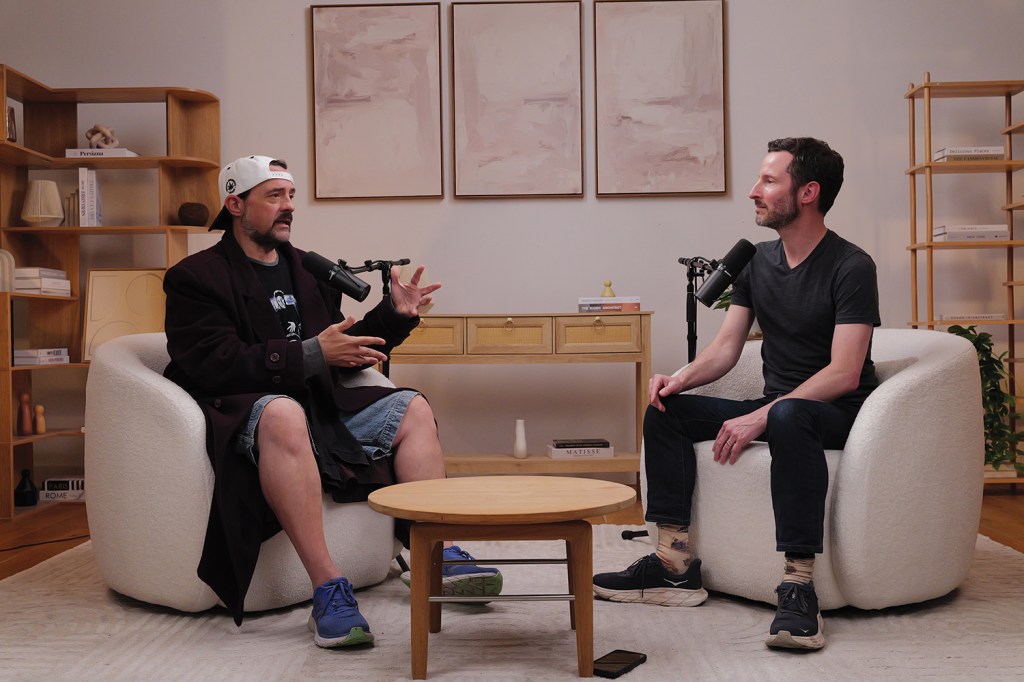
Image Credit: Ari Simmons | Theorist Studios
How do you think about catering to that audience?
When you meet the boss at any job, you’re a kiss-ass. You’re happy to have the job. So it makes sense that whenever you meet the audience as the artists, be the same way. I was always very fan- oriented — what they now call “direct to consumer.”
I did a lot of screening Q&As at colleges. I’d drive halfway across the country. We’d start at full capacity, and I’d keep answering questions even as we’d get down to less than half the crowd. But I had the philosophy of: I’m here. I have nowhere else to go, and they wanna know. And that was before I learned I could make money off of it.
I would also hang out on an early message board. People would write questions about my work, and I would go answer them. But I was never thinking, This is the future of marketing. I was just thinking, These people have jobs, and maybe they’re making minimum wage, and they spent a few bucks on my movies, and I want to know why. That’s a relationship I want to foster, because I want them to come back.
It feels like your connection to your audience — which you’ve built for decades now — has helped sustain you even beyond movies.
I started podcasting back in 2007. Pivoting into that was beautiful, and it created this whole other industry, where I brought my friends along instead of me just standing on stage talking about myself. When I talk to listeners in real life today, the identity factor is still huge. It’s still the same relatability.
At the same time, I had no idea that this job would become a never-ending thirst and hunt for relevancy. ’Cause that’s the only way we exist. Like, for my dad, he wasn’t “relevant.” He was a cog in the postal machine. He would still get paid either way. But I ain’t getting paid unless somebody’s like, “What are you saying this time?”
What’s the secret to staying relevant to the people you reach?
This is going to sound so basic, but it’s in Shakespeare, man: “To thine own self be true.” We’re all so different and so beautiful. Embrace that. Lean into that.
I tell young writers, “You can write about space or a comic- book movie. There are lots of those. But there aren’t a lot of the story of you. They’re waiting for that. That’s what people connect to.”
You gotta come up with something meaningful. If you’re trend-chasing, if you’re saying what everyone else is saying, then why are they coming to you? But if you can make them feel something, they’ll pay you for the rest of your life.
It seems to me like your relatability and your relevancy are intertwined. To your audience, you were playing two roles at the same time—the average guy, and the guy who did the thing that other artists dream of doing.
I was their avatar. One guy said to me, “If I was going to succeed, I’d do it exactly the way you did.” That’s my favorite compliment I’ve ever gotten in my entire career.
How do you think entrepreneurs can use the lessons you’ve learned from your career today?
Human beings are being shut out of the workforce, thanks to AI. So I think we are entering a very entrepreneurial period of human development, because there’s no choice anymore.
I recently watched a TikTok that blew my hair back. This gentleman is talking about how he has three degrees, including a Ph.D., and has sent out 10,000 resumes, and barely heard back from anyone. It’s the first time he’s been out of a job since he was 12. And he says, “In a world where I can’t even get a job at Starbucks, there’s no point for you to not chase your dreams anymore.”
Everybody has some secret sauce. I believe we’re all put together, and we’re all different, because we all have the answers for each other. Everybody has something that somebody else needs, whether it’s experiential, whether it’s something tactile — something they could share.
People get good ideas, but they don’t follow them because of the second voice. The first voice is inspiration: What doesn’t exist? If you’re irritated that something doesn’t exist, and you know it should exist, then you could bring it into existence. That’s the important voice. But the second voice is like, Nah. Don’t listen to the second voice.
You need passion, because that’s what separates you. Believe me, you have not had an idea that somebody else hasn’t also had. The difference is that you are going to take it to completion. You’re going to take whimsy and make it reality. That’s what an entrepreneur does, and it’s the closest thing to magic that exists.
Related: It’s Not the Best Who Wins — It’s the Best Known. 5 Steps to Make Sure You’re Seen.
Kevin Smith built a personal brand without realizing it. And it probably saved his career.
In 1994, he released a movie called Clerks — and self-funded it with credit cards. When the movie exploded, it inspired a generation of self-funded filmmakers. He followed that up with Mallrats, Chasing Amy, Dogma, and a string of other movies that helped define a filmmaking era (and defined him by his character, Silent Bob).
But along the way, Smith noticed something: Fans weren’t just interested in his movies. They were also interested in him. And in a fickle movie industry, where filmmakers live or die on their next project, he saw a lot more longevity in selling himself.