For 47 Years, This Brand Has Kept Up With McDonalds and Dunkin. Have You Heard of It?
Among our longest-running, top-ranking franchises, there is a third, much smaller champion. How have they done it?
This story appears in the June 2026 issue of Start Up. Subscribe »
Pop quiz: What three brands have had the greatest consistency in franchising?
Two of them are easy to guess: Dunkin’ and McDonald’s. These are giants, internationally known for their food as much as their impact on culture. But the third brand flies more under the radar—succeeding without high-profile collabs with Megan Thee Stallion (Dunkin’) or promotions with box-office hits like A Minecraft Movie (McDonald’s).
That brand is Lawn Doctor. And unlike Dunkin’ and McDonald’s, which have tens of thousands of franchises, Lawn Doctor only has 665.
Let’s back up for a moment to explain. Every year, Entrepreneur publishes its Franchise 500 ranking — the definitive ranking of franchise brands, which evaluates companies on more than 150 data points in areas like growth, franchisee support, and financial strength. This isn’t just about number of units; it’s about brand strength as a whole, celebrating consistency and not just rapid growth.
Related: New to Franchising? Here’s Your Guide to the Must-Know Industry Acronyms.
We’ve been publishing the Franchise 500 for 47 years — and in that time, only Dunkin’, McDonald’s, and Lawn Doctor have ranked in every single list, across all 47 years. That gives them the greatest consistency in franchising.
So, we wanted to know: How has Lawn Doctor remained this strong for this long?
Chairman and CEO Scott Frith was happy to answer. He has a nearly lifelong history with the brand: His dad started by selling franchises out of his home office, rose to CEO, then passed the role along to him. Under Frith, Lawn Doctor expanded into a parent company called Happinest, which now acquires and runs other home services brands that cross-fertilize each other.
In this conversation, Frith explains the company’s history, evolution, and how a brand like this grows strategically — while always taking care of its franchisees.
How did you first hear of Lawn Doctor?
I was seven years old, playing on our front lawn in Warminster, Pennsylvania, when my dad came home. I remember it like a photograph that’s burned in my mind: Him stepping out of his car in his three-piece suit with his tie and talking to my mom, and I’m like, Something’s going on here. It turned out he’d just had an interview at Lawn Doctor and gotten a job as franchise development manager.
My mom and my dad were the first ones in their families to own a home. And ours was so small—very humble beginnings. But we got a used desk and set up his office in the laundry room, and he sold franchises from there. This would have been in 1978.
Who started the whole thing? What was that story?
So there were two founders, Tony Giordano and Bob Magda. Bob was a tool and die maker for Singer sewing machines. Tony had this hardware store in Matawan, New Jersey. And much like our family, who’d originally come from Philly, people were moving out from the city to the suburbs, and coming to the store to buy lawn-care products they didn’t know how to use. One day Tony went to lunch with Bob and said, “Maybe you could create a piece of equipment with your engineering background…” And that’s where it all started.
So Lawn Doctor launched in 1967. Your father, Russell Frith, became CEO in 1983. When did you first get a job there?
I was 13 when I worked for the summer in the manufacturing plant. It was the definition of the dirty job. I would clean up, patch the roof that was leaking. But I also built equipment — we design and build all our own. Currently, for example, we have a unique power seeder that mixes the seeds with the soil, and a stand you ride on that puts down fertilizer, weed and insect control, calibrating the exact amount to the speed. Back then, Bob would be up in his elevated office, surrounded by glass, engineering what we were gonna build next. And seeing those blueprints come down to the floor, and then making those parts, gave me a perspective on pioneering — charting a different course — which is one of our core values today.
Then, just as I was about to graduate college, I got a call from the marketing director. He says, “Hey, I need an assistant.” I was going to be a lawyer, but I’d started leaning toward business and jumped at the opportunity. I had a little folding table in a corner and an old, broken chair, and I went to work. At first it was like, Hey, I’ll just get paid and figure out what’s next. But there came a moment when I said, You know, this isn’t a job. This is my career.
I loved this idea of our role relative to the franchisees and how that synergy works. We have the brand, the operating system, the training and support. The franchisee brings their energy, their capital, their dreams. And that power, right? I just thought there was a tremendous amount of potential to fuel entrepreneurship, but do it within a structure.
So I went back to school for an MBA, and my goal was to be the CEO of a franchise brand by the time I was 40. And I became the CEO of Lawn Doctor at 39.
Related: ‘Computers Can’t Tie Balloons’: 8 Innovative New Franchises
It was 2011, when you took the reins from your father and the company was acquired by a private equity firm. What was that like?
He was a legend, and I did feel the “big shoes to fill” kind of thing. The company had been on the verge of bankruptcy, and he’d turned it into a household name. But he told me he was ready to retire.
Tony had passed away, and my father had become a majority shareholder, and we decided to have a liquidity event. Bob exited at the same time. So we brought in institutional capital. Today, that private equity firm has a minority position as a comanager and we’ve brought in another firm alongside them.
It was something like out of a movie. We’re in a Manhattan skyscraper at this huge table. The transaction closes. My father and I fly to Florida for the holidays. And then I come back, walk into his office, and sit in his chair.
You started acquiring other home services brands and founded Happinest in 2018. These were very small emerging franchises. How did that affect Lawn Doctor?
As you grow a multi-brand platform, you can attract talent that otherwise you may not be able to. You can also make investments in the platform itself that, if you’re a smaller company with one brand, may not make sense. So you’re spreading some of those costs across a number of different brands.
I will also say that those really innovative, scrappy brands that are growing and finding their space, also do things in a way that benefits Lawn Doctor. We very much have a startup, West Coast kind of vibe here, something that’s important to always keep intact regardless of how successful you are.
And it cuts both ways. Lawn Doctor, almost 60 years old now, is bringing a lot of operational experience — nearly 4,000 years between our franchisees and our team—across the platform. So certainly that brings value to emerging brands that are small and learning.
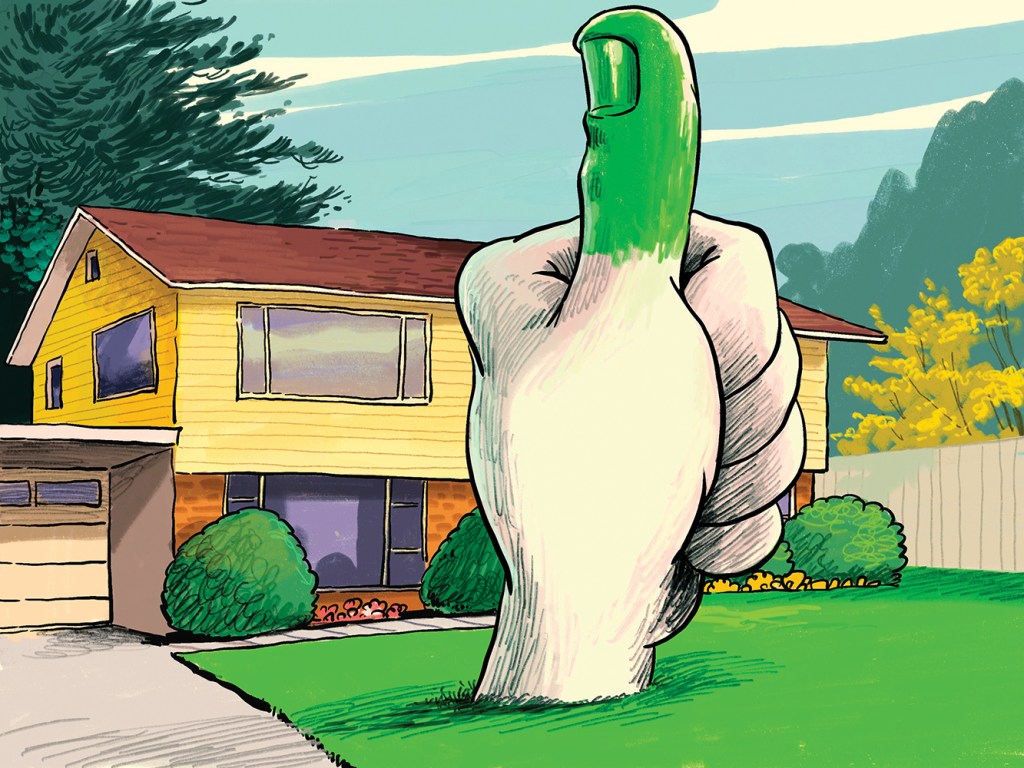
Image Credit: Zohar Lazar
As far as investments in the platform, what has been the most significant driver of growth?
My father once said, “Treat a franchisee as if they can leave you tomorrow and you’ll be okay.” In other words, make sure you understand their value in building this business alongside you. And that’s been a guiding principle.
So a real differentiator for us is how we’ve created the structures to help every franchisee unlock [success]. We’ve really ramped up training. For new franchisees, we have pre-training with digital content, then class for a week, practical training in the field — and then it’s ongoing with new initiatives. You also have a dedicated person with you for two years.
After that, it’s a revenue- based support model. So as you move into a higher revenue band, you have a different support person who also supports all franchisees in that same band. The idea is, if someone in your cohort is doing something great, it’s very relevant to your size of business and circumstance. Then, to continually help franchises move up, we have what we call the Ladders program, where a host location will bring in a number of franchisees who are at a level below them so they can see exactly what the next-level business looks like. We also run small performance groups of franchisees who meet on a regular basis to discuss financial and operational issues: What are your wins? What are your challenges? And they hold each other accountable to the things they say they want to improve in the business.
Then we have a specific mentorship program for franchisees who aren’t doing as well as they, or we, expect them to. They’re paired with a successful franchisee. Our strategy is to overlay all of these structures to allow best practices.
Related: From Celebrity Investors to AI That Cuts Labor Costs by 90% — How 5 Brands Made Massive Leaps
Has it worked?
Our average franchisee does over a million dollars a year in revenue. Our largest franchisees are well over $10 million.
What hasn’t worked?
I’m very ambitious. I want to do really big things. But sometimes I try to take on too many. And you really have to look at execution risk and make sure that not only can the team execute on those things, but the franchisees can absorb them. Because change for a franchisee’s business can be very disruptive. Sometimes, as a leader, you have to slow down to go fast.
Quite frankly, the world may move faster than a particular franchisee may want to. As consumers evolve — how they discover the brand, what they expect for service, how they buy—phone, text, email, etc. — it’s really important that we move [with them]. But we have some large franchisees who are very successful. And they’re like, “I’m really happy with how it is. What’s happening?”
It’s our job to support and develop a relationship with each franchisee. But it’s also our job to keep the brand relevant, and continue to create value for everyone. So that’s the tension.
Today Happinest’s brands include Lawn Doctor, Pest Hunters-Mosquito Hunters, Ecomaids, Elite Window Cleaning and Sparkle Squad, which together have over 900 locations. Obviously, customers who want their lawns maintained, might also need their homes and windows cleaned and mosquitos killed. But what stage were those brands when you acquired them?
One had two franchises. Seven in another case; 11 in another. It’s typically very scrappy, where the founder started a company and then learned about franchising. And there’s a moment of realization which is like, “This is harder than I realized. The first 10, 20, 30 — it’s very capital intensive to build a franchise and a totally different business. I need help.”
What are the challenges of unit economics with these tiny franchises?
It’s honestly not the easiest thing. There are a lot of companies that are interested in well-established brands. But getting emerging brands to the next level is hard and there’s also less margin for error.
A lot of the brands we acquire don’t have a strong operating model. So we build some assumptions and work toward those assumptions, and they won’t always be right. Also, new franchisees are starting from zero. It’s not like they can go, “Hey, this isn’t working. Let me talk to someone who has been there and built this really large business.” Because there is no precedent. And that’s why it’s very rewarding when you get it right and you really start scaling it up.
Related: What It Takes to Win In Franchising In 2026
What’s the first step?
Customer acquisition is always one of the first conversations. So coming up with a clear go-to-market strategy and an avatar of who is the ideal customer. Having a marketing stack that gives you different ways to reach them and a sales process to convert those leads into customers — that’s the first thing they really need help with. Once we have that, then we need to create a brand that people are excited about.
Curious if you’re using AI?
We’re still in the process of trying to figure it out! What are we really trying to accomplish? Which use cases are the best? Where do we start? It’s one of my big initiatives and we’re certainly on the journey.
Do you have a vision for Happinest down the line?
Definitely to be a billion-dollar-plus business — and that is very much within our reach. And it means all the things that you would think. It’s continuing to grow existing and new Lawn Doctor franchisees and driving same-store sales — 2025 systemwide revenue was about $250 million. It’s continuing to scale up with new locations of our emerging brands, which includes expanding from residential customers to commercial ones. It’s bringing additional brands into the portfolio and scaling them up with the experience we have.
Any advice for entrepreneurs who want to start their own franchise company?
A lot of things will pull you in different directions, even with one franchisee.
But focus really hard on making those unit economics work, so the franchisee does well and is happy in the model. In that early stage, you want to anchor to that success of the franchisee.
From the beginning, think about building the company to scale. For example, how do you leverage data and technology? What kinds of things can you do even when you’re small to plan for when you’re big, so that you can accelerate when the time is right? Also, be very careful with your vendor selection, and have the mindset that they’re not just a supplier, they’re a partner. They often have a lot of knowledge, and it’s in their interest to help you. And they can really be a part of your support.
And talk to companies like us. Just build the relationship, even if it doesn’t turn into anything. Most will help you, because they want entrepreneurs to be successful. There’s enough for all of us.
You have teenagers — a daughter and a son. Any possibility they’ll catch the bug and buy a franchise or start one? Maybe even become a third-generation leader of Lawn Doctor?
I’ll tell you: Giving your kids the opportunity to carve out their own path, and then watch what they do next for the business? That to me is the ultimate American dream.
Wehave a guy who started as a Lawn Doctor technician operating a piece of equipment. He went on to buy a franchise. He has since bought many more, and is gonna be a $10-million-plus franchisee. And both of his sons will operate that business. We have many operators who are second generation. And we actually just found out we even have a third generation.
My kids have seen different areas of the business. And my son is really interested in manufacturing. When he turned 13, he told me, “I’m old enough. I could start.” I’m like, “It’s kind of different now.” But, you know, I’ll be really interested to see what they decide to do.