In an email, a Google executive reportedly told employees that many new features and products unveiled during Google's developer conference last month were "conceived, developed, and built by teams working side by side."
Many leaders claim that employees are more ethical in the office, where they can see them — conversely, they're less ethical when working from the home office. Well, that conventional wisdom has been busted.
Employee mental health substantially worsened with the return to office demands, and it's causing disengagement and low morale. The solution demanded by employees is the answer.
There is a vivid sign of the disconnect between employees and their workplace, a glaring indication that companies need to revise their scripts to improve their hybrid and remote work policies.
In a world where we've seen five consecutive quarters of declining productivity in the U.S., one would think that CEOs and company leaders would question their tactics. Yet despite the overwhelming evidence that flexible hybrid work is more productive than forced in-office work for the same roles, top executives are stubbornly herding employees back to the office like lost sheep.
It certainly takes more work to have hybrid employees participate in co-creating the return office, but the long-term gain is very much worth the short-term pain.
The number of stay-at-home mothers nearly doubled from 2022 to 2023, leaping from 15% to 25%, because of the forced return to office and resultant lack of flexibility
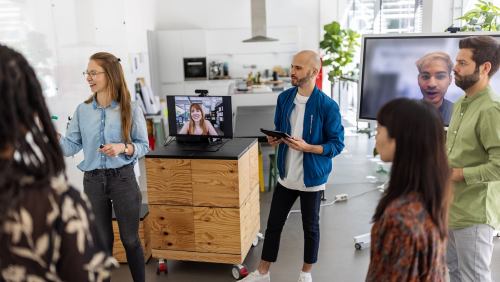
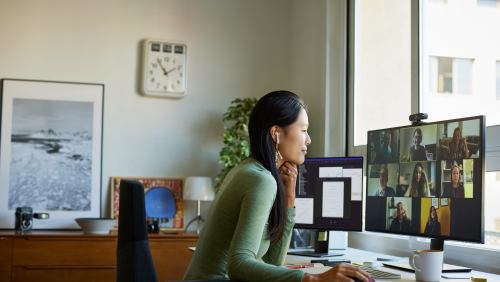
As leaders are figuring out hybrid and remote work, they are facing the challenge of deciding whether to encourage employees to keep their cameras on during meetings. This decision has a significant impact on communication, engagement, and trust-building within the team.
Leaders need to face the music: remote work, full-time or part-time is here to stay. That means addressing the unique challenges associated with this new work modality can make or break a team's success. Conflict resolution is one such challenge that, when mastered, can significantly boost your remote team's performance and morale.
Miriam Groom specializes in employee experience and development. She shares her advice about overcoming the pitfalls and challenges of being a remote worker.
New York City Mayor Eric Adams was once a staunch opponent of hybrid work, adamant that city employees should work in person. However, the growing reality of a tight labor market and the success of remote work have finally begun to change his mind.
In an era where hybrid work is becoming the norm, JPMorgan Chase CEO Jamie Dimon seems to be swimming against the tide. With the recent news of the bank's request for managing directors to return to the office full-time, it's clear that Dimon's crusade to bring employees back in person is not only a sign of weakness but also exposes an inability to adapt to the evolving world of work.